

More news on this day
Winter weather thousands of miles from Southern California has created major travel interference at Los Angeles International Airport, where 217 flights have been affected by cancellations and delays, disrupting schedules for passengers flying with United, Delta, Southwest, SkyWest and other major carriers.
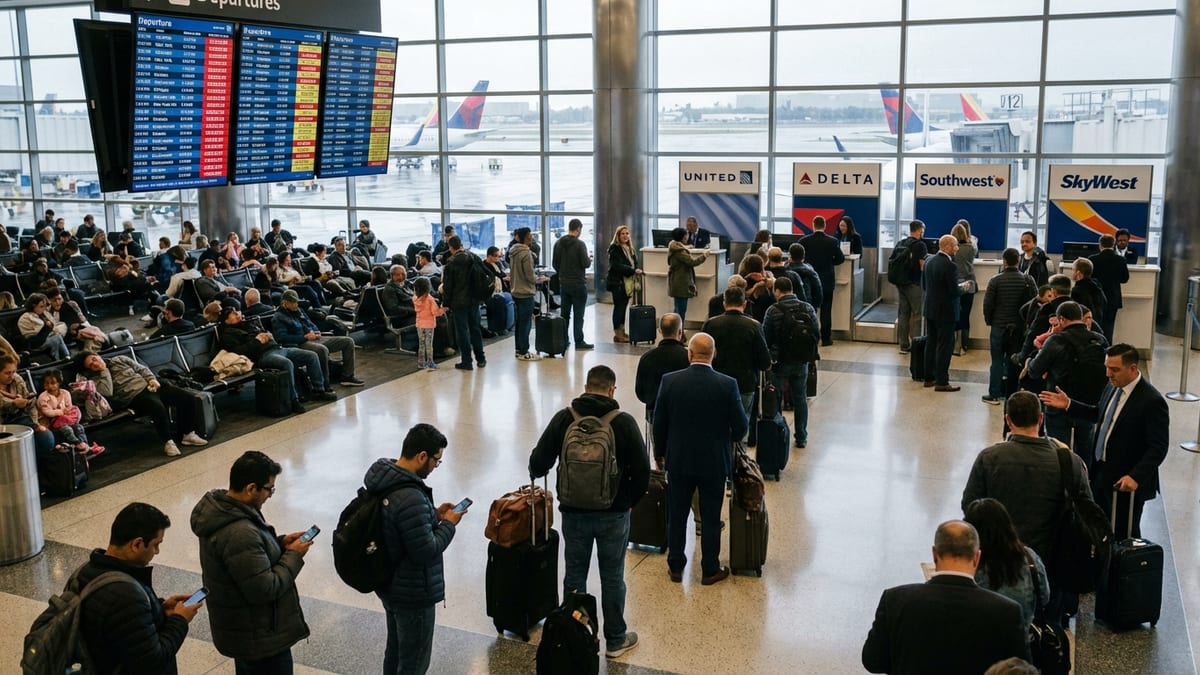
Winter Storm Ripple Effects Reach Sunny Los Angeles
The latest disruption underscores how vulnerable air travel remains to extreme weather far from a passenger’s departure or arrival city. While Los Angeles enjoyed relatively calm conditions, snow, ice and frigid temperatures across large swaths of the country led to widespread schedule changes that quickly rippled into one of the nation’s busiest hubs.
According to flight-tracking data over the past 24 hours, Los Angeles International Airport recorded 217 affected flights, combining cancellations and delays tied to conditions at other major airports. The impact has been particularly pronounced on transcontinental and key domestic routes connecting LAX to storm-battered cities in the Midwest, Northeast and parts of the South.
Operationally, the interference reflects the complexity of modern airline networks. Aircraft and crews that started the day in storm-hit cities were unable to reach Los Angeles on time, if at all, leading to knock-on disruptions hours later on the West Coast. Even when runways at LAX remained open and weather conditions were favorable, airlines had fewer aircraft and available crew to operate scheduled departures.
For travelers, the result was long lines at check-in counters and customer service desks, crowded gate areas and a surge of last-minute itinerary changes. Many passengers arriving at LAX discovered only upon landing that their onward connections had been canceled or significantly delayed, forcing them to scramble for rebooked flights or overnight accommodations.
Major US Carriers Bear the Brunt
The latest figures show that the impact is spread across several of the country’s largest airlines, with United Airlines, Delta Air Lines, Southwest Airlines and regional operator SkyWest Airlines among the most heavily affected at Los Angeles International Airport. These carriers rely on LAX as both a major origin-and-destination market and a key connecting hub, amplifying the effect of each cancellation or lengthy delay.
United and Delta, with extensive domestic and international networks, saw a mix of cancellations into and out of LAX as aircraft were delayed or stranded at hubs such as Denver, Minneapolis, Newark and Boston. Some flights were pushed back by several hours as crews timed out or aircraft needed de-icing at origin airports, while others were preemptively canceled as carriers sought to reset their schedules amid ongoing storm-related disruptions.
Southwest Airlines, which operates a high-frequency schedule of short- and medium-haul flights along the West Coast and across the United States, also experienced notable interference. Its point-to-point network means a disruption in one region can quickly cascade across multiple airports, including Los Angeles. Affected travelers reported rolling departure times and gate changes as the airline tried to reposition planes and crews.
SkyWest Airlines, operating regional flights on behalf of major brands including United and Delta, played a central role in the day’s turbulence. As a connector between smaller cities and larger hubs, its operations are particularly sensitive to weather disruptions. When a regional jet cannot depart from a smaller, weather-hit airport, the knock-on effects can remove essential feeder flights from the LAX schedule, leaving passengers without their scheduled connections.
Nationwide Weather and System Pressures
The turmoil at LAX is part of a broader pattern of travel disruption across the United States this winter. A powerful storm system bringing snow, sleet and ice to more than a dozen states has generated thousands of cancellations nationwide in recent weeks, particularly at major hubs in Texas, the Midwest and the Northeast. Airports such as Dallas Fort Worth, Boston Logan, Newark Liberty, Charlotte Douglas and New York’s JFK and LaGuardia have all recorded elevated cancellation counts as they struggle with runway conditions and de-icing backlogs.
Those hubs serve as critical nodes in the domestic travel network. When they slow down or temporarily suspend operations, flights linked to Los Angeles are often among the first to be delayed or cut as airlines work to keep aircraft and crew resources concentrated where they are most urgently needed. Even after the worst of the weather passes, it can take carriers several days to fully restore their schedules and reposition aircraft and crews.
This winter’s disruptions follow a series of recent travel snarls tied to a combination of severe weather, air traffic control staffing challenges and high passenger demand. Nationwide, carriers are still balancing leaner staffing and tighter schedules with a rebound in leisure and business travel. When storms roll in, the reduced margin for error becomes apparent, with limited spare aircraft and smaller pools of reserve crew available to step in and keep flights running on time.
Aviation analysts note that while airlines have invested in more sophisticated planning tools and real-time data to mitigate the impact of storms, the scale and intensity of some recent weather systems have overwhelmed even improved contingency plans. The pattern has left travelers more exposed to last-minute changes, particularly during peak travel periods and busy holiday or long-weekend windows.
Scenes of Frustration and Fatigue at LAX
Inside LAX’s terminals, the day’s disruptions translated into hours of uncertainty for passengers. Arrival boards flickered repeatedly between “On Time,” “Delayed” and “Canceled” notices, while gate agents delivered frequent but often tentative updates as airlines adjusted schedules in response to changing conditions at origin and destination airports.
Families traveling with children, international visitors unfamiliar with the US system and business travelers on tight schedules all found themselves navigating rebooking lines and customer service phone queues. Passengers reported waiting through multiple successive delay announcements before finally being advised that their flights would not depart at all, forcing them to scramble for alternative arrangements.
Airport seating areas and food courts grew more crowded as travelers camped out with carry-on luggage, charging devices and trying to secure hotel rooms near the airport when overnight stays became unavoidable. For those who had already endured weather-related disruptions at earlier stops on their journeys, LAX became just another unexpected layover in a longer-than-planned trip.
Some passengers expressed understanding, noting that safety must take precedence when weather compromises visibility, runway conditions or the ability to de-ice aircraft. Others voiced frustration with what they saw as limited communication, inconsistent updates and difficulty reaching airline representatives. The combination of weather impacts and already busy winter schedules made same-day alternatives scarce, particularly on popular transcontinental and hub-to-hub routes.
Operational Challenges for Airlines and Crews
Behind the scenes, the day’s interference at Los Angeles International Airport reflected a complex puzzle for airline operations teams. Every cancellation or delay requires a cascade of decisions about where to send aircraft next, how to reassign pilots and flight attendants and which flights can be consolidated or rerouted with the least impact on passengers and the broader network.
When a storm disrupts multiple hubs simultaneously, the problem becomes exponentially more difficult. Carriers must ensure that pilots and crews remain within strict federal duty-time limits, even as delayed departures and long ground holds strain their schedules. If crews exceed their legal working hours because of extended waits on the tarmac or in the terminal, flights may be forced to cancel at the last minute despite otherwise acceptable weather conditions.
Maintenance schedules add another layer of complexity. Aircraft due for inspections or routine work cannot simply be kept in service longer without regulatory waivers, and severe weather can make it difficult to move those planes to facilities where the work can be completed. For airlines at LAX this week, balancing these operational constraints while managing a wave of passenger rebookings proved to be a significant challenge.
Regional partners such as SkyWest face additional hurdles. Their smaller jets often serve shorter routes into airports with more limited infrastructure, where snow and ice can shut down operations quickly. When those flights are canceled or heavily delayed, entire connection banks at major hubs, including Los Angeles, may see reduced service, leaving travelers with fewer options to reach smaller cities or make onward connections.
Advice for Affected and Future Travelers
As disruptions mounted, both airport officials and airline representatives emphasized the importance of planning and flexibility for anyone traveling through Los Angeles International Airport during periods of unsettled weather across the country. Passengers were urged to monitor their flight status frequently through airline apps or text alerts and to allow extra time to reach the airport.
Travel experts recommend that, when possible, passengers book nonstop flights rather than itineraries with tight connections through multiple hubs, particularly in the winter months. Nonstop routes reduce the number of potential weather chokepoints and can make it easier for airlines to re-accommodate travelers when schedules go awry. For those whose plans require connections, building in longer layovers can provide a buffer against cascading delays.
Another often-overlooked strategy is traveling early in the day. Morning flights are generally less prone to long knock-on delays because aircraft and crews have typically overnighted at the departure airport. As the day progresses, the network becomes more vulnerable to disruptions originating elsewhere. The experience at LAX this week, where afternoon and evening departures bore the brunt of cascading delays, reinforced that pattern.
Passengers are also encouraged to familiarize themselves with airline policies on rebooking, meal vouchers and hotel accommodations during irregular operations. While federal regulations in the United States do not require carriers to compensate travelers for weather-related disruptions, many airlines offer flexible rebooking waivers or fare-change options during major storms, which can help passengers adjust plans before arriving at the airport.
Broader Implications for US Air Travel
The turmoil at Los Angeles International Airport illustrates the broader vulnerability of the US air travel system to extreme weather and systemic shocks. With passenger volumes continuing to recover and in some markets surpass pre-pandemic levels, the margin for error on busy travel days has narrowed considerably. When severe storms strike, the effects are often felt not just at directly impacted airports, but at distant hubs like LAX that rely on a steady flow of inbound aircraft and crews.
Industry observers note that climate change may increase the frequency and severity of disruptive weather events, including powerful winter storms, heavy rainfall and high winds. As these patterns intensify, airlines and airports are under growing pressure to invest in more resilient infrastructure, from modern de-icing facilities and improved runway drainage to upgraded technology that can help operations teams anticipate and manage disruptions more effectively.
The latest wave of cancellations and delays also feeds into ongoing public and political scrutiny of airline reliability and customer service. Calls for clearer communication, more transparent data on delay causes and stronger protections for passengers caught in lengthy disruptions have intensified in recent years. Each new episode of large-scale travel interference, such as the one playing out at LAX, adds fuel to that debate.
For now, travelers passing through Los Angeles must continue to navigate a system strained by forces largely outside the region’s control. As winter weather continues to affect large portions of the country, airlines and airport officials warn that intermittent disruptions are likely to persist, and that flexibility and preparation will remain essential for anyone planning to fly in or out of one of the nation’s busiest gateways.