

More news on this day
Hundreds of passengers were left stranded at Los Angeles International Airport as at least 221 flights were delayed and 25 canceled, snarling operations for Delta Air Lines, American Airlines, British Airways, and other major carriers and sending disruption rippling through key hubs from San Francisco and New York to Boston and as far afield as Sydney.
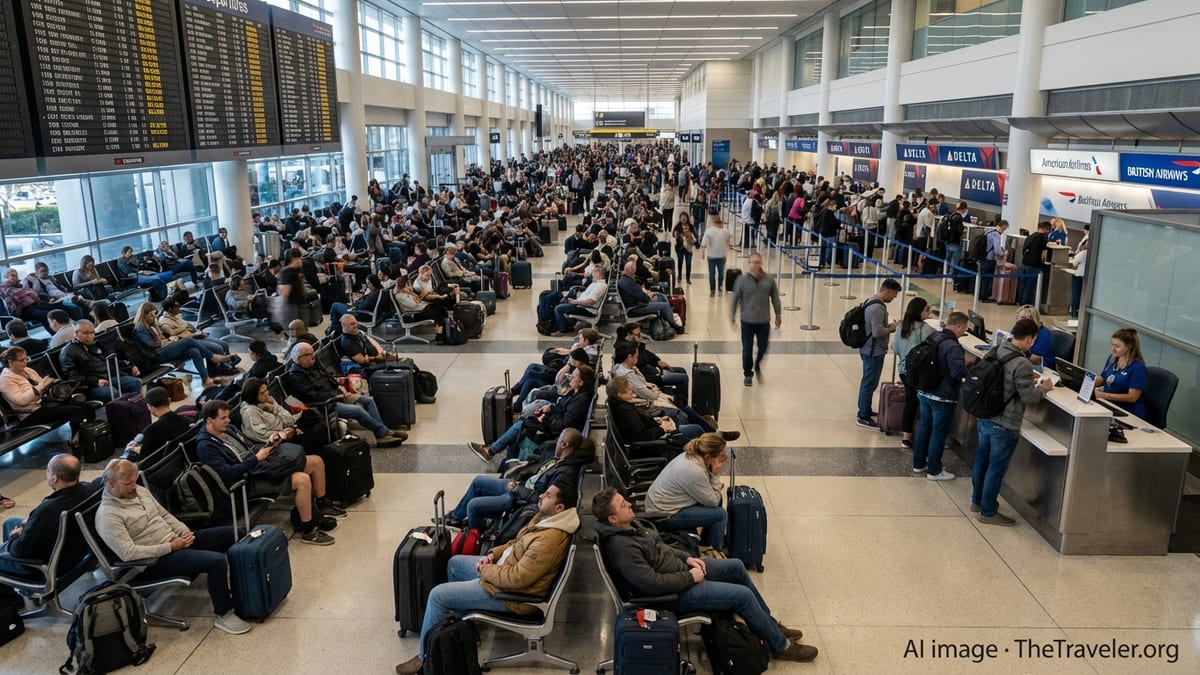
Severe Disruptions Hit a Key West Coast Gateway
The latest wave of disruption at Los Angeles International Airport unfolded across both domestic and long-haul international services, turning one of the world’s busiest gateways into a maze of queues, rebookings, and anxious passengers. Departure boards in multiple terminals showed long strings of delayed flights alongside a growing list of cancellations affecting morning and afternoon operations.
Operational data indicated that more than 200 services arriving into or departing from LAX were running significantly late, with delays frequently stretching beyond an hour and in some cases exceeding two. At least 25 flights were canceled outright, many of them turnarounds that would have operated onward legs to other major hubs, compounding the knock-on impact for travelers who were not even scheduled to pass through Los Angeles.
As the disruption built, terminals serving Delta, American Airlines, British Airways, and other global carriers reported clusters of passengers camping out near service desks, power outlets, and baggage carousels with luggage stacked around them. Airport staff brought in additional customer-service agents and deployed portable queue barriers in an attempt to manage lines for rebooking and compensation requests.
Airport operations managers emphasized that while LAX did not experience the worst of the winter weather affecting other regions, its position as a key connecting hub on the West Coast meant that schedule problems elsewhere in the United States and overseas quickly translated into local chaos. With aircraft and crews arriving late, carriers struggled to turn flights around in time to meet tightly packed schedules.
Ripple Effects Across San Francisco, New York, and Boston
The problems in Los Angeles were closely intertwined with pressure on other major airports, particularly along the West and East Coasts. In San Francisco, a combination of residual weather issues, air-traffic flow constraints, and delayed inbound aircraft led to rolling hold times on the tarmac and congestion at gates. Several flights that would ordinarily shuttle passengers between the Bay Area and Southern California left hours behind schedule, upsetting onward connections to transcontinental and transpacific services.
On the opposite side of the country, New York’s major airports were still recovering from earlier winter storms that slowed arrival rates and forced airlines to park aircraft in holding patterns or divert them to alternate airfields. At John F. Kennedy and Newark, carriers including Delta and American had already been contending with backlogs of passengers from previous days, and the latest disruption to cross-country rotations from Los Angeles added further strain to an already overloaded system.
Boston, often one of the first northeastern gateways to feel the full impact of advancing snow systems and coastal winds, also reported elevated levels of delay. Airline planners juggling limited gate space and tight runway slots were forced to make difficult choices over which services to prioritize, leading to late-night and early-morning flights bearing the brunt of cancellations. Travelers booked on nonessential leisure routes were, in many cases, asked to accept rebookings on later dates.
Experts noted that the interconnected nature of airline networks means a relatively small number of cancellations in one city can quickly cascade into large-scale disruption elsewhere. Aircraft and crew that fail to reach their next scheduled departure point in time trigger further delays, while tight federal limits on crew duty hours constrain how long pilots and cabin staff can remain on duty, forcing airlines to cancel or consolidate flights even when airports remain technically open.
Transpacific Routes to Sydney and Beyond Affected
The effects of the disruption were felt far beyond North America as long-haul routes connecting the United States with Asia and the Pacific experienced delays and equipment changes. Flights between Los Angeles and Sydney, a key transpacific corridor served by several major carriers, were among those affected when inbound aircraft from other U.S. cities arrived late or out of sequence, leaving departures from LAX waiting for available, properly crewed aircraft.
Passengers bound for Australia reported receiving multiple schedule change notifications over the course of the day, with revised departure times slipping later into the evening and early morning hours. Some were rebooked onto departures from San Francisco or other West Coast airports, creating a secondary surge of demand on ground transportation and regional feeder flights as travelers scrambled to make unfamiliar connections with minimal notice.
Similar patterns emerged on other long-haul routes operating from Los Angeles to Asia and Europe. While a number of flights ultimately departed, they often did so behind schedule, which in turn disrupted carefully timed downline connections in cities such as Sydney, Auckland, and various Southeast Asian hubs. For passengers with separate onward bookings on regional carriers, even a modest delay leaving Los Angeles could mean an unplanned overnight stay at their final hub.
Aviation analysts point out that the economics of long-haul flying leave airlines with limited flexibility when disruptions strike. Swapping aircraft between routes is complex, given varying cabin configurations and crew qualifications, while canceling a heavily booked intercontinental flight can cost carriers far more than consolidating multiple shorter domestic segments. As a result, the network adjustments needed to keep transpacific departures operating often reverberate back through domestic schedules, worsening disruption for short-haul travelers.
Major Carriers Struggle to Stabilize Operations
For Delta, American Airlines, British Airways, and other large carriers, the situation at LAX and across the broader U.S. network underscored how quickly resilience can be tested during peak travel periods. Each airline was forced to weigh the competing priorities of moving stranded passengers, repositioning aircraft and crews, and maintaining at least partial schedule integrity on high-demand routes.
Delta and American, both with extensive domestic and international operations centered around Los Angeles and other coastal hubs, relied heavily on rolling rebookings and schedule thinning. Where possible, they combined passengers from multiple lightly loaded flights onto a single departure and removed later frequencies from the schedule to free up crews and gates. Although such strategies can help stabilize operations over a 24 to 48 hour window, they also leave many travelers arriving far later than planned, sometimes in the middle of the night when ground transportation options are reduced.
British Airways and other transatlantic carriers operating from Los Angeles, San Francisco, and East Coast cities also faced logjams as winter storms interfered with both U.S. and European airport operations. When transatlantic flights departed late from New York or Boston, they often returned to American shores out of sync with their next legs, shrinking the available recovery time for maintenance, cleaning, and crew rest and in some cases forcing last-minute swaps onto smaller or differently configured aircraft.
Industry consultants observing the disruption noted that even well-resourced airlines can struggle to maintain passenger communication in fast-moving situations. While mobile apps and text alerts have improved transparency compared with previous decades, the sheer volume of schedule changes can overwhelm call centers and airport staff. Travelers at LAX and other affected airports reported receiving conflicting updates from different channels as operations teams tried to keep pace with the evolving situation.
Passengers Face Long Queues, Limited Options, and Mounting Costs
For passengers, the operational details mattered less than the immediate reality of missed connections, canceled holidays, and work obligations derailed. Inside LAX, some travelers queued for hours at airline counters to secure alternative flights or seek meal and hotel vouchers. Others opted to abandon their air journeys altogether, renting cars to complete domestic legs or postponing trips until the backlog of delays eased.
Families traveling with young children and elderly passengers were particularly hard hit, with limited quiet spaces in crowded terminals and long waits between updates. Many complained about the difficulty of obtaining clear, timely information about their rights when flights were significantly delayed or canceled. While airlines operating in the United States are not required to provide compensation in all disruption scenarios, they may offer meal vouchers, hotel rooms, or rebooking on competing carriers depending on the cause of the delay and internal policies.
For international travelers transiting through the United States, the complexity of rebooking grew even greater. Changing flights could involve new connections through different U.S. ports of entry, raising questions about transit times, immigration processing, and eligibility for visa-free entry programs. Some passengers found themselves needing to adjust not only their flights but also hotel reservations, car rentals, and even event tickets at their final destinations, with many of those costs falling outside the scope of airline assistance.
Travel advisors recommend that passengers caught in similar disruption scenarios document all expenses, keep boarding passes and confirmation numbers, and check both airline policies and travel insurance coverage. Comprehensive policies can sometimes reimburse for accommodation, meals, and alternate transportation when delays or cancellations stretch beyond a specified threshold, though coverage varies widely between providers and plans.
Operational Strain Highlights Fragility of Peak Travel Periods
The turmoil at LAX and other hubs came against a backdrop of elevated travel demand and a series of winter systems sweeping across large swaths of North America. Airlines that have spent the past several years rebuilding schedules and staffing levels now face the challenge of managing record passenger volumes with networks that are tightly tuned for efficiency but vulnerable to cumulative shocks.
Industry data from recent months has shown that even on days without headline-grabbing storms, a sizable share of U.S. flights operate with some level of delay. At major hubs such as Los Angeles, Atlanta, and New York, airlines typically run aircraft and crews close to full utilization to maintain profitability, leaving limited slack in the system when weather, air-traffic restrictions, or technical issues arise.
Airport authorities and carriers have increasingly turned to technology to manage the strain, expanding the use of digital rebooking tools, real-time gate management systems, and predictive analytics intended to identify emerging bottlenecks before they cascade through the network. Yet the scenes of overcrowded terminals and weary passengers in multiple cities this week suggest that these tools, while helpful, are not a complete solution when large numbers of flights are disrupted simultaneously.
Experts argue that improving resilience will likely require a combination of better cross-agency coordination, modestly looser schedules during the most weather-prone periods, and continued investment in ground infrastructure that speeds up aircraft turnaround times. However, each of those steps carries potential trade-offs in cost, capacity, and ticket pricing, leaving airlines and regulators to balance operational reliability against travelers’ appetite for frequent, affordable flights.
What Travelers Can Do When Disruption Strikes
As the backlog from the latest wave of delays and cancellations slowly clears, travel specialists are once again emphasizing practical steps that passengers can take to reduce the impact of major disruptions. Among the most frequently cited measures is building extra buffer time into itineraries, particularly when planning tight connections between domestic and international flights or when traveling during seasons historically prone to severe weather.
Passengers are also encouraged to stay closely engaged with their airlines’ digital channels, including mobile apps and text alerts, which often reflect schedule changes more quickly than airport displays. In many cases, travelers can rebook themselves onto alternative services, join standby lists, or request refunds without waiting in line at customer-service counters, which become overwhelmed when dozens of flights are affected simultaneously.
At the same time, consumer advocates stress the importance of understanding basic passenger rights, including refund eligibility when a flight is canceled and the difference between disruptions caused by weather and those arising from airline-controlled issues such as crew shortages or technical problems. While regulations differ between domestic U.S. and international itineraries, having a clear grasp of the rules can help travelers press for the assistance they are entitled to receive.
For now, hundreds of passengers at LAX and thousands more across cities such as San Francisco, New York, Boston, and Sydney are still working their way through disrupted journeys. Airlines expect operations to gradually normalize, but with winter weather continuing to affect key corridors, travelers are being advised to keep a close eye on flight status updates and to have contingency plans ready should schedules shift again at short notice.