

More news on this day
Travelers moving through Los Angeles International Airport on Friday faced mounting disruption as SkyWest, Qatar Airways and Alaska Airlines logged 10 flight cancellations and numerous delays, unsettling busy links to Aspen, Eagle, Seattle, Doha, Toronto and several other key destinations at the height of a crowded spring break travel period.
Operational Turbulence at a Major West Coast Gateway
The latest disruption at Los Angeles International Airport unfolded across a crucial morning and midday bank of departures, when demand on transcontinental and mountain routes typically peaks. According to preliminary operational data, a cluster of 10 cancellations involving SkyWest, Qatar Airways and Alaska Airlines triggered knock-on delays across shared codeshare and connecting itineraries, affecting hundreds of passengers.
While the total number of disrupted flights at LAX remained modest compared with recent nationwide meltdowns, the concentration on high-value routes magnified the impact. Travelers bound for ski destinations such as Aspen and Eagle, Canada gateway Toronto, and long haul hub Doha bore the brunt, as aircraft and crew imbalances cascaded into rolling schedule changes.
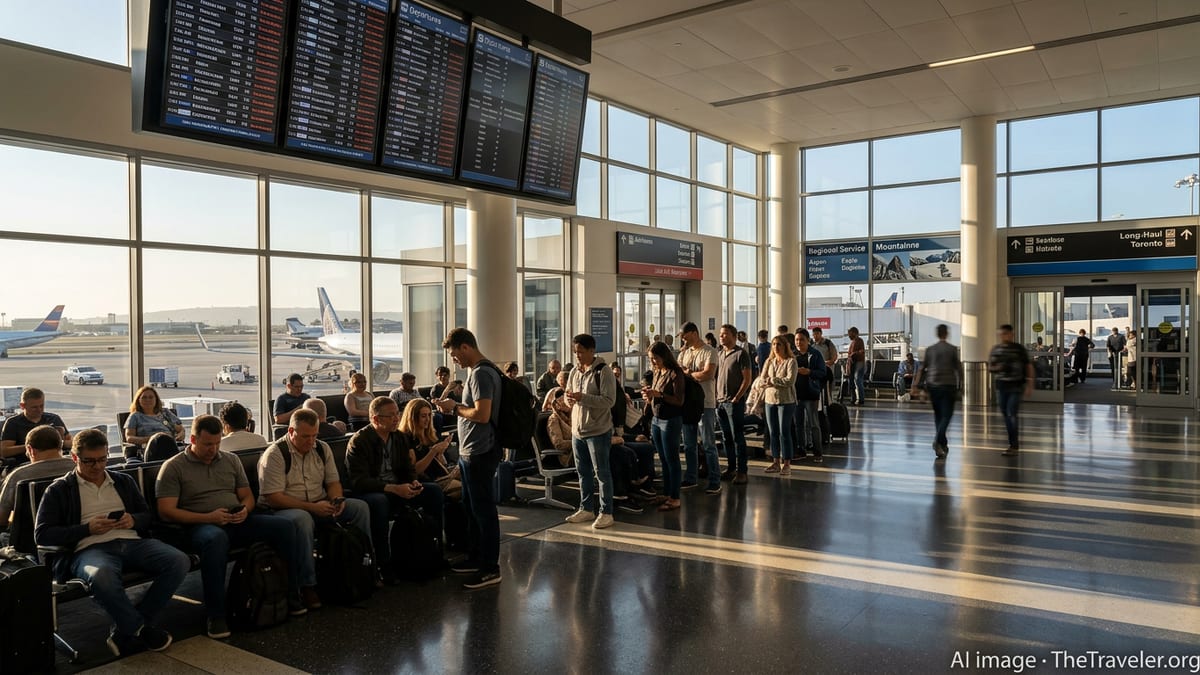
Gate areas in several LAX terminals saw growing crowds as departure times were repeatedly revised. Airline staff issued meal vouchers on a case-by-case basis and attempted to reroute stranded passengers through Denver, Dallas, Chicago and other hubs, but limited spare capacity on peak-day flights left many facing extended waits.
Key Routes to Aspen, Eagle and Seattle Disrupted
Regional services linking Los Angeles with the Rocky Mountain airports of Aspen and Eagle were among the first to feel the strain. SkyWest, which operates regional flights under major U.S. carrier brands, scrubbed several LAX rotations to the Colorado resorts after earlier weather and air traffic restrictions in the Rockies left aircraft out of position and crew duty windows tight.
For travelers headed to Aspen and Eagle, the timing was especially sensitive. The late winter and early spring period remains a peak for ski travel, and seats into mountain airports are often fully booked days or weeks in advance. With limited alternative capacity and strict performance requirements for high-altitude, terrain-challenged runways, airline options to quickly swap aircraft or add extra sections were constrained.
Northbound, Alaska Airlines and its regional partners experienced delays on multiple LAX to Seattle services as crews and aircraft cycled through congested turnaround windows. Passengers reported departure pushes of 45 minutes to more than two hours on some flights, complicating onward international and domestic connections out of Seattle–Tacoma International Airport.
For some, missed connections from Seattle to secondary markets forced overnight stays or complex rebookings. Others opted to abandon same-day travel, rebooking for later in the weekend as schedules stabilized.
Long Haul and Cross-Border Links Feel the Ripple
The disruption extended beyond domestic routes. A Qatar Airways departure to Doha from LAX was affected amid the broader pattern of global schedule adjustments tied to shifting airspace restrictions and heightened operational complexity on long haul corridors. Even modest delays on such flights can have outsized consequences, given tightly timed aircraft rotations and onward banked connections through Gulf hubs.
In the transborder market, at least one Los Angeles to Toronto service experienced a significant delay linked to the same combination of aircraft routing and staffing pressure. With Canada routes forming part of intricate North American and transatlantic itineraries, affected passengers risked missing onward flights to European and East Coast destinations, forcing airlines to rebook them across alliances or via alternative hubs.
On the LAX concourses, the result was a patchwork of disruption rather than a complete standstill. Some departures left nearly on time, while adjacent gates saw repeated boarding pauses and equipment swaps as carriers worked to consolidate loads and preserve their most time-critical international operations.
Passengers Confront Long Waits and Limited Options
For stranded travelers, the practical consequences were immediate. Families heading to ski vacations in Aspen and Eagle reported losing valuable days on the slopes as they waited for seats to open on later flights. Business travelers connecting through Seattle and Toronto scrambled to adjust meeting schedules or shift to video calls as their itineraries unraveled.
With hotel availability around LAX tightening during busy travel periods, some passengers accepted redirection through alternative hubs, even when it meant zigzagging across the continent or adding extra segments to their journey. Others remained on standby lists in the hope of snagging last-minute seats from cancellations and no-shows later in the day.
Airlines encouraged customers to use mobile apps and airport kiosks to rebook, but long in-person queues persisted at service desks where more complex international and multi-carrier itineraries required manual handling. Vouchers for meals and accommodation were issued under each carrier’s internal policies, which vary depending on whether delays are attributed to weather, airspace limitations or airline-controlled operational issues.
Veteran travelers at LAX noted that they had built in buffer days or avoided last departing flights on key routes, anticipating that even localized disruptions can ripple quickly across network schedules during high-demand windows.
Broader Context of a Strained Air Travel System
The turbulence at Los Angeles International comes against a backdrop of persistent strain across global aviation. U.S. carriers and their regional partners have been grappling with a tight labor market for pilots and maintenance personnel, ongoing supply chain challenges and intermittent air traffic control staffing shortfalls that leave little margin for error when weather or geopolitical events disrupt normal patterns.
Middle Eastern carriers such as Qatar Airways are juggling additional complexity as they adjust routings and schedules around evolving airspace restrictions, adding flying time and compressing ground turnarounds at hub airports. These changes can push already packed long haul schedules to the limit, making it harder to absorb unplanned delays originating at far-flung outstations like Los Angeles.
For SkyWest and Alaska Airlines, both heavily exposed to challenging winter-weather markets and thinner regional routes, relatively small operational shocks can resonate across multiple airports in a single day. When those shocks intersect at a major gateway like LAX, the combined effects are felt by travelers well beyond Southern California, reaching deep into resort communities, Pacific Northwest hubs and international connecting banks.
Industry analysts say that until additional staff, aircraft and air traffic system upgrades create more slack in the system, passengers on complex itineraries should continue to plan for potential cascading disruptions, especially during peak travel periods and on routes that depend on finely tuned connections through busy hubs like Los Angeles.