

More news on this day
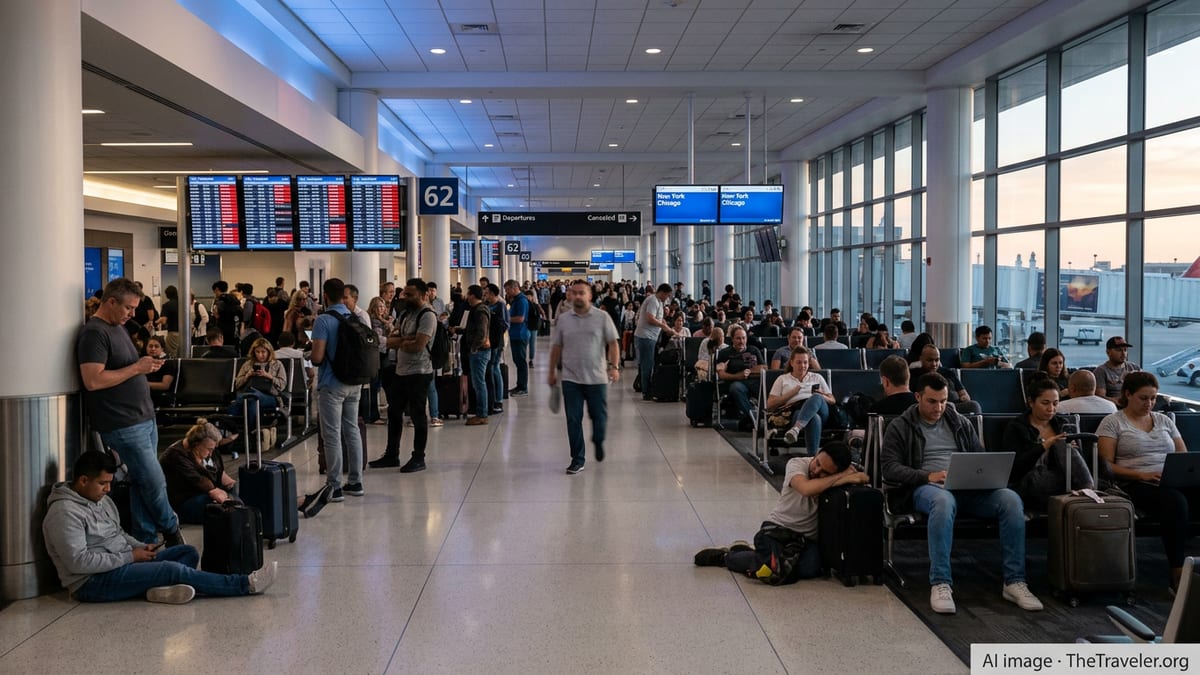
Hundreds of travelers were left stranded at Los Angeles International Airport as 227 flights were delayed and 31 canceled, disrupting plans on busy routes linking the hub to major U.S. cities and piling fresh pressure on an already stretched domestic air travel system.
Get the latest news straight to your inbox!
Major Carriers Hit Across Key Domestic Routes
Publicly available flight tracking data shows that the latest disruption at Los Angeles International Airport has affected a broad mix of domestic services operated by major U.S. airlines, including American Airlines, Delta Air Lines, and Alaska Airlines. The wave of delays and cancellations has rippled through some of the nation’s most heavily traveled corridors, compounding congestion at both ends of key routes.
Flights to and from major business and leisure destinations such as New York, San Francisco, Las Vegas, Seattle, Dallas, Chicago, Miami, and Atlanta have borne the brunt of the disruption. These city pairs represent some of the busiest links in the U.S. network, meaning that schedule changes at Los Angeles can quickly cascade into missed connections and reshuffled itineraries nationwide.
Operational data indicates that the imbalance between delayed and canceled services has created pockets of congestion around specific departure banks and arrival waves at LAX. With 227 delayed flights against 31 that were outright canceled, many aircraft and crews remain in circulation, but often out of position, increasing the likelihood of rolling delays deep into the travel day.
Industry analyses of similar events in recent years highlight how quickly disruptions at a single major hub can spread throughout the system. When large carriers experience knock-on effects at multiple airports simultaneously, passengers traveling on through itineraries via Los Angeles, particularly to long-haul international destinations, can face extended waits and unexpected overnight stays.
Stranded Passengers Face Long Waits and Limited Options
Reports from travelers describe crowded gate areas, long customer service lines, and departure boards heavily populated with revised times. With so many flights operating behind schedule rather than being fully scrubbed, many passengers remain in limbo as airlines attempt to move aircraft, crews, and customers through an increasingly constrained operating window.
In practical terms, stranded passengers encounter a range of challenges. Same-day rebooking options on nonstop services from Los Angeles to cities like New York, Chicago, or Dallas can be limited once peak departures are disrupted, particularly on high-demand routes where later flights are already heavily booked. For those aiming to connect onward from hubs such as Atlanta or Miami, even a moderate delay departing LAX can translate into a missed connection and an unplanned night in transit.
Publicly available information from consumer advocacy groups notes that travelers often turn to a combination of airline apps, airport kiosks, and third-party travel tools to secure alternative arrangements during irregular operations. However, when disruption is widespread and affects multiple carriers simultaneously, available seats on alternative itineraries can be scarce, forcing travelers to accept longer routings or departures delayed by many hours.
Accounts from previous large-scale disruptions in the U.S. aviation system also show that vulnerable travelers, including families with young children, older passengers, and those with tight schedules or limited flexibility, can be disproportionately affected. Extended waits in terminals and overnight holds without guaranteed lodging or meal support can quickly turn a routine domestic flight into a multi-day ordeal.
Knock-on Effects for National Air Travel
Analysts of the U.S. aviation network point to LAX’s role as both an origin-and-destination gateway and a crucial connecting hub. Disruptions at Los Angeles rarely remain a purely local issue. When dozens of departures and arrivals are delayed, aircraft and crews that were scheduled to operate subsequent legs from other airports often depart late or are reassigned, spreading the impact to travelers who may have no direct connection to Southern California.
According to published coverage of past operational crises at major U.S. carriers, even a single day with elevated delays and cancellations can ripple into the following 24 to 48 hours. Aircraft end up overnighting at unexpected airports, while crews may time out under federal duty limitations, forcing airlines to trim schedules or combine flights until normal rotations can be restored.
For airports at the far end of the affected routes, including New York, San Francisco, Seattle, and Atlanta, this can mean bursts of irregular arrival times and uneven passenger flows. Ground handling teams, baggage operations, and security checkpoints must adapt quickly to shifts in peak volumes, sometimes leading to crowding in arrival halls or bottlenecks at check-in and screening areas when delayed departures bunch together.
Transportation experts note that these kinds of cascading disruptions are becoming more visible to the public as travelers increasingly track flights and wait times in real time. While such tools can help passengers adjust plans more quickly, they also underscore how dependent the national network is on a relatively small number of large hubs remaining stable throughout the day.
Context: A System Under Strain
Recent years have highlighted how weather, staffing constraints, and technology issues can rapidly trigger mass disruptions across U.S. air travel. Publicly available analyses of earlier airline meltdowns show that, when operations are already running close to capacity, even moderate disturbances at a handful of airports can strand large numbers of travelers in a matter of hours.
Studies and government documents reviewing previous crises describe patterns that echo the situation seen at Los Angeles: flight delays sharply outnumber cancellations, but the cumulative effect on passengers is still severe. Tight aircraft utilization, crew duty rules, and congested airspace leave carriers with limited flexibility to recover once a certain threshold of late-running flights has been crossed.
Moreover, the recovery process itself can require airlines to make difficult choices about where to restore regular schedules first. High-demand trunk routes such as those linking LAX with Chicago, Dallas, and New York typically return to near-normal operations earlier, while secondary or late-night services may continue to experience irregular timings as carriers reposition planes and crews.
For travelers, this means that disruptions like the one currently affecting Los Angeles International Airport may be felt long after departure boards begin to look more typical. Missed connections, displaced luggage, and rearranged hotel and ground transport bookings can continue to affect trips for days, even as the headline numbers of delays and cancellations start to shrink.
What Travelers Can Expect Next
Based on patterns from previous large-scale disruption events, passengers at LAX and on affected routes can expect airlines to spend the coming hours rebalancing schedules and repositioning aircraft to restore more predictable operations. Publicly available information on typical recovery strategies suggests that carriers will prioritize clearing backlogs on the busiest city pairs and moving stranded crews into place for subsequent rotations.
Travel advisories published during similar incidents often recommend that passengers monitor their reservations frequently, even after receiving an initial new departure time. Gate changes, further rolling delays, and last-minute aircraft substitutions are common as operations stabilize, particularly at complex hubs like Los Angeles.
Industry watchers note that early-morning and late-night flights tend to be especially sensitive during the aftermath of a disruption. Early departures rely on aircraft and crews having reached their overnight positions on time, while late-night services can be trimmed if crews approach duty limits or airports face local noise and curfew restrictions.
For now, the significant number of delayed flights compared with outright cancellations at Los Angeles International Airport indicates a system still attempting to move as many passengers as possible, albeit on a stretched and uneven schedule. For hundreds of travelers caught in the middle of this disruption, the immediate priority remains simply getting out of the terminal and back into the air, whether to reach home, connect with family, or begin long-planned journeys across the country.