

More news on this day
Security officials at Los Angeles International Airport have launched an investigation after “Free Palestine” stickers were discovered on roughly 140 checked bags destined for an El Al flight to Tel Aviv, prompting a lengthy delay, extensive bomb checks and the eventual departure of the aircraft without the affected luggage.
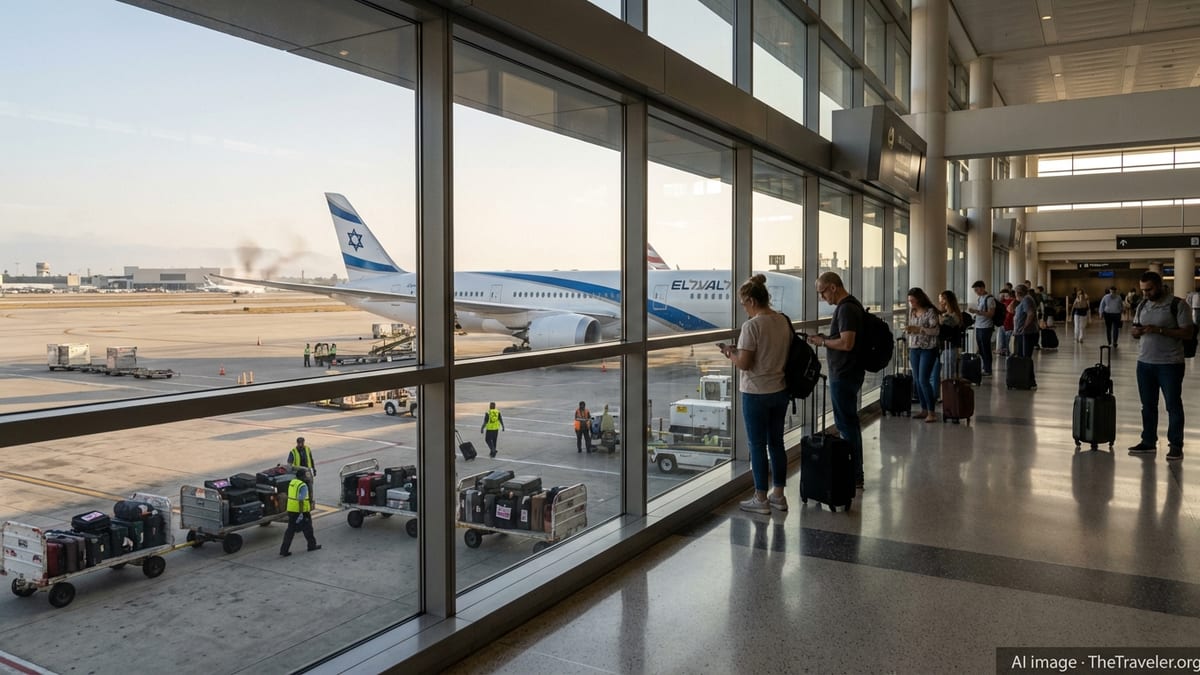
Unusual Discovery on the Ramp at LAX
The incident unfolded on February 16, 2026, as El Al flight LY6, a Boeing 787-9 service from Los Angeles to Tel Aviv, prepared for a scheduled 2 p.m. departure from Los Angeles International Airport’s Tom Bradley International Terminal. Ground staff preparing to load baggage for the long-haul flight noticed that a large number of suitcases were marked with stickers reading “Free Palestine,” all apparently placed in a similar way on checked bags that had already cleared the public-facing ticket counters.
What might have appeared at first glance as an act of political expression quickly escalated into a serious security event. The uniformity of the stickers, and the fact they appeared on such a high volume of luggage associated with a single flight on Israel’s flag carrier, was treated by authorities as a potential indicator of a coordinated attempt to tamper with the baggage.
Under El Al’s well-known security protocols, any unexplained or coordinated change to bags after check-in is treated as a potential threat scenario. Airport and airline staff quickly halted normal baggage loading, isolating the tagged suitcases and notifying security teams, including the Transportation Security Administration and El Al’s own contracted security personnel.
Delay Stretches as Passengers Wait on the Tarmac
Inside the aircraft, passengers initially received only limited information. According to multiple accounts, the cabin crew first announced a 25-minute delay related to baggage handling issues, a routine explanation at busy international hubs such as LAX. As the delay lengthened, however, frustration began to grow in the cabin, which was reportedly filled largely with Israeli travelers returning home after NBA All-Star weekend events.
Only later did the captain and senior cabin crew elaborate that a large number of bags had been flagged for additional screening after the discovery of political stickers. Passengers were told that the luggage needed to be removed from the aircraft and inspected individually to rule out any explosives or other prohibited items that might have been introduced after check-in.
As the delay extended to around two hours, some passengers reportedly raised their voices, worried not only about missed connections and onward travel plans but also about important personal items in the checked baggage, including clothing intended for family events. The purser was quoted by one traveler as telling a passenger that it was better to arrive safely without the suitcase than to risk a more dangerous alternative, encapsulating the airline’s security-first posture.
Security Protocols Triggered by a Political Message
El Al, which operates under some of the strictest aviation security standards in the world, is highly sensitive to indications that luggage may have been accessed after check-in. The airline’s risk assessments do not hinge on the content of a political slogan itself but on what that coordinated act might signal in terms of motive and opportunity to sabotage a flight.
Security analysts note that any mass application of stickers or tags to bags for a specific flight strongly suggests that someone with airside access to the baggage handling system intervened after the passengers had relinquished control of their luggage. That scenario raises the possibility that the same individual or group could have placed more dangerous items in or on the bags, even if no such items are ultimately found.
In this case, the sheer number of altered bags, the targeted nature of the action toward an Israeli carrier and the heightened sensitivities surrounding the Israel–Palestine conflict combined to trigger an elevated response. Each stickered suitcase had to be removed, isolated and manually cleared through explosive detection procedures, a time-consuming process for security teams and ramp personnel.
Flight Departs Without Nearly One Hundred and Forty Bags
As the checks continued and the departure time slipped further from schedule, El Al’s operations team faced a difficult choice between delaying the flight for several more hours or operating the service without the tagged luggage. Airline officials ultimately opted to prioritize getting passengers airborne to Tel Aviv, while keeping the affected bags on the ground at LAX for continued screening.
The flight pushed back from the gate more than an hour after its scheduled departure and took off for Israel without the roughly 140 suitcases that had been set aside. According to passenger reports, notifications were later sent in Israel informing travelers that their bags had not been transported and would arrive on subsequent services once fully cleared.
El Al later confirmed that the luggage had undergone additional inspection and was sent on later flights to Tel Aviv once authorities were satisfied there was no explosive or security risk. While the bags themselves were ultimately deemed safe, the operational disruption and passenger anxiety highlighted the real-world impact of actions that interfere with secure baggage handling.
Investigators Eye Insider Access and Baggage Systems
The core question now confronting security officials is how such a large number of bags for a single flight came to bear nearly identical political stickers after check-in. Given the volume and apparent coordination, investigators are focusing on the possibility of insider involvement by one or more airport workers with access to restricted baggage areas.
At a major hub like Los Angeles International Airport, once a suitcase is checked at the counter it enters an automated baggage handling system that moves it through explosive detection screening, sorting areas and loading piers where ramp workers prepare carts and containers for each flight. It is within these secure, badge-controlled zones that the stickers most likely would have been applied, away from passengers and the public eye.
Airport operators maintain detailed access logs for secure areas, and many baggage corridors and loading zones are covered by closed-circuit cameras. While it may still be possible that the stickers were placed in a blind spot or during a brief lapse in coverage, security experts say the scale of this incident increases the chances that investigators will be able to identify where, and potentially by whom, the stickers were applied.
Any worker found responsible would face serious consequences, including the loss of security credentials and employment, and could be subject to federal investigation for interfering with aviation security procedures. Local law enforcement and federal agencies have not publicly disclosed suspects or motives, but the case has already become a test of how systems designed to prevent insider threats respond to politically charged disruptions.
Passenger Experience and Growing Tensions Around Air Travel
For travelers aboard the disrupted flight, the episode underscored the fragility of modern air travel plans in an era of heightened political and security tensions. What began as an ordinary Monday afternoon departure turned into an anxious wait on the tarmac, followed by the realization that hundreds of people would arrive in another country without their belongings.
Some travelers expressed sympathy for the security response, acknowledging that the airline and airport had little choice but to treat the coordinated bag markings as a possible threat, regardless of the message involved. Others voiced anger that their luggage could be used as a canvas for political protest without their consent, and questioned how such interference with personal property was allowed to occur inside a restricted airport zone.
The incident has also fed into a broader debate about how political activism intersects with transportation infrastructure. Demonstrations at airports, sit-ins at terminals and social media campaigns aimed at airlines have become more common in recent years. Yet the manipulation of baggage within secure zones represents a more intrusive escalation, one that directly touches core safety processes and exposes travelers to both security risk and significant inconvenience.
Balancing Political Expression and Aviation Security
The “Free Palestine” stickers at LAX highlight a complex tension facing airports and airlines worldwide: how to uphold principles of free expression while maintaining rigorous, smoothly functioning security systems. While passengers have often used clothing, signs and even carry-on items to express political views, the placement of politically charged materials on checked bags within secure zones is viewed very differently by security professionals.
From the perspective of risk management, the content of the slogan is less important than the fact that someone chose to mark so many bags for a single flight, aligning the action with a geopolitical conflict that has long made certain carriers and routes more attractive targets for threats. In such an environment, authorities are unlikely to take a relaxed view of any coordinated activity that blurs the line between protest and potential sabotage.
Civil liberties advocates caution that overreacting to nonviolent expressions of political speech can chill legitimate protest and reinforce perceptions that certain viewpoints are automatically equated with security threats. Yet even some rights-focused observers acknowledge that secured baggage systems are a poor venue for any kind of activism, given the potential to trigger cascading security responses that affect hundreds of uninvolved travelers.
Implications for Global Airports and Israeli Carriers
For El Al and other carriers associated with regions of acute political tension, the LAX incident serves as another reminder of the operational risks they face far from their home bases. The airline already invests heavily in security, from intensive passenger interviews at check-in to additional layers of baggage screening at overseas airports. Events like this one are likely to prompt further reviews of how closely airline staff work with local airport authorities to monitor baggage flows at key touchpoints.
Airport operators around the world are also watching closely. If investigators ultimately conclude that an insider with legitimate access was responsible, the case could strengthen calls for more stringent vetting, real-time monitoring and auditing of workers with access to baggage systems. It may also encourage airports to look again at camera coverage and alarm systems in areas where bags are staged for individual flights, particularly those deemed high risk.
For passengers, the immediate takeaway is a renewed awareness that events inside secure areas can have direct, sometimes drastic effects on their journeys even when they have followed all rules and arrived on time. As aviation stakeholders grapple with how to deter politically motivated tampering without undermining basic rights, the disruption at Los Angeles International Airport has become a stark example of how quickly a slogan pasted on a suitcase can grow into a multinational security case.