

More news on this day
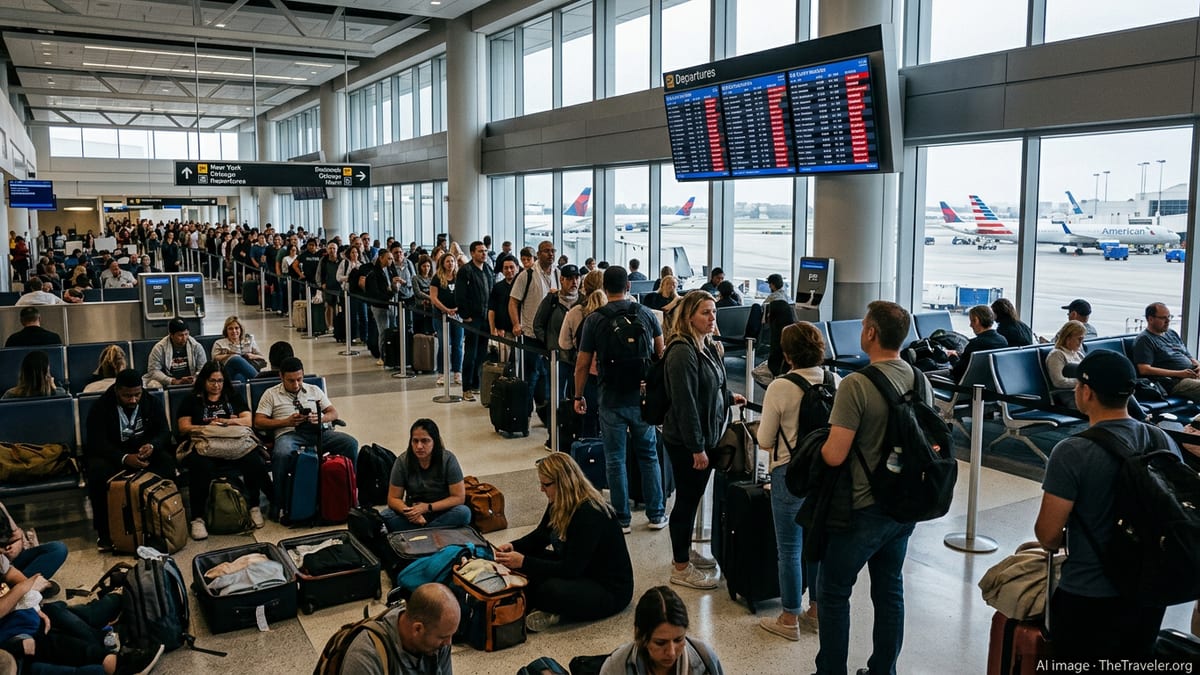
Passengers at Los Angeles International Airport faced a morning of mounting frustration on March 15 as major U.S. airlines logged 282 delays and 42 cancellations, disrupting travel to New York, Chicago, Miami, and several other domestic destinations.
Get the latest news straight to your inbox!
Major Carriers Struggle to Keep Flights Moving
Publicly available tracking data on March 15 indicates that Delta Air Lines, American Airlines, United Airlines, and Southwest Airlines all experienced operational strain at Los Angeles International Airport, contributing to hundreds of delayed departures and arrivals. The disruptions affected both early morning and midday banks of flights, creating a growing backlog that rippled through the rest of the day.
The 282 delays and 42 cancellations recorded across these four carriers represent a significant spike compared with a typical mid-March day at LAX, where delay rates are usually under one in five flights. The impact was most visible on high-frequency routes to large hubs such as New York, Chicago, and Miami, where even small schedule shifts can quickly cascade into wider disruption.
According to aviation performance data released in recent months, all four airlines have been grappling with a tight operating environment that leaves little room for recovery when problems arise. Industry statistics show that, nationally, carrier-controlled issues such as aircraft rotations and crew scheduling have combined with airspace congestion and localized weather to push delay rates higher at major hubs.
At LAX, those systemic pressures appeared to converge on Sunday’s schedule. Departures that missed their original slots by 30 to 90 minutes were common across the big four carriers, while a smaller but still significant share of flights was removed from the schedule entirely.
New York, Chicago, Miami Among Hardest-Hit Routes
The disruption at Los Angeles did not remain local. High-demand transcontinental and cross-country routes bore a disproportionate share of the impact, with flights bound for the New York area, Chicago, and Miami experiencing repeated rolling delays and, in some cases, outright cancellations.
These routes are among the most time-sensitive in the U.S. network, serving a combination of business travelers, international connections, and leisure passengers. When a departure from Los Angeles is pushed back or canceled, downstream schedules at airports such as John F. Kennedy, LaGuardia, Newark, Chicago O’Hare, and Miami International can quickly become congested as aircraft and crews arrive late or out of sequence.
Recent analyses of national flight performance trends show that large coastal hubs, including Los Angeles and New York, are particularly vulnerable to ripple effects once delays reach a certain threshold. When one wave of departures misses its planned window, arriving aircraft may be forced to wait for gates and crews, slowing turnarounds and compressing later departure banks.
On March 15, the combination of delayed outbound flights from LAX and ongoing congestion at some East Coast and Midwest airports meant that passengers on both ends of the route network felt the strain. Travelers connecting onward from New York, Chicago, or Miami to smaller cities frequently faced missed connections and unplanned overnight stays.
Weather, Congestion, and Tight Schedules Fuel the Backlog
While detailed causal breakdowns for each disrupted flight were not immediately available, industry data and recent government reports offer a clear picture of the main forces typically driving such days of disruption. Federal transportation statistics show that on-time performance across major U.S. carriers has been under pressure, with national aviation system issues and carrier-controlled delays both contributing substantial shares of total delay minutes.
In the case of Los Angeles, operational complexity plays a central role. LAX is one of the busiest airports in the world, serving a dense schedule of domestic and international flights, many of them operated in tightly timed banks to support connections. When an inbound aircraft arrives late because of congestion or weather elsewhere, the outbound departure from Los Angeles often slips, especially when spare aircraft and crews are already fully utilized.
Reports published in recent weeks about broader U.S. flight performance highlight how a single day of poor weather in one region can lead to multi-day knock-on effects across the country. A storm system or low ceiling over a major hub can prompt air traffic flow programs that slow arrivals and departures, prompting carriers to hold or reroute aircraft and pushing some flights into cancellation to protect the rest of the schedule.
Travelers at LAX on March 15 experienced the visible result of this dynamic. Aircraft waiting for available gates, repeated pushes of boarding times on departure screens, and crews reaching their duty limits after earlier delays all combined to stretch what might have started as modest schedule disruptions into a broader wave of delays and cancellations.
Knock-On Effects for Travelers Across the United States
The operational problems at Los Angeles did more than inconvenience local passengers. Because LAX is a major hub and focus city for Delta, American, United, and Southwest, disruptions there reverberated throughout the carriers’ networks, affecting travelers who had never set foot in Southern California.
For passengers originating in cities such as Phoenix, Denver, Dallas, or Seattle and connecting through Los Angeles to New York, Chicago, or Miami, even a short delay on the first leg could mean a missed connection if the onward flight departed on time. On a day when hundreds of flights were running late or being canceled, rebooking options quickly became limited, with later departures also heavily booked because of spring travel demand.
Recent consumer reports and traveler accounts from other U.S. hubs show that these sorts of cascading disruptions have become more common during busy periods. As airlines operate fuller schedules and higher load factors, there are fewer empty seats available to absorb displaced passengers when irregular operations occur.
By late afternoon on March 15, the effects of the morning disruption at Los Angeles were visible at gates across the country, as passengers on flights unconnected to California encountered aircraft arriving late from earlier legs that had passed through LAX. For many, the delays translated into shortened vacations, missed meetings, and extended airport stays.
What Travelers Can Expect in the Coming Days
Travel industry analysts note that, on days when major hubs experience elevated delays and cancellations, it can take 24 to 48 hours for airline networks to fully recover, especially if aircraft and crews are displaced away from their planned positions. For passengers scheduled to travel into or out of LAX in the next couple of days, that reality may translate into lingering schedule adjustments, aircraft swaps, or minor timing changes even after the worst of the disruption has passed.
Publicly available guidance from airlines and airport operators generally encourages travelers to monitor their flight status frequently, use mobile apps for real-time updates, and allow extra time for connections when possible. On days with widespread disruption, same-day standby and airport-based rebooking counters can become crowded, making early digital adjustments particularly valuable.
Recent data-driven assessments of U.S. flight reliability suggest that structural challenges such as constrained airspace, tight crew scheduling, and aging infrastructure will continue to pose risks of sudden disruption at major hubs. However, they also indicate that many airlines have slightly improved their handling of cancellations, focusing more on preemptive schedule changes when severe weather or system constraints are clearly forecast.
For now, passengers at Los Angeles and across the country are left to navigate the immediate consequences of Sunday’s disruptions, adjusting itineraries and reshuffling plans while carriers work to restore their networks to normal rhythm. As the spring travel season accelerates, days like March 15 at LAX serve as a reminder of how quickly conditions can shift in a tightly wound aviation system.