

More news on this day
The two-week ceasefire announced between the United States and Iran on 7 April 2026 has yet to calm the skies over the eastern Mediterranean, where Lebanon, Israel and Iran remain at the heart of a fast-deepening aviation crisis that is dismantling travel plans and erasing a crucial tourism season.
Get the latest news straight to your inbox!
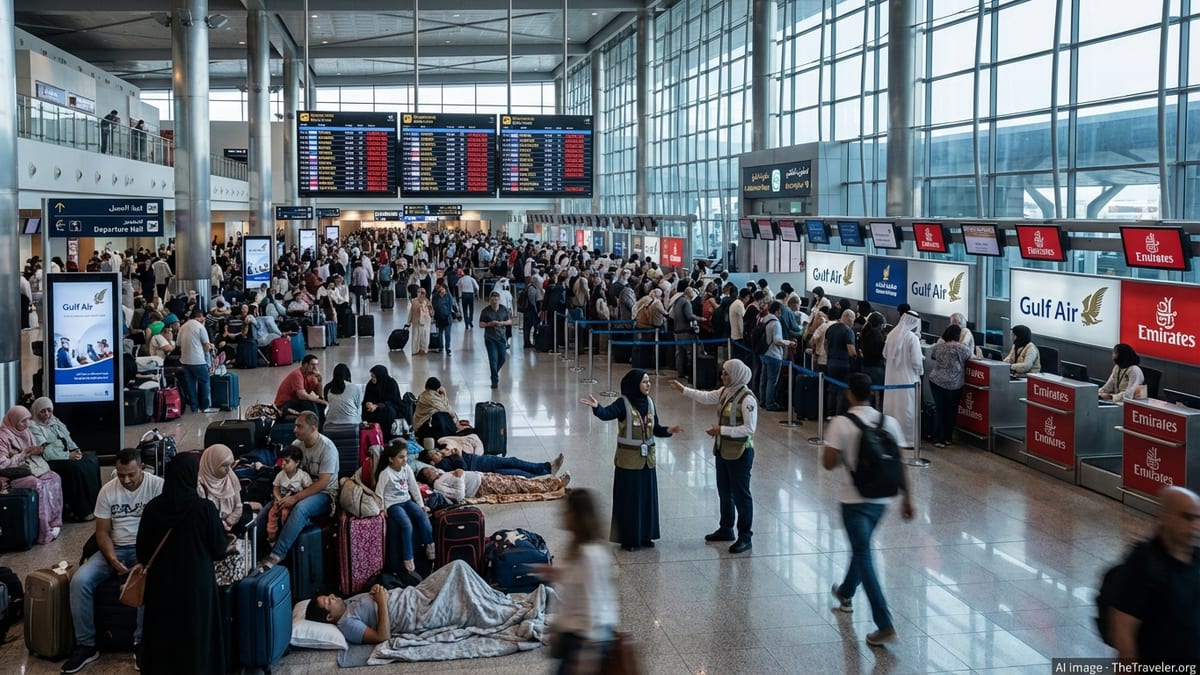
Ceasefire Exposes, Rather Than Eases, Aviation Risk
Publicly available information shows that the ceasefire agreement between Washington and Tehran has done little to restore confidence in aviation links touching Lebanon and Israel. The truce, mediated by Pakistan and framed as a step toward de-escalation, formally covers hostilities between the United States, Israel and Iran. However, subsequent statements and battlefield developments indicate a sharp disconnect between the text of the agreement and realities on the ground.
Reports indicate that Israel has explicitly argued the ceasefire does not extend to its campaign against Hezbollah in Lebanon. Within hours of the announcement, Israeli strikes intensified in and around Beirut and across southern Lebanon, with some of the heaviest bombardments of the conflict recorded on 8 April. Coverage from global newswires describes dense commercial and residential districts being hit, amplifying concerns about the safety of overflying or serving Lebanese airspace.
The result is a paradoxical environment in which a formal ceasefire coexists with sustained operations in Lebanon and persistent missile and drone threats tied to Iran and its allies. Aviation risk assessments cited in specialist industry briefings continue to rank the eastern Mediterranean and parts of the Gulf as high-threat corridors, advising against nonessential travel and recommending wide detours for long-haul traffic between Europe, Asia and Africa.
In practice, the ceasefire has shifted the focus from all-out regional escalation to highly localized yet intense flashpoints, with Lebanon at the center. This dynamic is complicating risk calculations for airlines and travelers, as periods of apparent calm can be punctured rapidly by new salvos and counterstrikes.
Airspace Closures and Rerouting Snarl Global Networks
Published aviation and travel analyses show that the conflict that erupted in late February led to an unprecedented pattern of airspace shutdowns and tight controls across Iran, Israel, Iraq, Jordan, parts of the Gulf and neighboring states. At various points in March, at least eight countries either fully closed or heavily restricted their skies to civilian traffic, according to regional media and flight-tracking assessments.
Ben Gurion Airport near Tel Aviv remains subject to severe limits as of 8 April, with only a very small number of flights permitted under strict caps. Industry coverage describes a one-flight-per-hour regime designed to balance minimal connectivity with the need to keep runways and airspace available for military and emergency operations. Lebanon’s Rafic Hariri International Airport has likewise seen schedules gutted, with earlier reductions now compounded by the latest waves of strikes in and around the capital.
Transit hubs in the wider region, including major Gulf airports, are operating with varying degrees of disruption after temporary closures and sporadic attacks on critical infrastructure. Travel-security bulletins characterize the overall picture as the most severe aviation shock to hit the Middle East since the COVID-19 pandemic, not only because of canceled flights but also because of the instability of route planning and the scarcity of reliable alternative corridors.
For global travelers, the knock-on effect is evident in longer flight times, higher fuel costs and, in many cases, outright suspensions of services linking Europe and North America with South and East Asia. Carriers are concentrating remaining capacity on lower-risk paths, frequently adding hours to journeys that previously depended on Middle Eastern overflight rights and hub connections.
Tourism Collapse Hits Lebanon, Israel and the Wider Region
The tourism fallout from the conflict and the fragile ceasefire is already substantial. Data and projections from travel industry bodies cited in European and regional media estimate that the Middle East as a whole is losing hundreds of millions of euros in visitor spending every day compared with pre-war forecasts. The World Travel & Tourism Council’s 2026 expectations for the region have rapidly become obsolete as cancellations accelerate.
Lebanon, which had been cautiously hoping for a modest rebound after years of economic crisis and political instability, is among the hardest hit. Reports from local and international outlets describe hotel occupancy collapsing, cruise calls being withdrawn and cultural events postponed indefinitely. Images and accounts of strikes in central Beirut have further eroded visitor confidence, overshadowing earlier marketing campaigns that sought to highlight the country’s food, culture and coastal landscapes.
Israel is facing a similar tourism shock, with its main international gateway operating under heavy restrictions and many foreign airlines keeping Tel Aviv off their networks for now. Domestic tourism cannot compensate for the loss of high-spending international visitors, particularly during what would normally be a strong spring and early summer season. The war’s spread into Iran and the closing and partial reopening of the Strait of Hormuz have also chilled demand for cruises and adventure travel across the broader region.
Neighboring destinations that rely on regional stability, such as Jordan, Turkey, Cyprus and Greece, are experiencing divergent trends. Some are benefiting from travelers redirecting trips away from immediate conflict zones, but travel economists warn that lingering perceptions of regional risk may weigh on bookings even in countries not directly hit by attacks.
Airlines Cut Capacity as Risk and Costs Mount
According to recent operational updates compiled by passenger-rights groups and industry observers, many European and North American airlines have suspended or sharply reduced flights to Beirut, Tel Aviv and Tehran, and have trimmed frequencies to key Gulf hubs. Flag carriers including Lufthansa, Air France-KLM and others have extended their earlier suspensions into April, citing volatile airspace conditions, higher insurance costs and the need to reposition aircraft to more profitable, lower-risk routes.
Analysts note that rerouting long-haul services around restricted zones means burning more fuel and deploying additional crews, worsening margins already strained by high oil prices linked to the Strait of Hormuz crisis. Some airlines are choosing to consolidate capacity on transatlantic and intra-Asian corridors, where demand has remained relatively resilient and route planning is more predictable.
Lebanon’s own flag carrier, Middle East Airlines, has sought to maintain a skeletal network, but its operations are constrained by both security assessments and the shrinking pool of airports willing or able to receive flights from Beirut. Travel advisories from multiple governments continue to urge citizens to reconsider or avoid nonessential trips to Lebanon, Israel and parts of Iran, undermining any prospects for a quick rebound in demand.
Industry commentary suggests that even if the ceasefire holds between the United States and Iran, airlines are likely to move cautiously. The combination of unresolved tensions, sporadic attacks in Lebanon and the memory of rapid, large-scale airspace closures in March is pushing network planners to favor conservative schedules and contingency-heavy routing.
Uncertain Outlook for Summer Travel
Forecasts published by tourism consultancies and regional business media point to a highly uncertain outlook for the 2026 summer season. Many tour operators have effectively written off organized trips that pass through Lebanon or Israel, while cruise lines are revising itineraries to avoid eastern Mediterranean ports seen as vulnerable to spillover from the Iran conflict.
For Lebanon, the timing is particularly painful. Spring and early summer traditionally mark the start of a slow but important influx of diaspora visitors and regional holidaymakers. With infrastructure damaged, air links curtailed and security conditions volatile, analysts warn that the country could lose another peak season, extending an already severe foreign-currency crunch and putting additional pressure on small businesses that depend heavily on tourism.
Israel faces related challenges, particularly if strict capacity limits at Ben Gurion remain in place. Tech, conference and pilgrimage travel, all vital pillars of the country’s visitor economy, are difficult to sustain without reliable air access. Iran, meanwhile, is contending with damage to cultural heritage sites and a perception of heightened risk that is likely to deter all but the most determined niche travelers, even if formal hostilities ease.
Across the region, travel specialists increasingly describe 2026 as a reset year rather than a recovery. Unless the ceasefire between the United States and Iran is extended and expanded to meaningfully reduce threats involving Lebanon and Israel, global aviation networks are expected to remain fragile, and a full tourism revival in the eastern Mediterranean will likely be pushed further into the future.