

More news on this day
LEGOLAND California and LEGOLAND Florida are preparing to launch LEGO Galaxy, a new space-themed land centered on the Galacticoaster indoor coaster, with industry observers expecting the 2026 rollout to sharpen competition for family travelers in both states.
Get the latest news straight to your inbox!
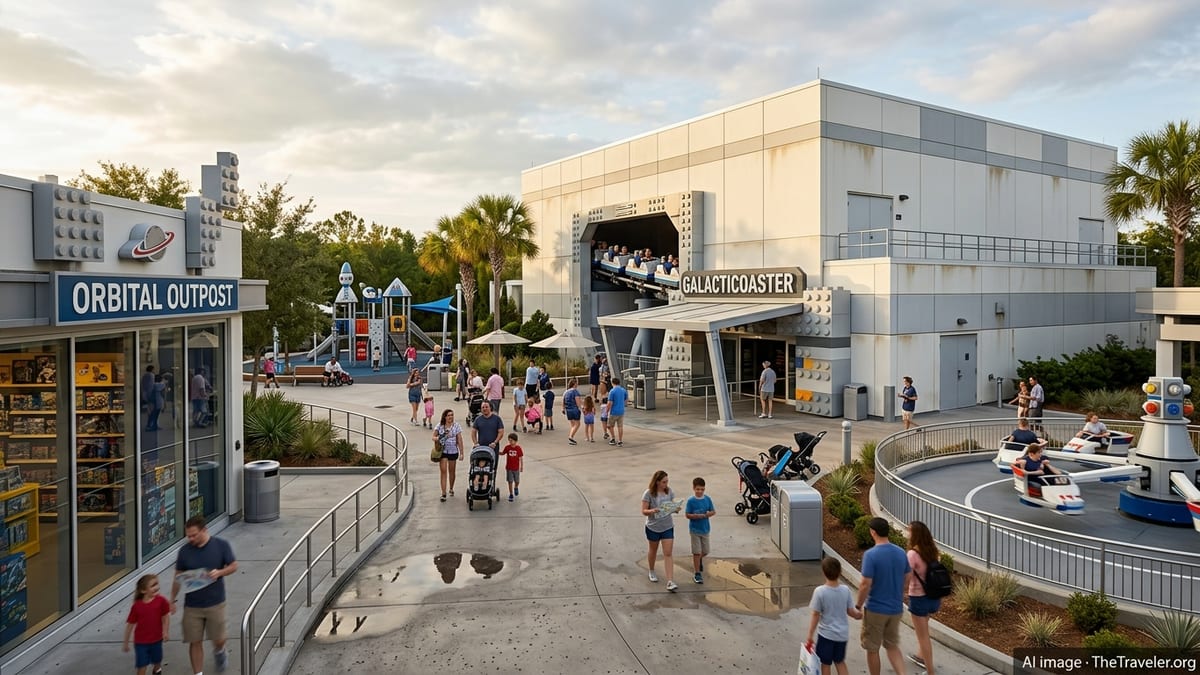
Galaxy-Themed Expansion Anchors 2026 Strategy
Publicly available information indicates that both LEGOLAND California and LEGOLAND Florida are investing heavily in LEGO Galaxy, a multi-ride space-themed area designed around an all-new indoor family coaster. Planning documents and tourism materials describe the Galacticoaster as a headline attraction that sends riders on an interstellar mission through a stylized LEGO universe, positioning the land as a major new draw for families considering trips in 2026.
At LEGOLAND Florida, regional tourism briefings describe Galacticoaster as the park’s first indoor coaster within the main park, built inside a large show building sized roughly to the footprint of multiple basketball courts. The experience is framed as a weather-proof attraction, a notable selling point in Central Florida’s frequent rain and summer heat, and a move that could extend guest spending deeper into shoulder seasons.
On the West Coast, community updates and fan reports point to a parallel buildout at LEGOLAND California, where LEGO Galaxy is expected to open with its own version of Galacticoaster and additional family rides. Local coverage has highlighted the project as part of a multi-year capital program at the Carlsbad resort, reinforcing the destination’s position in Southern California’s crowded theme park market.
Galacticoaster Blends Customization and Family Thrills
Ride descriptions shared in park materials and enthusiast coverage show that Galacticoaster is designed to bridge the gap between gentle family rides and more intense coasters, with a relatively low height requirement and a focus on interactivity. Before boarding, guests are guided through a mission briefing featuring a large-scale animatronic LEGO figure that introduces the story and sets up the journey into space.
One of the most distinctive features highlighted in early ride reports is the ability for guests to design their own virtual spacecraft using touchscreens, choosing from a wide range of LEGO-style components. These designs are then recognized by the ride system and appear during the coaster experience, allowing each rider to see a personalized ship flying through the LEGO galaxy. Observers see this level of customization as an extension of physical LEGO play into the digital and experiential realm.
Inside the show building, Galacticoaster uses an indoor launch and controlled lighting to simulate spaceflight while keeping forces calibrated for families with younger children. Theme park commentators note that this approach aligns with broader trends in family attractions, where parks seek to layer narrative, technology, and re-rideability rather than pursuing only higher speeds or more extreme drops.
Beyond the Coaster: A Complete LEGO Galaxy Land
According to travel trade documents and fan-oriented previews, LEGO Galaxy is planned as more than a single ride. At LEGOLAND Florida, the land is expected to include an Orbital Outpost retail location focused on space-themed LEGO sets and branded souvenirs tied to the coaster’s storyline, encouraging guests to extend the experience at home.
Additional family rides have been referenced in community discussions, including a motion-based attraction described as a G-force training experience and a smaller-scale ride offering gentler spins and views of the land. These installations are being framed as complementary to Galacticoaster, creating a full half-day destination within the park for families with children across a range of ages.
Soft-play and toddler-focused zones are also being highlighted in early coverage. Reports describe a Junior Astronaut Training Zone concept that offers climbing structures, slides, and interactive elements tailored for very young children who may be too small to ride Galacticoaster. For parents, this provides a dedicated area where siblings can play together in the same themed environment, an important consideration for multi-child families planning theme park days.
Tourism Impact in California and Florida
Destination marketing organizations in both states have begun to reference LEGO Galaxy and Galacticoaster in their 2026 previews, placing the projects alongside hotel openings and cultural venues in lists of reasons to visit. In Central Florida, the new land enters a landscape already crowded with large-scale openings, but analysts point out that LEGOLAND’s focus on children aged 2 to 12 gives it a relatively clear niche compared with regional competitors targeting older thrill-seekers.
Travel planners note that the fully indoor nature of the signature attraction may help LEGOLAND Florida smooth daily attendance, since families are less likely to defer visits based on weather concerns. With the ride’s opening positioned early in the year, packages and promotions tied to LEGO Galaxy are likely to feature prominently in spring break and summer marketing campaigns aimed at domestic and international visitors.
In Southern California, LEGO Galaxy supports broader efforts in Carlsbad and the surrounding coastal region to entice families who might otherwise focus on theme parks closer to Los Angeles. Tourism reports suggest that pairing a visit to LEGOLAND California with nearby beaches and regional attractions remains a strong proposition, and a fresh, high-profile land could encourage repeat visits from West Coast families who have already experienced the resort’s existing offerings.
Positioning the LEGO Brand for the Next Generation
Industry commentators view LEGO Galaxy as part of a long-term strategy by Merlin Entertainments to deepen the connection between the LEGO brand and immersive experiences. By allowing guests to design virtual spacecraft that come to life within the ride and by populating the land with recognizable LEGO elements, the parks are extending the core play pattern of building and imagining into the physical environment.
The timing of the rollout, tied to the 2026 travel season, aligns with broader expectations for steady growth in family tourism following several years of infrastructure investment at major attractions. As families weigh options among increasingly sophisticated destinations, the combination of interactivity, family-accessible thrills, and weather-protected experiences is being highlighted as a differentiator for LEGOLAND parks on both coasts.
Observers note that successful execution of LEGO Galaxy could serve as a template for future expansions at other LEGOLAND resorts worldwide, using the space theme and its adaptable storytelling as a foundation for rides, retail, and play areas tuned to local markets. For now, attention from both the travel trade and theme park fan communities is focused on California and Florida, where LEGO Galaxy is poised to become a centerpiece of the 2026 family vacation conversation.