

More news on this day
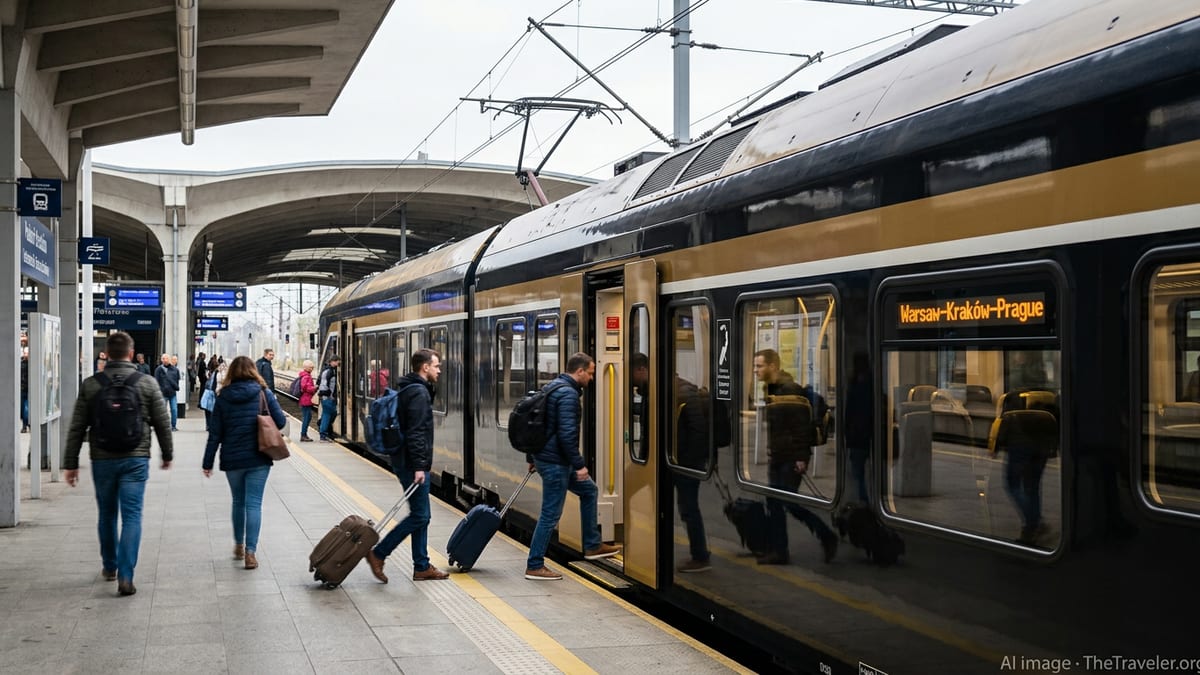
Czech private rail operator Leo Express has officially launched a new Warsaw–Krakow route, creating a faster, more competitive link between Poland’s two largest cities and extending cross-border connections toward Prague and beyond.
A New Player on Poland’s Busiest Rail Corridor
The new service entered regular operation on March 1, 2026, marking Leo Express’s first domestic route linking Warsaw and Krakow. The trains run on the core north south corridor that already carries dense traffic from incumbent PKP Intercity and fellow Czech challenger RegioJet, turning the line into one of the most hotly contested rail markets in Central Europe.
Leo Express is initially offering two daily return services between the capital and Krakow, with departures scheduled to suit both business and leisure travelers. Morning and late evening trains allow passengers to make same day round trips for work, studies, or short city breaks, while overnight-friendly times support longer journeys onward to Prague.
The Warsaw–Krakow segment forms part of a longer international route to the Czech Republic, with some services continuing via Ostrava to Prague. This positions the new line not only as a domestic connection but as a fresh cross border rail option for travelers moving between Poland and its southern neighbor.
The move deepens the presence of Leo Express in Poland, where it has operated Prague–Krakow services and bus links toward Ukraine since 2018. Backed by majority shareholder Renfe, Spain’s national operator, the company is using the new Polish route as a springboard for wider Central European expansion.
High-Speed Trains, Competitive Fares and Onboard Comfort
Although infrastructure constraints mean peak speeds are defined by the existing Polish network, Leo Express is marketing the Warsaw–Krakow trains as a high speed, high comfort alternative to road and air. Journey times on the new services are competitive with Poland’s flagship Express InterCity Premium trains on the same route, while tickets in the lowest fare buckets undercut many rivals.
Promotional prices advertised around launch include very low entry fares in standard class aimed at attracting price sensitive travelers away from cars and coaches. At the same time, the operator is leaning on its reputation for service, with multiple travel classes, onboard catering and a loyalty scheme that returns part of the ticket cost as credit for future trips.
Trains used on the route are low floor, air conditioned electric units equipped with power outlets, Wi Fi and modern interiors. Leo Express highlights four travel classes, including a premium sleeper style option with fully reclining seats designed for overnight and long distance journeys. The higher classes include at seat service, complimentary drinks and meals, and quieter sections that target business travelers.
The company has also refreshed its onboard menu for the Polish launch, featuring seasonal dishes and snacks available across its network. Orders are placed with onboard staff and delivered directly to seats, a service model that echoes the operator’s approach on routes in Czechia and Slovakia.
Stronger Links Between Cities, Regions and Neighbouring Countries
On the domestic section between Warsaw and Krakow, Leo Express trains call at intermediate stations such as Opoczno Poludnie and Wloszczowa Polnoc, improving long distance connectivity for medium sized towns along the corridor. On selected services between Krakow and Prague, additional stops at Oświęcim, Racibórz, Rybnik, Tychy and Mysłowice bring new direct links between regional centers in southern Poland and the Czech Republic.
For residents of these cities, the route offers new direct rail options to both Polish metropolises and to Prague, broadening opportunities for commuting, education and tourism without the need for car transfers or multiple changes. The company is also preparing a coordinated bus link from Krakow to Lviv, set to start in April, which will extend the rail corridor further east toward western Ukraine.
In the medium term, Leo Express plans an even longer international line running from Przemyśl, near the Ukrainian border, through Rzeszów, Krakow, Ostrava and Olomouc to Prague and onward to Dresden, Leipzig, Erfurt and Frankfurt Airport. This would create a continuous rail spine connecting several major Polish and German cities, matching European Union goals to shift more long distance travel from air and road to rail.
The Warsaw–Krakow launch therefore fits into a broader regional strategy, turning Poland into a central hub in the company’s growing Central European network and offering an alternative to flying on some of the continent’s busiest short haul corridors.
Expansion Plans and Intensifying Competition
The entry onto the Warsaw–Krakow axis is part of what Leo Express describes as the largest expansion phase in its history. The operator intends to double frequencies on the new domestic route in the second half of June 2026, when it plans to increase from two to four daily trains in each direction between the two cities.
Alongside the domestic growth, services on the Prague–Krakow route are being boosted to up to four daily trains on certain days, enhancing north south capacity across the Czech Polish border. Together, these changes significantly increase the number of seats available on one of Central Europe’s most important travel corridors.
The new services sharpen competition with state owned PKP Intercity, which operates both conventional and premium high speed services on the Warsaw–Krakow line, and with private Czech rival RegioJet, which also entered the corridor in 2025. Analysts note that the arrival of multiple commercial operators is already putting downward pressure on fares and spurring improvements in onboard amenities across the market.
For Renfe, which became the largest shareholder in Leo Express in 2023, the launch provides a foothold in a fast growing European rail market outside Spain. The Spanish operator brings extensive experience running high speed lines at home and sees Poland and its neighbors as key territories for future open access services.
Implications for Travelers and Poland’s Rail Future
For passengers, the immediate impact of the Warsaw–Krakow launch is more choice: a greater range of departure times, fare levels and service standards on what is already one of Poland’s busiest rail corridors. Travelers can weigh faster journey times and traditional national operator services against the more boutique, multi class offering of newer private competitors.
In practical terms, the new trains open additional options for weekend breaks and business trips between Warsaw and Krakow, two cities that anchor much of Poland’s economic, cultural and academic life. Direct links to Prague and future planned extensions toward Germany and Ukraine also make multi city itineraries by rail more appealing to international visitors.
From a policy perspective, the route’s success will be watched closely by regulators and policymakers considering how far to open domestic passenger markets to competition. If Leo Express and other open access operators can sustain affordable fares and reliable service, their presence could support wider goals of shifting travelers from road and short haul flights to lower emission rail.
As the new Polish timetable beds in and more trains are added in summer, the Warsaw–Krakow line is set to become a live test case for how competition, high quality rolling stock and cross border connectivity can reshape everyday rail travel in Central Europe.