

More news on this day
Rome’s Leonardo da Vinci–Fiumicino Airport has consolidated its position among Europe’s top performing hubs, joining airports in Málaga, Lisbon, Barcelona and Prague that are using awards recognition and record traffic to signal a new benchmark for efficient, seamless and passenger focused travel across the continent.
Get the latest news straight to your inbox!
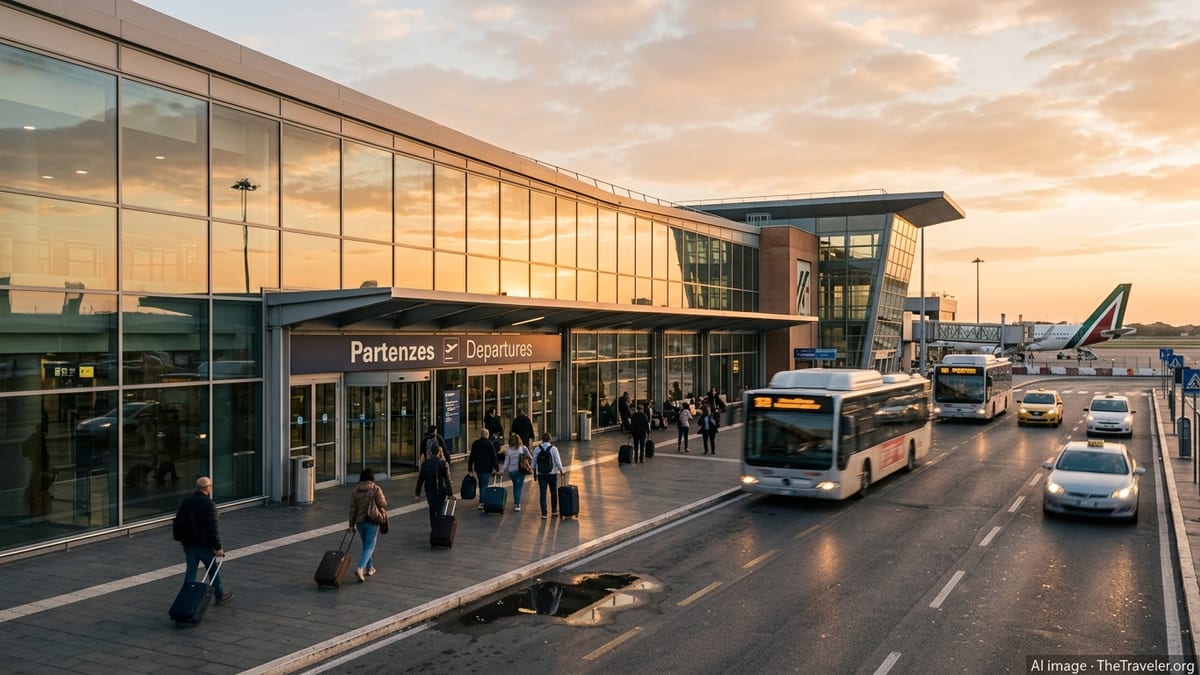
Award Streak Confirms Rome’s Leadership in European Hub Rankings
Publicly available data from Airports Council International (ACI) and operator reports show that Leonardo da Vinci–Fiumicino has been named Europe’s best large hub for the ninth consecutive year in the Airport Service Quality awards, covering the 2025 survey period. The airport tops the category for hubs handling more than 40 million passengers annually, reinforcing Rome’s status as a reference point for high volume yet smooth operations.
Information published by the airport’s parent group indicates that Fiumicino scored above 4.6 out of 5 on ACI’s passenger satisfaction index, placing it among the best performing airports worldwide in terms of perceived service quality. The score reflects more than 30 indicators across the travel journey, from wayfinding and security to cleanliness and retail, underscoring how consistent service delivery has become a strategic asset for the Rome gateway.
Recent coverage also notes that Fiumicino was the only European hub of its size to lead simultaneously in categories such as most dedicated staff, easiest airport journey, most enjoyable airport and cleanest airport. This cluster of recognitions has positioned Leonardo da Vinci as a standard bearer for an integrated approach to passenger experience, going beyond punctuality and connections to focus on comfort and predictability.
ACI Europe’s separate Best Airport Awards for 2025 likewise place Rome Fiumicino at the top of the over 40 million passenger segment, underlining that independent scoring systems are converging around similar conclusions on operational excellence at the Italian capital’s main airport.
A Pan European Network of Benchmark Airports Emerges
While Rome’s long running award streak draws headlines, similar patterns of recognition are emerging across the continent. Málaga–Costa del Sol in Spain, Lisbon’s Humberto Delgado, Barcelona’s Josep Tarradellas Barcelona El Prat and Prague’s Václav Havel have all appeared in recent ACI rankings and consumer focused indexes for service quality and traffic resilience, forming an informal network of reference airports.
In Spain, data from national operator statistics and ACI reporting shows Málaga and Josep Tarradellas Barcelona El Prat handling record passenger volumes through 2024 and 2025, yet maintaining high scores for perceived ease of journey. Coverage of the 2025 ASQ Customer Experience Awards highlights Barcelona in particular for its performance in European categories related to overall satisfaction and journey quality.
Lisbon’s Humberto Delgado Airport has also been singled out in previous years for ACI service quality awards in its size bracket, while working through well documented capacity pressures. Public information on recent upgrades to security lanes, boarding gate layouts and terminal flows indicates that Lisbon’s operator has used the ASQ framework to prioritise interventions aimed at easing pinch points for both origin and transfer passengers.
Prague’s Václav Havel Airport, meanwhile, features prominently in recent traffic and quality rankings as it rebuilds connectivity. ACI Europe data for 2025 shows the airport among the notable performers in passenger recovery, while earlier Airport Service Quality results credited Prague with strong satisfaction scores in the 5 to 15 million passenger category, further expanding the group of airports seen as shaping best practice.
Efficiency and Seamless Journeys Driven by Data and Design
The airports now clustered around Leonardo da Vinci in European rankings share a common operating philosophy that relies heavily on data collection and terminal design optimisation. Passenger surveys, real time crowding analytics and queue time monitoring are being used to recast terminal spaces into more intuitive, self navigating environments.
At Fiumicino, publicly available briefings describe a multi year programme of process redesign across check in, security and boarding, supported by advanced baggage systems and increasingly automated identity checks. These elements are framed as tools to reduce friction at key bottlenecks, enabling the airport to accommodate larger volumes without proportionally increasing perceived waiting times.
Similar strategies are visible at Málaga and Barcelona, where operators have invested in consolidated security zones, centralised commercial areas and clearer sightlines to gates. Reports indicate that these changes are intended to simplify orientation for infrequent travellers while freeing additional dwell time that can be allocated to hospitality and retail, creating a virtuous circle between efficiency and non aeronautical revenues.
Lisbon and Prague are following closely with staged refurbishments, additional security lanes and upgraded passenger information systems. In each case, the emphasis is on fine tuning the flow between landside and airside, as well as reinforcing multimodal links to rail and bus networks so that the airport experience is integrated into the broader urban mobility fabric.
Raising the Bar for Passenger Expectations Across Europe
The cumulative effect of these developments is a gradual but visible reset of what travellers can expect from Europe’s busiest airports. With Fiumicino and its peers consistently scoring at the top of satisfaction indices, time constrained passengers are increasingly treating these hubs as benchmarks when assessing other airports’ performance.
Travel industry observers note that award results are shaping competitive dynamics among operators and concessionaires, particularly as airlines weigh hub choices and connection strategies. High ASQ scores and repeated Best Airport titles are frequently highlighted in corporate communications, signalling to carriers that an airport can support reliable, passenger friendly operations even under peak loads.
For travellers, the practical outcomes are most evident in faster processing times, clearer signage and more predictable connections. The focus on cleanliness, ambient comfort and service staff engagement also responds to post pandemic expectations around hygiene and reassurance, areas that continue to feature prominently in passenger feedback surveys.
At a regional level, the emergence of a group of consistently high performing airports from the Iberian Peninsula to Central Europe suggests that best practices are diffusing across operators and ownership models. Leonardo da Vinci’s leadership position, combined with the momentum at Málaga, Humberto Delgado, Josep Tarradellas and Václav Havel, indicates that Europe’s airport experience is being reshaped by an interlocking set of standards grounded in measurable passenger outcomes rather than purely architectural ambition.