

More news on this day
New York City area travelers are heading into another unpredictable day of airport security as LaGuardia, John F. Kennedy and Newark Liberty report long but highly variable TSA wait times on March 30.
Get the latest news straight to your inbox!
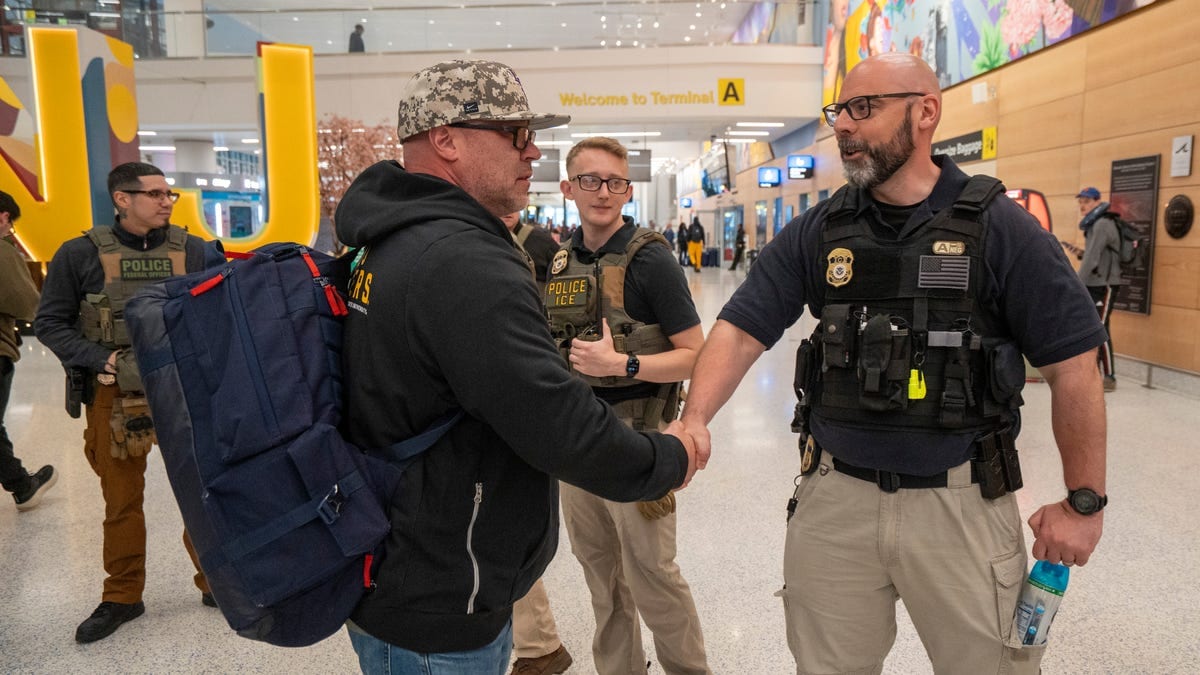
Image by northjersey.com
Patchy data and suspended trackers cloud the picture
Publicly available information shows that real-time security updates for the New York region’s three major airports remain inconsistent, complicating efforts to pinpoint which facility has the longest lines at any given hour. Recent coverage indicates that LaGuardia, JFK and Newark all temporarily suspended parts of their live wait-time reporting in the past week, citing rapid swings in passenger volumes and Transportation Security Administration staffing.
Some third-party tracking tools continue to display estimates for the trio of airports, but those figures are based on a mix of historical patterns, crowdsourced reports and partial live feeds. Travel advisories stress that these numbers can change within minutes as early morning rushes, banked departures and staffing gaps converge at individual checkpoints.
The result is that travelers are relying heavily on anecdotal accounts and crowd reports to gauge which airport is moving more smoothly on any given day. Those on the ground describe a patchwork reality in which lines can stretch past terminal doors in one concourse while another checkpoint in the same region clears passengers in under half an hour.
Against the backdrop of a partial federal government shutdown and recent back pay for TSA staff, national coverage portrays a system still in flux. While some hub airports report noticeable improvement, the New York metro remains among the markets where conditions can deteriorate quickly at peak times.
LaGuardia emerging as a hotspot for early-morning backups
Reports from travelers over the past several days suggest LaGuardia has seen some of the region’s longest standard TSA lines, particularly in the early morning departure banks. Posts describing Terminal B general screening queues running close to or beyond two hours before sunrise have circulated widely, with passengers recounting waits beginning around 5:30 a.m. and extending well past 7 a.m.
These firsthand accounts align with broader warnings that LaGuardia’s ongoing terminal consolidation and heavy morning departure schedule leave little slack when TSA staffing is strained. Once lines spill into public areas, authorities typically halt or downgrade public wait-time estimates, meaning official feeds can understate conditions during the worst of the crunch.
By late morning and early afternoon, some travelers report that LaGuardia’s lines loosen, dropping closer to what would be considered heavy but manageable wait times under normal operations. Even then, accounts indicate that general screening frequently moves significantly slower than TSA PreCheck, with standard passengers still urged in public messaging to arrive earlier than usual.
For now, LaGuardia appears to be the riskiest bet among the three for those traveling without expedited screening during the first wave of departures. Advisories and recent coverage alike recommend treating two hours for domestic flights as a minimum, not a target, during this period of volatility.
JFK sees wide swings between terminals and time of day
At JFK, travelers describe a more uneven pattern in which security wait times vary sharply by terminal and hour. Recent accounts from Terminal 5 and Terminal 8 reference general screening waits ranging from roughly 30 minutes at quieter times to more than an hour and a half when queues peak. In several cases, PreCheck lines have been reported at about 20 to 30 minutes while standard travelers inch through far longer corridors.
Social media and community forums indicate that JFK’s own wait-time displays have cycled between partial outages and more reliable estimates as data feeds are recalibrated. When visible, airport messaging has warned that wait times may be longer than usual and can change quickly, urging passengers to build in extra time beyond historical norms.
The timing of arrivals is playing an outsized role. Early morning windows shortly after 4 a.m. still see occasional reports of near walk-through security, particularly for PreCheck, but that breathing room disappears rapidly as more flights come online. Afternoon and evening banks can also tighten when international departures and domestic peaks overlap in the same terminal.
Taken together, the reports suggest JFK is not consistently the worst of the three airports for security delays today, but it remains highly unpredictable. Travelers who misjudge the timing or assume that a previous day’s short line will repeat have, in several widely shared cases, cut their arrivals too close for comfort.
Newark running relatively smoother but not immune to delays
Compared with LaGuardia and JFK, Newark Liberty appears to be having a comparatively better run at security this week, based on both historical data and on-the-ground reports. Typical TSA waits at Newark are usually quoted in the 10 to 30 minute range, and several recent traveler accounts continue to describe checkpoints in Terminals A, B and C clearing passengers within that window during much of the day.
However, Newark has not fully escaped the turbulence affecting TSA operations nationwide. Some airport-focused forums note that official wait-time feeds have at times been paused or lagging, leading travelers to caution that posted figures may not always reflect current reality, especially during the earliest departures and heavy evening banks.
Even with those caveats, the balance of recent anecdotal evidence points to Newark as the least congested of the three major New York area airports for security screening on many recent days. Flyers report breezing through general lines in under 20 minutes during off-peak periods and finding PreCheck lanes moving faster still.
That relative stability makes Newark an appealing option for travelers with flexibility in airport choice, though ground transport times and the risk of sudden staffing shortages still factor into the equation. Publicly available guidance continues to advise early arrival while acknowledging that some passengers are currently clearing much faster than they would at LaGuardia or certain JFK terminals.
How travelers can navigate today’s uncertainty
Given the volatility across all three airports, recent travel coverage emphasizes preparation over prediction. Tools such as the TSA’s mobile app and independent wait-time trackers remain useful for spotting broad patterns and last-minute spikes, but they are being treated as directional guides rather than precise instruments during the shutdown-related staffing disruption.
Airlines and airport operators are also using websites and social channels to signal when conditions deteriorate, often urging passengers to arrive earlier than usual and build in a larger cushion than pre-shutdown norms. In the New York region, that increasingly translates to arriving at least two hours ahead of domestic flights and three hours or more before international departures, especially at LaGuardia and the busier JFK terminals.
Travel experts and consumer advocates quoted in recent coverage stress that travelers should focus on controllable factors: checking in online, traveling with carry-on luggage when possible, and identifying which terminal and checkpoint they will use before leaving home. They also highlight that lines can move in bursts as additional lanes open or staffing is shifted, meaning a seemingly daunting queue may dissipate faster than expected.
For March 30, the emerging picture is of a tri-airport system still under strain but not uniformly gridlocked. LaGuardia appears to carry the highest risk of prolonged waits, JFK remains highly variable by terminal and time of day, and Newark is generally flowing more smoothly, though none can guarantee short lines during the busiest banks. Travelers are being encouraged to assume the longest scenario and treat any faster passage through security as an unexpected bonus.