

More news on this day
The United States has renewed Libya’s place on its highest-level travel warning list, a stark reminder that growing swaths of the globe are now effectively off-limits to American tourists as conflicts, criminal networks, and collapsing states push more countries into the U.S. State Department’s Level 4 “Do Not Travel” category in 2026.
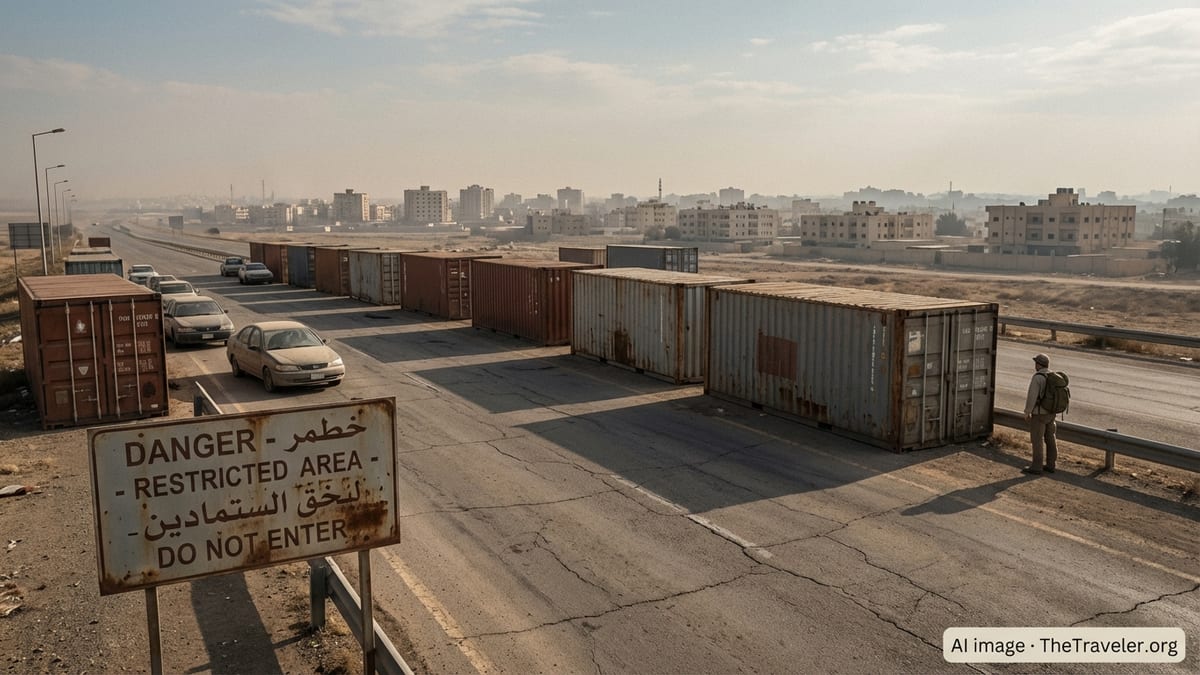
Libya’s Renewed Level 4 Warning Signals Entrenched Instability
In January 2026, U.S. officials again confirmed that Libya will remain under a Level 4 “Do Not Travel” advisory, indicating that the security situation remains too volatile for American visitors. The notice cites widespread crime, terrorism, armed clashes between rival factions, and the presence of unexploded ordnance as core reasons for the continued designation. It also notes that U.S. government capacity to assist citizens in-country is extremely limited, underscoring the risks of any non-essential travel.
More than a decade after the fall of Muammar Gaddafi, Libya continues to be characterized by fragmented political authority and competing armed groups. Militia checkpoints, sporadic street fighting, and shifting front lines have made road travel inherently unpredictable. International organizations have repeatedly warned about the dangers posed by landmines, cluster munitions, and other remnants of war scattered across both urban and rural areas, creating hidden threats for anyone moving outside well-secured zones.
The renewed U.S. guidance stresses that potential travelers should not be misled by periods of relative calm in certain cities. Local ceasefires and political talks have frequently broken down without warning, triggering rapid escalations that leave foreigners and residents alike scrambling for safety. For tourism, an industry that depends on stability and predictable access to airports, roads, and basic services, the message is unambiguous: Libya remains a no-go destination in 2026.
A Growing Level 4 Roster: From Russia to Haiti and Beyond
Libya’s status is part of a much broader pattern. The U.S. State Department now maintains Level 4 “Do Not Travel” advisories for a cluster of countries where war, state collapse, or extreme repression has made travel life-threatening. Recent overviews of the advisory system point to about 21 nations in this highest-risk category as of late 2025 and early 2026, including Russia, Yemen, Somalia, North Korea, Mali, Haiti, Iran, Sudan, Iraq, Syria, Afghanistan, and Ukraine.
While each country has its own dynamics, the reasons for Level 4 placement often overlap: intense armed conflict, widespread criminality and kidnapping, terrorism, or the near-total breakdown of public services and law enforcement. In several cases, U.S. embassies have reduced operations or closed entirely, limiting the ability to provide emergency assistance to stranded travelers. That practical reality is now a key driver of warnings, as officials emphasize that even well-prepared tourists cannot rely on consular services if something goes wrong.
Analysts say the clustering of Level 4 nations forms an arc of instability stretching from parts of Eastern Europe through the Middle East and the Sahel to swaths of the Caribbean and Latin America. For the global tourism industry, this expanding red zone is shrinking the map of viable destinations, redirecting demand toward safer regions and forcing airlines, cruise operators, and tour companies to rewrite itineraries year by year.
Haiti and Venezuela: Crime, Collapse, and Closed Flight Paths
Haiti and Venezuela have become emblematic of how entrenched crises can transform once-busy routes into travel dead zones. Haiti has been under a persistent Level 4 advisory as gang violence, kidnappings, and political turmoil have intensified, especially in and around Port-au-Prince. The U.S. government and law enforcement agencies have repeatedly urged Americans to leave the country when conditions permit, warning that gunfire, roadblocks, and targeted attacks can erupt at short notice.
In 2025 and into 2026, aviation and cruise decisions have reflected those warnings. U.S. regulators extended bans on American commercial flights to Haiti’s capital following multiple incidents in which aircraft were fired upon as they approached or departed the main international airport. A major Caribbean cruise line suspended calls to its private port in northern Haiti after security assessments flagged unacceptable kidnapping and unrest risks, disrupting dozens of itineraries and signaling that even controlled resort environments could not be insulated from the country’s larger security meltdown.
Venezuela, meanwhile, has remained at Level 4 due to a toxic mix of political repression, economic freefall, and high levels of violent crime. Inflation and shortages have strained essential services, while episodes of arbitrary detention have raised concerns for foreign visitors. Airlines long ago slashed routes into the country, citing not just security concerns but also financial and regulatory obstacles. For individual travelers who might once have been drawn by Venezuela’s natural beauty, the State Department’s current judgment is blunt: the potential costs far outweigh any touristic reward.
Conflict Zones: Yemen, Sudan, Iraq, and the Middle East’s Flashpoints
In the Middle East and North Africa, some of the most entrenched Level 4 advisories are tied to active or recent war zones. Yemen has been a byword for humanitarian catastrophe for years, with a complex web of armed factions, foreign interventions, and chronic shortages of food, fuel, and medical care. For tourists, the advisory language translates into practical reality: airports and ports are contested or intermittently closed, road travel is extremely dangerous, and foreign nationals can become bargaining chips in local power struggles.
Sudan has joined this grim list amid civil conflict that has displaced millions and turned parts of the country into combat zones. Reports from aid agencies describe hospitals overwhelmed or destroyed, looting of humanitarian warehouses, and widespread sexual violence used as a weapon of war. Under such conditions, normal tourism infrastructure has all but collapsed, and foreign governments now focus on evacuation and humanitarian access rather than promoting any form of travel.
Iraq remains under a Level 4 warning driven by persistent security threats, including terrorism and militia activity, as well as the limited reach of central authorities in some provinces. While business and diplomatic travelers continue to enter on highly controlled itineraries, leisure tourism is effectively nonexistent. Nearby Syria and parts of the broader Levant face similar advisories, reflecting not just the risk of violence but also the absence of functioning consular services for Americans.
Together, these conflict-driven advisories demonstrate that the U.S. government is now more explicit about the limits of what it can do for citizens who choose to ignore official guidance. Where embassies have shuttered and protecting powers handle only minimal affairs, a traveler’s margin for error narrows to virtually zero.
Authoritarian States and Wrongful Detention: Russia, Iran, and North Korea
Not all Level 4 countries are active war zones. Some are placed on the list primarily because of the risk that foreign nationals will be arbitrarily detained or used as leverage in geopolitical disputes. Russia, Iran, and North Korea stand out in this category, as U.S. officials warn that Americans may face wrongful detention, politically motivated charges, or trial procedures that do not meet international standards.
In Russia, the war in Ukraine and a sharp deterioration in relations with Western countries have transformed the environment for foreign visitors. High-profile cases of detained journalists and dual citizens have underscored the potential dangers. The advisory explicitly warns that Americans in Russia could be singled out for harassment or arrest, and that exit routes could be restricted in a crisis. Airlines have already rerouted many long-haul flights to avoid Russian airspace, and tour operators have suspended most leisure travel programs.
Iran’s addition to and retention on the Level 4 list has been driven by similar concerns about arbitrary detention, alongside regional tensions and domestic unrest. While Iran’s cultural and historical sites have long attracted adventurous travelers, the State Department now cautions that dual nationals in particular face heightened risk, and that legal protections may not be honored in practice. North Korea, which had long been inaccessible to most Americans due to a near-total ban on U.S. passport use for travel there, continues to be cited for the possibility of long-term detention and a lack of any consular presence.
These cases highlight a less visible but equally serious threat to travelers: not stray bullets or landmines, but judicial systems and security services that operate with little transparency or accountability. For Americans contemplating high-risk travel, the risk calculus increasingly includes the possibility of becoming entangled in interstate disputes far beyond their control.
The Sahel and Central Africa: Mali, Burkina Faso, and the Expanding Red Zone
Across the Sahel and parts of Central Africa, a surge in jihadist violence, coups, and community conflict has pushed several countries into the Level 4 category. Mali and Burkina Faso, once minor but promising destinations for cultural and adventure tourism, are now cited for frequent armed attacks, roadside bombs, and targeted kidnappings. The fragmentation of authority has created vast ungoverned spaces where armed groups operate freely, making overland travel particularly hazardous.
Neighboring states such as the Central African Republic and the Democratic Republic of the Congo also feature on high-risk lists due to a mix of insurgencies, communal clashes, and weak state institutions. Travel advisories emphasize that foreigners and aid workers can be deliberately targeted for ransom or political gain. In many of these areas, even basic infrastructure such as paved roads, reliable electricity, and functioning clinics is limited or non-existent outside a few urban centers.
Tourism boards in parts of Africa continue to promote safer regions and national parks far from conflict zones, but international risk ratings can overshadow these nuances. Once a country is labeled Level 4, it becomes difficult for prospective visitors to distinguish between relatively stable enclaves and high-risk provinces, and major insurers may refuse coverage altogether. As a result, the Sahel’s travel industry, already fragile, faces an uphill struggle to survive under the shadow of ongoing security crises.
How the U.S. Travel Advisory System Works in 2026
The U.S. State Department’s four-tier advisory system has become a key reference point for travelers, insurers, and tour operators. Level 1 indicates a low-risk environment where visitors should exercise normal precautions, while Level 2 urges increased caution due to elevated but manageable threats such as petty crime or isolated unrest. Level 3 advises travelers to reconsider non-essential trips, and Level 4 is reserved for countries where the U.S. government believes life-threatening risks are widespread and where it may have little capacity to assist in an emergency.
Officials say Level 3 and Level 4 advisories are reviewed at least every six months, with updates issued more frequently when security conditions change markedly. The system incorporates intelligence reporting, crime statistics, public health data, and on-the-ground assessments by embassy personnel. While some governments criticize the advisories as overly cautious or damaging to tourism, the State Department positions them as informational tools designed to help citizens make informed choices rather than as sanctions.
For travelers, the practical implications are significant. Many travel insurance policies either exclude coverage for Level 4 countries or dramatically increase premiums, while some airlines and cruise operators refuse to accept passengers whose itineraries include destinations on the highest-risk list. Universities, corporations, and non-governmental organizations also use the advisories to shape their own travel policies, sometimes banning student trips or work assignments to countries that cross the Level 3 or Level 4 threshold.
A Shrinking World for Tourists and the Rise of “Risk-Aware” Travel
The expansion and entrenchment of Level 4 “Do Not Travel” advisories in 2026 is reshaping global tourism in subtle but far-reaching ways. Popular destinations in Europe, parts of Asia, and the Americas are absorbing demand that might once have flowed to more adventurous circuits in the Middle East, North Africa, and the Sahel. At the same time, travelers who remain determined to visit higher-risk regions are increasingly relying on specialized security consultants, armored transport, and detailed contingency planning traditionally associated with journalists or aid workers rather than holidaymakers.
For Libya, Haiti, and other countries now synonymous with extreme travel risk, the long-term challenge extends beyond immediate security. Tourism once provided jobs, foreign currency, and a bridge to the outside world for local communities. With each renewal of a Level 4 advisory, those benefits move further out of reach, and it will take years of sustained stability before confidence returns. Until then, the State Department’s stark warnings stand as both a safety measure for U.S. citizens and a sobering barometer of the world’s deepening fault lines.