

More news on this day
High on the Himalayan fringe in southwest China, Lijiang and Shangri-La are emerging as a powerful twin draw for international travelers, combining storybook old towns, snow-capped peaks and living minority cultures into one of Asia’s most talked-about tourism corridors.
Get the latest news straight to your inbox!
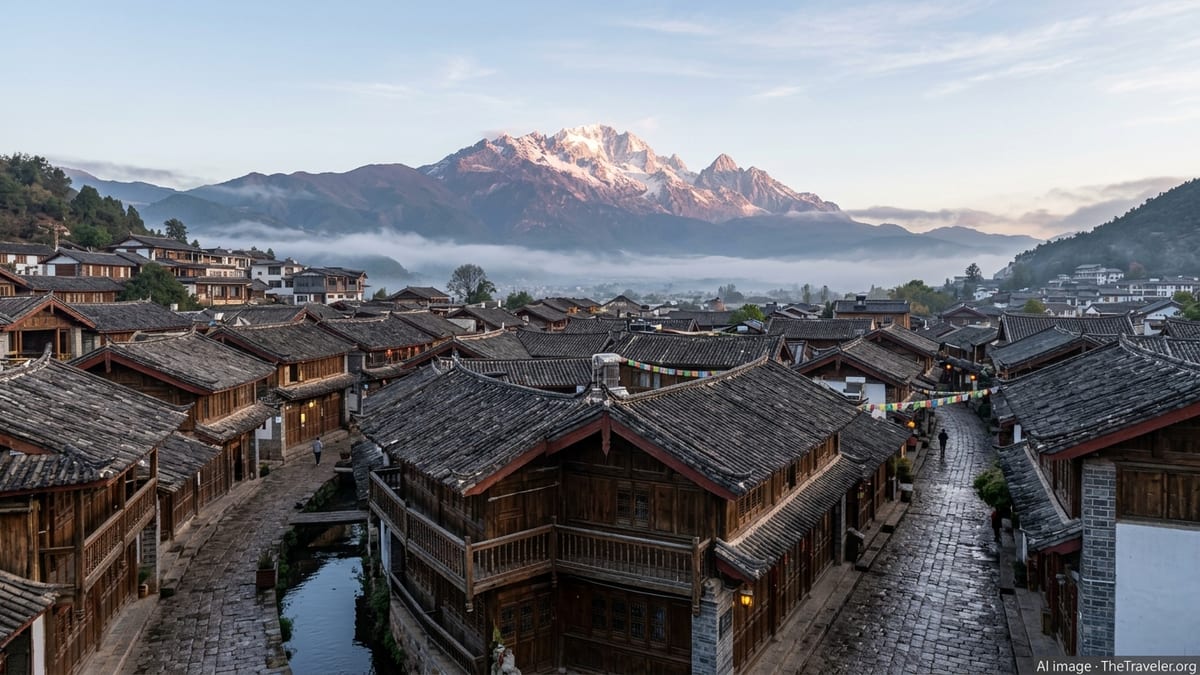
Lijiang’s UNESCO Old Town Anchors a Cultural Powerhouse
Lijiang’s ancient town, inscribed as a UNESCO World Heritage site in 1997, remains the visual and emotional heart of the region. Visitors step into a lattice of cobbled alleys, willow-lined canals and timber courtyard houses that showcase the carpentry and hydraulic ingenuity of the Naxi people. Publicly available information highlights how conservation plans have sought to protect the intricate water system and irregular street pattern that distinguish Lijiang from other walled Chinese cities.
Reports indicate that Lijiang’s recent tourism boom has been channeled into a broader cultural “renaissance,” with night-time lighting upgrades, restored facades and expanded museum spaces presenting Naxi Dongba script, music and religious practices to a wider audience. Cultural tourism features prominently in municipal development strategies, with local authorities emphasizing small-scale guesthouses and pedestrian zones to preserve the town’s intimate feel while accommodating surging visitor numbers, particularly during Chinese public holidays.
Across the old town, landmarks such as Lion Hill and Wangu Pavilion give a sense of the city’s geography, with sweeping views over the tiled roofs toward Jade Dragon Snow Mountain. Travel guides describe a growing network of boutique hotels, cafes and handicraft studios in nearby Shuhe and Baisha, offering quieter alternatives that still tap into Lijiang’s heritage credentials. Together, these districts position Lijiang as a base where culture, comfort and scenery intersect.
From Tea Horse Road Crossroads to Contemporary Tourism Hub
Lijiang’s appeal is rooted not only in picturesque streets but also in a long history as a trading crossroads on the Ancient Tea Horse Road, the caravan route that once funneled tea, salt and horses between Yunnan, Tibet and beyond. Historical studies describe how Naxi elites leveraged this position to develop a cosmopolitan town that blended Han, Tibetan and Bai influences, a legacy that is still visible in architectural details and ritual life today.
Modern tourism infrastructure is now tracing those historic paths. Rail and highway improvements across Yunnan are shrinking travel times between Kunming, Dali, Lijiang and Shangri-La, making multi-stop itineraries easier for domestic and international visitors. Travel industry itineraries for 2025 and 2026 increasingly market eight-day loops through these destinations, pairing Lijiang’s heritage quarters with highland excursions and Tibetan-influenced monasteries farther north.
Publicly available planning documents and recent media coverage also point to a digital shift. Lijiang has promoted smart-ticketing, online reservation systems and multilingual wayfinding, aiming to smooth crowd flows during peak seasons. This modernization is framed as a way to safeguard the old town’s fabric while keeping it accessible, contributing to Lijiang’s image as both timeless and technologically up to date.
Shangri-La: High-Altitude Gateway to a Mythic Landscape
Three hours north of Lijiang by road or rail, Shangri-La in Diqing Tibetan Autonomous Prefecture trades cobblestones for prayer flags and broad highland skies. Formerly known as Zhongdian, the city adopted the Shangri-La name in 2001, echoing the fictional utopia from the novel “Lost Horizon” and underscoring its tourism ambitions. Publicly available demographic data shows that the area is dominated by Tibetan communities, alongside Naxi, Lisu and Yi residents, giving the city a markedly different cultural tone from Lijiang.
The opening of the Lijiang–Shangri-La railway and the Shangri-La railway station in late 2023 has been a turning point, with domestic media reporting increased visitor arrivals and smoother connections from Yunnan’s provincial capital, Kunming. The new line brings travelers directly into a high plateau framed by the snow-covered peaks of the Hengduan Mountains and the upper reaches of the Jinsha River, part of the Yangtze headwaters.
Around the city, headline attractions such as Songzanlin Monastery and the surrounding pastoral villages provide a window into Tibetan monastic life and yak-herding culture. Publicly accessible tourism materials emphasize grassland hikes, wooden farmhouses, and seasonal festivals featuring cham dances and prayer-flag blessings. The combination of religious heritage and wide-open alpine scenery positions Shangri-La as both a cultural destination and an acclimatization stop for more demanding treks deeper into the mountains.
Tiger Leaping Gorge and the New Era of Yunnan Adventure Travel
Between Lijiang and Shangri-La, Tiger Leaping Gorge has become one of China’s most celebrated hiking routes, cutting a deep chasm between Jade Dragon Snow Mountain and Haba Snow Mountain. Recent trip reports and guide updates for 2025 and 2026 describe a well-marked high trail dotted with small guesthouses, offering multi-day treks with panoramic river and cliff views. The gorge has become a rite of passage for independent travelers seeking a more rugged counterpoint to Lijiang’s polished old town streets.
At the same time, safety and environmental pressures are reshaping how visitors experience the canyon. Publicly available advisories note closures of certain steep descents and viewing platforms in the middle section of the gorge due to rockfall risk, as well as evolving regulations on vehicle access and trail maintenance. hikers are urged by travel operators and online community forums to check the latest local conditions, book accommodation in advance during peak seasons and travel with appropriate gear for rapidly changing mountain weather.
Longer term, regional development projects, including proposed hydropower infrastructure on the upper Yangtze, are being closely watched by conservation groups and tourism businesses. International media coverage has raised questions about how large-scale engineering could affect famous viewpoints near the river’s first bend and sections of the gorge. For now, however, Tiger Leaping Gorge remains a centerpiece of Yunnan’s adventure tourism, linking the historic streets of Lijiang with the highland communities of Shangri-La in a single dramatic landscape.
Why the Lijiang–Shangri-La Corridor Is Rising on Global Travel Radars
Travel industry analyses suggest that Lijiang and Shangri-La together encapsulate several trends driving China’s post-pandemic tourism recovery: interest in minority cultures, appetite for slower, experience-based travel, and demand for dramatic nature that is still perceived as relatively uncrowded compared with coastal megacities. Package tours and independent itineraries increasingly weave the two cities into one narrative, inviting travelers to follow the arc from Naxi canals to Tibetan monasteries in the span of a few days.
Visa policy adjustments and improved digital payment options for foreign visitors are also playing a role, according to tourism-focused coverage that tracks inbound arrivals to Yunnan. While travelers are advised to monitor current entry rules and regional regulations, particularly around border prefectures, the province is marketing itself as one of China’s most accessible gateways to Himalayan landscapes and cross-cultural encounters.
For many visitors, the appeal lies in contrasts experienced at human scale: morning light on Lijiang’s tiled roofs, the hum of traditional string instruments in a courtyard theater, the sight of yak herds moving across a Shangri-La meadow, or the echo of the Jinsha River far below a high trail in Tiger Leaping Gorge. Taken together, these moments are fueling Lijiang and Shangri-La’s rise from regional favorites to fixtures on global “must-see” lists, reinforcing their reputation as a jaw-dropping cultural and scenic paradise in the heart of southwest China.