

More news on this day
Passengers traveling through Lima’s Jorge Chávez International Airport this week are facing widespread disruption after United Airlines and Sky Airline canceled two key departures to Houston and Arequipa, isolating travelers across Peru and straining one of South America’s busiest hubs.
Get the latest news straight to your inbox!
Key United and Sky Airline Flights Pulled From Schedule
The latest wave of disruption in Lima centers on two high-impact cancellations: a United Airlines service from Lima to Houston and a Sky Airline flight from Lima to Arequipa. Both departures were scrubbed on March 11, 2026, local time, according to airport information boards and industry reports, contributing to a broader pattern of irregular operations at Jorge Chávez International Airport this season.
The United Airlines flight was scheduled to operate between Lima and Houston, a crucial long-haul link for business and leisure travelers connecting between Peru and the United States via United’s major Texas hub. The Sky Airline service to Arequipa, meanwhile, is part of a dense domestic corridor that shuttles residents, tourists, and business travelers between the capital and Peru’s second city, an essential gateway to the Colca Canyon and southern Andean region.
These specific cancellations form part of a cluster of four flights withdrawn by United, Sky Airline, and LATAM Peru on March 11. While LATAM’s affected routes included connections to Bogotá and Trujillo, the lost Houston and Arequipa services have had outsized repercussions because they interrupt both international and domestic traffic flows at the same time.
No single cause has been publicly confirmed by the airlines for this combination of cancellations. However, regional aviation analysts point to a mix of operational constraints, shifting fleet allocation, and tight turnaround schedules at Lima’s expanding but still pressured hub facilities as likely contributing factors.
Stranded Passengers Face Long Queues and Limited Alternatives
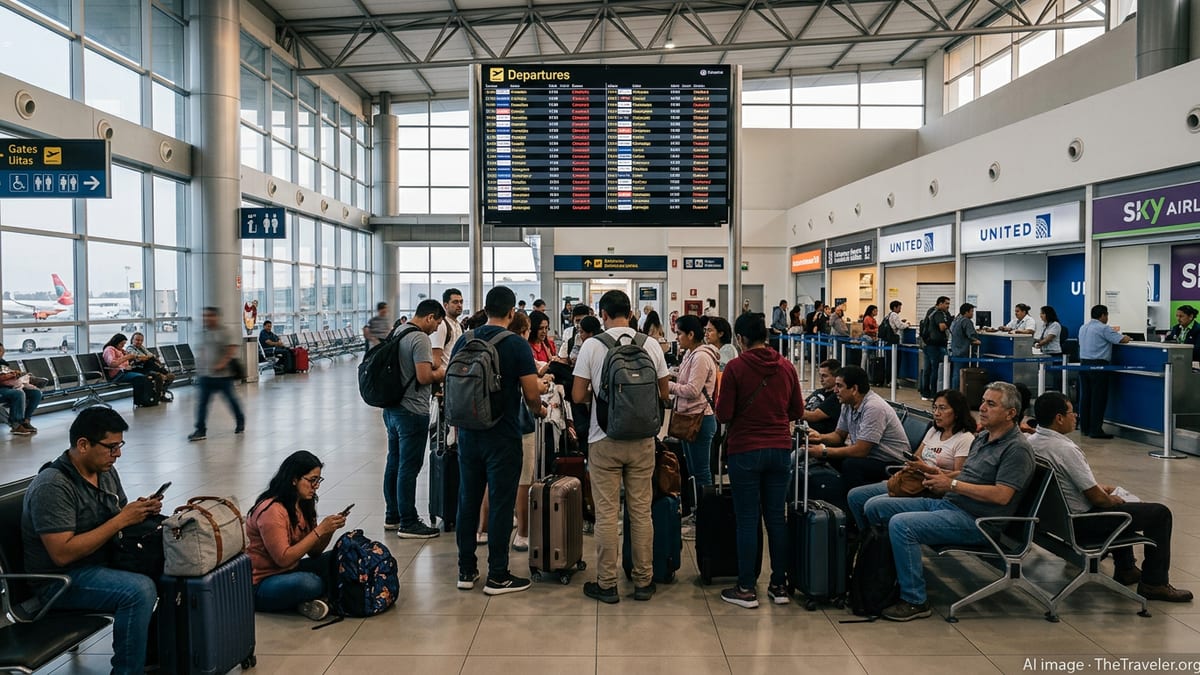
Inside Jorge Chávez International Airport, the immediate impact has been visible in crowded check in halls, long queues at customer service desks, and travelers camped out near departure gates with luggage piled around them. With both a major US-bound route and a critical domestic sector suddenly unavailable, passengers report difficulty securing near term alternatives, especially for same day or next day departures.
Travelers ticketed on the Lima Houston service have been among the hardest hit. Many were relying on onward connections from Houston to other US and international destinations, meaning a missed departure from Lima cascades into multiple missed legs across the network. Some have been rebooked on later United departures via alternative hubs such as Newark or on partner airlines from other South American gateways, often adding a full day or more to their journeys.
On the domestic side, Sky Airline customers bound for Arequipa face a more limited set of options. Seats on remaining flights operated by Sky and competing carriers have filled quickly, driving up same day fares and leaving late bookers with little choice but to accept rebookings several days later or reroute through other Peruvian cities. For travelers with pre booked tours, treks, or hotel stays in southern Peru, the disruption is translating into cancellation penalties and complex re-planning.
Airport staff in Lima have been pressed into managing crowd control and providing basic information, though many passengers report receiving the most timely updates via airline apps and mobile notifications. Loudspeaker announcements and departure boards have repeatedly highlighted the cancellations, adding to a general sense of uncertainty among those still waiting for confirmation of their revised itineraries.
Ripple Effects Across Peru’s Domestic and International Networks
The loss of a single daily Houston flight and a key Lima Arequipa rotation might seem modest in numerical terms, but aviation experts emphasize that such cancellations at a hub like Lima can create outsized knock-on impacts. Lima functions as Peru’s primary gateway for both international arrivals and domestic connections, so disruptions there can leave travelers effectively isolated in cities such as Cusco, Arequipa, Trujillo, and Tarapoto when onward links no longer line up.
In this case, passengers who had already flown into Lima from other Peruvian or regional airports found themselves stranded in transit when their onward segments were abruptly withdrawn. Many had to scramble for last minute hotel rooms in the Callao and Miraflores areas, while others opted to remain overnight in the terminal in the hope of securing standby seats on early morning departures.
These events come on the heels of earlier cancellation waves this year affecting LATAM and regional carriers across Peru, which have periodically snarled operations in Lima, Cusco, and Arequipa. Combined, they highlight the vulnerability of Peru’s air travel system to relatively small but strategically timed schedule adjustments, particularly when they affect hub-and-spoke connections that tie together domestic and international routes.
For tourism operators, the timing is unwelcome. March sits at the shoulder between peak highland season and cooler months on the coast, a period when many international travelers attempt complex itineraries linking Machu Picchu, Arequipa, Lake Titicaca, and the Amazon basin in a single trip. Any break in the domestic chain can leave visitors unable to complete those loops and may deter last minute bookings.
How United and Sky Airline Are Responding for Affected Travelers
United Airlines has been offering standard reaccommodation options for passengers whose Lima Houston flight was canceled, including rebooking on the next available United-operated service, routing via alternative hubs where feasible, or issuing refunds for unused portions of travel in line with its international contract of carriage. Some travelers have reported being offered hotel and meal vouchers in Lima or connecting hubs when overnight delays were unavoidable, though the level of support varies by fare type and travel insurance coverage.
Sky Airline, which markets itself as a low cost carrier, has directed affected Lima Arequipa customers to its digital channels and call centers to request rebooking or credit vouchers. Under regional consumer protection rules, the airline is required to notify passengers of cancellations and provide alternatives or refunds; the exact remedies depend on the timing of the notification and whether the disruption is considered within the carrier’s control.
Both airlines are urging travelers with upcoming departures through Lima to verify the status of their flights before leaving for the airport and to ensure that contact details in their bookings are current. Same day schedule changes and rolling delays remain possible as the carriers rebalance aircraft and crews, particularly if additional operational challenges emerge at Jorge Chávez International Airport or at downline stations such as Houston and Arequipa.
Industry observers note that, while the number of flights affected on March 11 was limited compared with major global disruptions, the concentration of cancellations at a critical node like Lima underscores the importance for airlines of robust contingency planning and for travelers of building flexibility into their itineraries.
What Travelers Should Do Now If They Are Booked Through Lima
For those already impacted by the canceled United and Sky Airline services, immediate priorities include securing confirmed alternative transport, documenting out-of-pocket expenses, and reviewing travel insurance or credit card protections that may cover additional costs such as hotels, meals, and nonrefundable tours. Keeping all receipts and written communication from airlines can support later reimbursement claims.
Passengers with upcoming flights through Jorge Chávez International Airport in the next several days are being advised by travel agents to monitor schedules closely and to consider allowing longer connection times through Lima, especially if linking between an international arrival and a domestic departure. Where possible, booking flexible fares or tickets that permit free date changes can offer a crucial buffer if further adjustments occur.
Travel planners also recommend that visitors headed to secondary Peruvian cities build in at least one contingency day at either the start or end of complex itineraries. This provides room to absorb unexpected flight changes without sacrificing marquee experiences such as visits to Machu Picchu or guided treks around Arequipa’s volcanic landscapes.
While operations at Lima are expected to stabilize as airlines complete rebookings and reposition aircraft, the latest cancellations serve as a reminder that even short bursts of disruption can leave travelers temporarily isolated in a country where air links are often the only practical way to cover long distances between major destinations.