

More news on this day
In Lingayen, the coastal capital of Pangasinan long known as the Bagoong Capital of the Philippines, preparations are building toward a 2026 Bagoong Festival that is shaping up to be a showcase of culinary pride, coastal culture and homegrown food entrepreneurship.
Get the latest news straight to your inbox!
A Coastal Town Built on Fermented Fish
Lingayen’s identity is deeply tied to bagoong, the pungent fermented fish paste and sauce that appears in kitchens across the Philippines. Publicly available information describes the town as a center of bagoong production, with numerous small and mid-sized processors turning anchovies and other small fish from Lingayen Gulf into jars and bottles of intensely flavored condiments destined for markets at home and abroad.
Local government and national agency documents highlight a dense ecosystem of bagoong makers in and around Lingayen, from long-established family brands to newer enterprises positioning their products for export and specialty food fairs. Recent participation of Pangasinan bagoong producers in regional food expos and halal-focused product catalogs points to a growing ambition to move Lingayen’s bagoong further into premium and international markets.
Cultural references to Lingayen’s Bagoong Festival in regional tourism coverage show how this once strictly utilitarian ingredient has become a cultural touchstone. The festival typically follows the town fiesta held in early January and forms part of a wider calendar of coastal celebrations that also includes the province-wide Pista’y Dayat beach festivities.
From 2024 and 2025 to a Bigger 2026 Edition
Reports on the 2024 and 2025 editions of the Bagoong Festival point to a steadily expanding program of events that mix food-focused activities, street performances and tourism promotions. Earlier celebrations featured three-day programs, street dance exhibitions under the broader Gayaga Pangasinan showcase, and collaborations with vloggers and content creators to amplify Lingayen’s culinary story.
Municipal announcements for the 2025 festival detailed factory tours, where visitors registered in advance and joined guided visits to bagoong processing facilities. Those activities gave guests an inside look at salting, fermenting and bottling processes, while also underscoring food safety and quality practices that producers are increasingly emphasizing. A separate vlogging competition encouraged participants to capture the festival atmosphere and the work of local makers, with judging criteria centered on content, relevance and creativity.
On the regulatory and training side, food safety orientations and traceability workshops held in 2025 for bagoong processors in Lingayen signaled a parallel effort to professionalize the sector. By the time the 2026 festival arrives, many of the processors involved will have had recent exposure to updated compliance requirements, which observers expect to be reflected in factory tour narratives and promotional materials.
While detailed schedules for the 2026 Bagoong Festival have not yet been widely circulated, the pattern of recent years suggests a similar three-day format built around town fiesta dates, with side events spilling into the wider coastal promenade and Lingayen Baywalk area as evening crowds gather for food and live entertainment.
Culinary Tourism, Street Culture and the Taste of Bagoong
At the heart of Lingayen’s Bagoong Festival is a straightforward aim: to invite visitors to taste bagoong in its many forms and understand why the town stakes a claim to producing some of the best in the world. Festival programs in previous years have highlighted traditional bagoong monamon and other variants used in dishes such as pinakbet, grilled seafood dips and green mango accompaniments, offering tasting stations and market stalls where visitors can compare brands and styles.
The festival also taps into Pangasinan’s strong street culture. Street dance exhibitions linked to the province’s broader festival circuit have featured contingents representing Lingayen’s Bagoong Festival alongside other local celebrations. Performances usually take place near major civic landmarks and coastal promenades, adding a visual and rhythmic layer to what is otherwise a food-centered event.
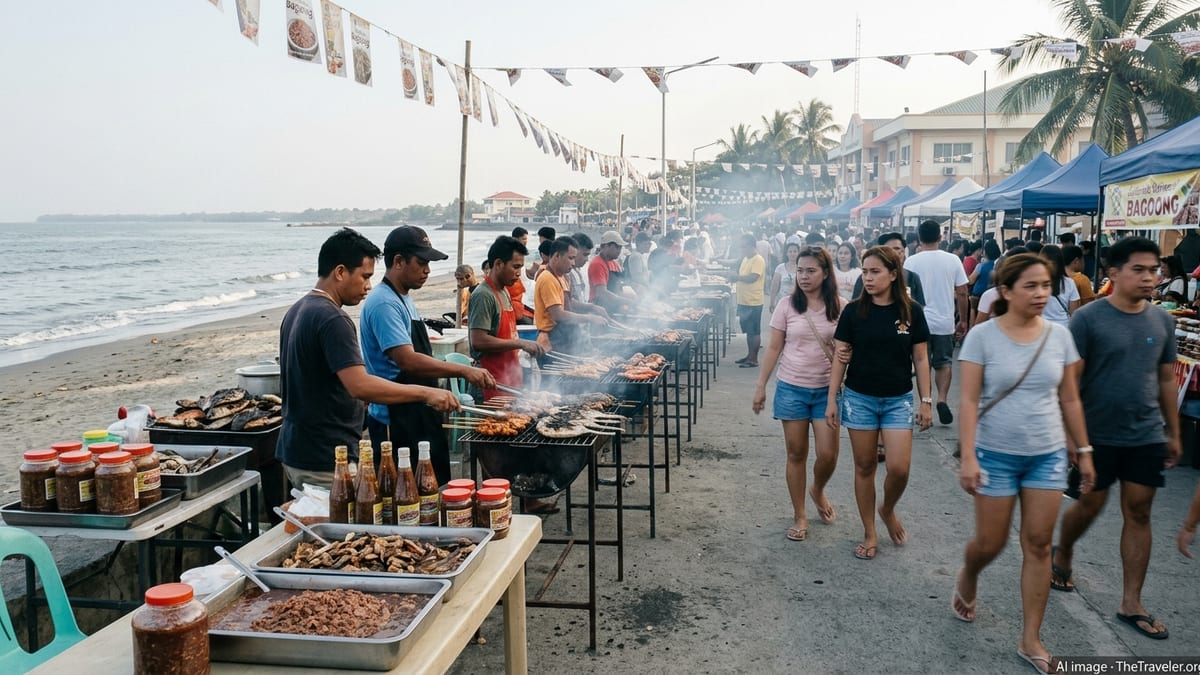
Visitors planning for 2026 can expect dense clusters of vendors selling bottled bagoong, grilled seafood, local rice cakes and coastal snacks, turning central streets and the baywalk into a continuous food corridor. Evening events frequently highlight “Kalutan ed Dalan” style street grilling, where stalls set up rows of charcoal fires to cook fish, squid and meats brushed with marinades that often incorporate bagoong or bagoong-based sauces.
For travelers, this convergence of dance, grilling and coastal scenery makes the Bagoong Festival a natural anchor for a wider Pangasinan itinerary, tying in side trips to Lingayen’s historic sites, nearby beach resorts and inland culinary stops in neighboring towns.
Inside the Bagoong Factories of Lingayen
Factory tours, introduced and expanded in recent editions of the festival, are expected to remain a signature draw in 2026. Registration-based group visits in 2025 brought small batches of participants into working facilities, where they could observe large vats of fermenting fish, salting techniques and the long maturation periods that define quality bagoong.
Publicly available descriptions of these tours emphasize an educational tone. Visitors are typically guided through basic stages of production, from fish sourcing to packing, while staff share information on hygiene controls and storage practices. For many guests, especially domestic travelers used to seeing bagoong only in sealed bottles, the tours offer a rare opportunity to connect the finished product with the labor and time behind it.
Government and academic documents focused on Pangasinan’s bagoong industry note parallel work on process standardization, packaging innovation and product diversification, including padas-based products and flavored variants designed for export. The festival provides a public-facing platform for these innovations, with some processors using the event to test new labels, sampling strategies and ready-to-use sauces alongside traditional pastes.
As more consumers worldwide seek fermented and umami-rich foods, Lingayen’s producers are positioning their bagoong as both a heritage staple and a contemporary ingredient that can move beyond traditional recipes into marinades, dressings and fusion cuisine.
Practical Notes for Travelers Planning a 2026 Visit
With the 2026 edition taking shape, travel patterns from recent years suggest that visitors should watch for announcements tied to Lingayen’s early January town fiesta and the subsequent festival week. Schedules for specific events, such as factory tours, vlogging activities or street dance exhibitions, have previously been released in stages through municipal information channels, so travelers commonly finalize exact dates closer to their departure.
Accommodation demand typically rises around festival dates, with guests splitting their stays between hotels and guesthouses in Lingayen proper and beach resorts along the bay. Travel forums and recent online discussions point to Lingayen as a convenient base for exploring nearby cities such as Dagupan and Alaminos, making it advisable to secure bookings early for a 2026 trip that centers on the Bagoong Festival.
Food-focused travelers are often advised to allow at least two full days on the ground to explore factory tours, evening grill sessions and daytime market browsing. Those keen to understand bagoong in context can extend their stay to visit other Pangasinan food towns known for specialties such as puto, kakanin or mango-based products, building a regional itinerary around the festival.
For now, publicly available coverage portrays the Bagoong Festival as a rapidly maturing event that combines small-scale entrepreneurship, heritage preservation and coastal leisure in a compact, walkable setting. As Lingayen’s bagoong makers continue to refine their craft and expand their reach, 2026 is shaping up to be a compelling year for travelers seeking what many in Pangasinan proudly describe as the world’s best bagoong.