

More news on this day
Once little more than a name on the Dodecanese ferry timetable, Lipsi is emerging in 2026 as one of the Aegean’s most talked-about small islands, promoted in recent coverage as a rare blend of pristine beaches, layered history, and low-key Cycladic-style charm that still feels largely untouched by mass tourism.
Get the latest news straight to your inbox!
A Rising Star Among Greece’s Lesser-Known Islands
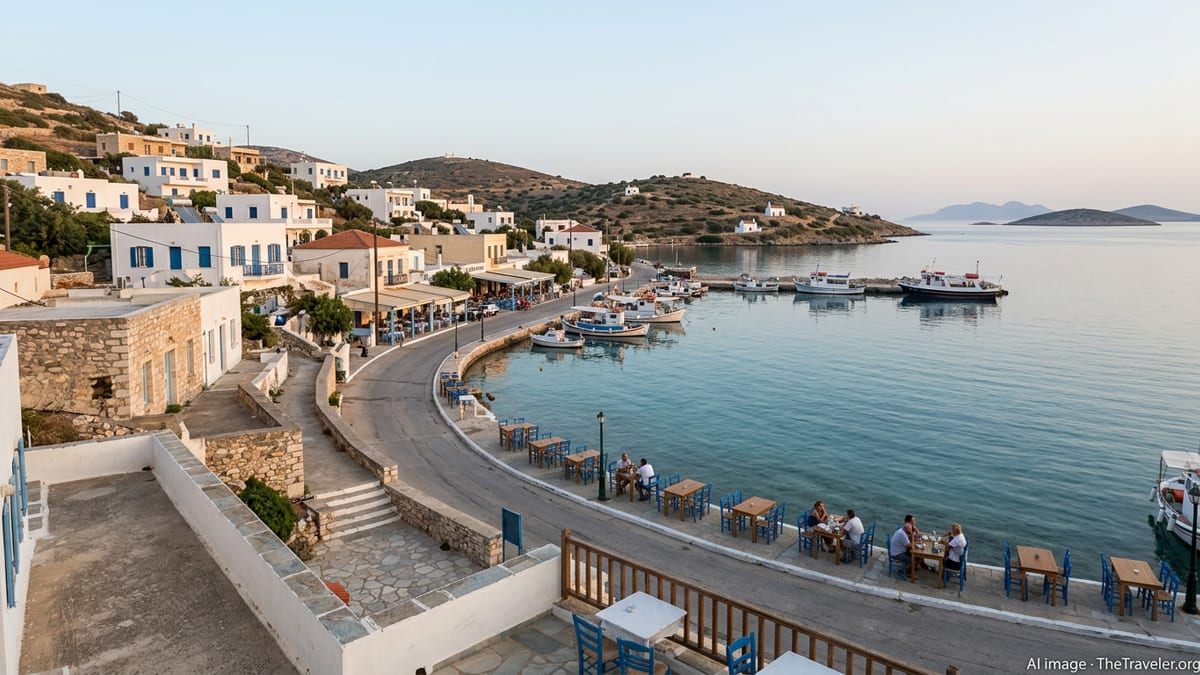
Lipsi, also written Leipsoi, lies in the eastern Aegean between Leros and Patmos, a speck of land framed by smaller islets and turquoise coves. Publicly available travel guides describe it as an island of fewer than 1,000 residents, where fishing boats still dominate the waterfront and the harbor town climbs gently up a low hillside in whitewashed tiers. Ferry connections from larger Dodecanese hubs mean the island remains accessible while still feeling off the main tourist grid.
In recent months, Lipsi has drawn fresh international attention. Travel and tourism outlets report that the island has been ranked among the world’s most exotic emerging destinations for 2026, citing its “untouched” coastline, slow rhythm of life, and emphasis on authentic local experiences. Coverage highlights that, unlike some of Greece’s crowded hotspots, visitor numbers remain manageable and nightlife is deliberately low-key, positioning Lipsi as a refuge for travelers seeking quiet rather than spectacle.
Destination profiles produced this year describe the island as particularly appealing to couples, solo travelers and families looking to unplug. It is often marketed as a place where children still play safely in village squares and where evenings revolve around leisurely dinners on the quay instead of late-night bars. This measured growth in popularity is increasingly framing Lipsi as an antidote to overtourism elsewhere in the Aegean.
Stunning Beaches Framed by an Unspoiled Coastline
Lipsi’s rising profile is closely tied to its coastline. Recent travel guides and local tourism material point to a ring of small, sheltered beaches, many within walking distance of the main settlement. Lientou and Katsadia are frequently cited as among the most popular, with shallow, clear water that makes them suitable for families, while Platys Gialos is often described as one of the island’s most photogenic stretches of sand, backed by low, scrub-covered hills.
Smaller coves such as Elena, Tourkomnima and Chochlakoura, reached by footpath or boat, are promoted as havens for travelers willing to trade facilities for seclusion. Reports emphasize that visitors can still find coves with only a handful of people even in high summer, a rarity in some better-known Greek destinations. The surrounding islets, reachable by day boats, are described in local promotional material as “living museums of natural history,” offering calm anchorages, bright blue water and minimal built development.
Regional tourism coverage also situates Lipsi within Greece’s broader reputation for clean seas and environmentally conscious beach management. While national Blue Flag statistics focus on larger regions, analysts note that small islands like Lipsi benefit from this wider push for high water quality and thoughtful coastal use. The absence of large-scale resort construction on the island is frequently highlighted as a factor in maintaining the clarity of its bays and the relaxed, low-rise character of the waterfront.
History, Faith and Everyday Island Life
Beyond the beaches, Lipsi offers a compact but notable cultural landscape. Historical summaries indicate that the island’s story is tied to the wider Dodecanese, with traces of ancient settlement and a long tradition of seafaring and small-scale agriculture. The main village, clustered around the port, is anchored by churches that play a central role in daily life and seasonal celebrations.
Among the best known religious sites is Panagia tou Harou, a small church along the road toward Chochlakoura. Travel features describe it as one of the most important pilgrimage sites in the region, associated in popular belief with recurring “miraculous” events involving lilies placed before its icon. Each August, a major festival draws worshippers and visitors from surrounding islands, adding a spiritual dimension to the summer season and offering travelers a glimpse into local devotional traditions.
Within the village itself, the church of Agios Ioannis Theologos, dating from the early 20th century, and smaller chapels scattered across the hills reflect the island’s close-knit religious heritage. Publicly available cultural guides point to narrow lanes, blue-trimmed houses and small squares where kafeneia and tavernas double as informal meeting points. Everyday scenes, from fishermen mending nets to bakers delivering fresh bread, feature prominently in recent travel writing that positions Lipsi as an island where ordinary life still takes precedence over tourism.
Sustainable Tourism and a Low-Impact Vision
One of the strongest themes in current coverage of Lipsi is its emerging role as a model for low-impact tourism. Ecotourism organizations describe the island as practicing “sustainable island management,” with policies that discourage mass tourism and seek to limit environmental pressures. Published information highlights local initiatives that promote responsible waste management, reduced single-use plastics and support for small producers.
Reports from environmental and travel platforms emphasize that Lipsi encourages visitors to engage with nature respectfully, whether through hiking, swimming or exploring nearby islets by small boat. An on-island marine conservation presence, including rescue work for marine animals, has been noted by recent travel features and is presented as evidence of a deeper commitment to protecting the surrounding ecosystem.
The island’s food and wine scene also aligns with this philosophy. Locally produced cheeses, honey, herbs and wines are frequently promoted as a core part of the visitor experience, with small farms and family-run businesses supplying tavernas along the harbor. This focus on short supply chains and regional products is framed by commentators as both an economic lifeline for residents and a practical expression of sustainable tourism principles.
Reaching Lipsi and What Travelers Can Expect in 2026
Unlike many popular Greek islands, Lipsi has no airport, a detail that continues to shape the pace and profile of tourism. Travel planners note that visitors typically connect via larger Dodecanese islands such as Kos, Leros or Rhodes, using regular summer ferries and high-speed catamarans. This extra step in the journey appears to help filter arrivals, favoring travelers willing to trade convenience for quieter surroundings.
Accommodation remains predominantly small scale, according to recent travel guides, with family-run guesthouses, rooms-to-let and modest boutique hotels clustered around the harbor and main beach areas. Large resort complexes are absent. This keeps building heights low and preserves sea views, while also anchoring visitor spending more directly in the local community.
For 2026, destination overviews suggest that interest in Lipsi will likely continue to grow, driven by media attention, word-of-mouth recommendations and the ongoing search for less crowded Mediterranean escapes. At the same time, the island’s existing policies and physical limitations point toward measured, rather than explosive, development. For travelers, that combination translates into an Aegean island that offers clear water, cultural depth and a sense of calm, yet still retains the scale and spontaneity of a working Greek village.