

More news on this day
Lisbon is emerging as one of Europe’s standout cities for solo travellers in 2026, as new rankings and tourism data highlight the Portuguese capital’s mix of safety, culture and high-speed connectivity.
Get the latest news straight to your inbox!
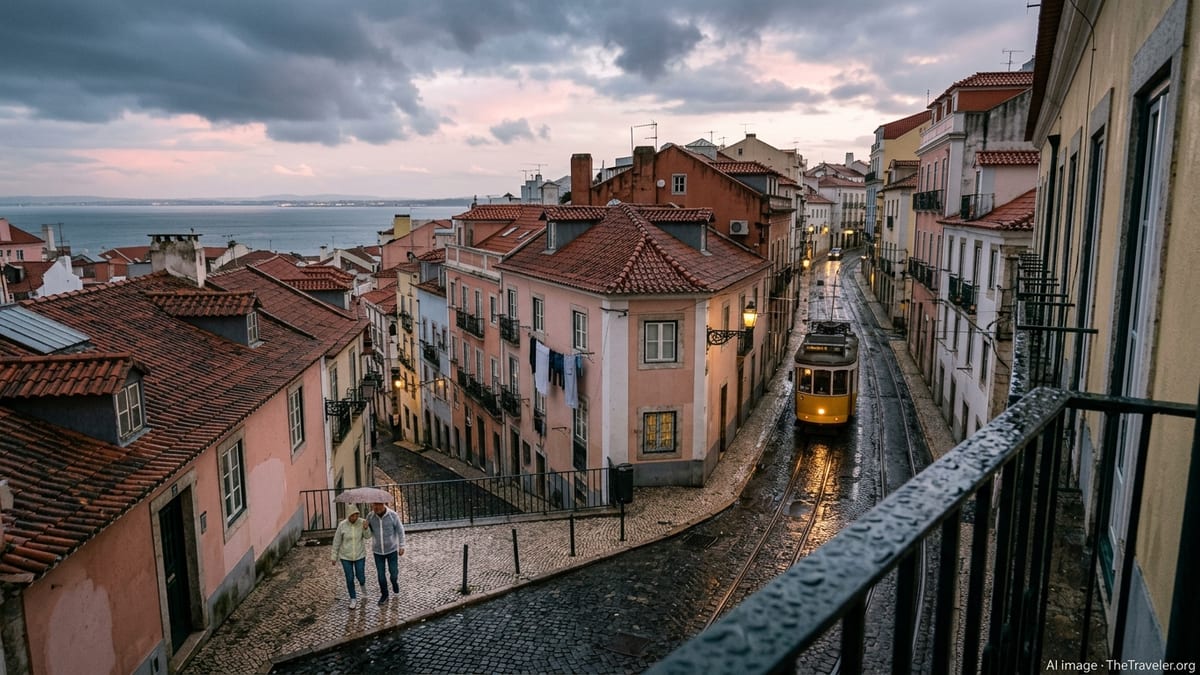
New Indexes Push Lisbon Into Europe’s Solo Travel Elite
Lisbon’s status among independent travellers has been strengthened by a series of recent rankings that place the city near the top of Europe’s solo travel charts. A 2026 Solo Travel Index compiled by travel insurance platform Quotezone, and reported by Portuguese media this month, lists Lisbon among the Top 3 European destinations for solo visitors, based on indicators such as personal safety, affordability, variety of accommodation, digital connectivity and cultural offering.
The index gives Lisbon a safety score of 67.4 points, noting that a growing share of international travellers are planning to explore new destinations alone over the next year. Industry coverage of the study highlights that nearly seven in ten surveyed travellers expressed an intention to take at least one solo trip in 2025, a trend now feeding into early 2026 bookings focused on well-connected, easy-to-navigate cities.
Lisbon’s inclusion near the top of this ranking adds to its existing position in broader tourism benchmarks. Euromonitor International’s latest Top 100 City Destinations Index lists the city among the world’s leading urban destinations, with strong scores not only for tourism performance and infrastructure but also for health and safety and sustainability. These cross-cutting indicators support the picture of a compact European capital increasingly tailored to independent and first-time solo visitors.
Tourism analysts note that such international visibility is important in a crowded European city market. With other Mediterranean capitals competing aggressively for digital nomads and weekend city breaks, Lisbon’s combination of safety metrics, relatively moderate prices and a dense cultural calendar is emerging as a clear differentiator for travellers arriving alone.
Safety Reputation Underpins Solo Travel Confidence
Safety has become one of Lisbon’s strongest calling cards for solo tourism. Recent assessments of travel risk continue to rank Portugal among the world’s safest countries to visit in 2026, with the capital regularly cited as one of the safest major cities in Europe. A 2026 travel advisory overview describes Lisbon as “among Europe’s safest capital cities” for international visitors, underlining consistently low exposure to serious crime in central districts, visible policing in tourist zones and reliable emergency healthcare access.
National and international peace and security indexes reinforce this picture. Portugal sits near the top of the Global Peace Index table, while global opinion polling shows a high share of residents reporting that they feel safe walking alone at night. Reports emphasise that petty crime such as pickpocketing remains the main concern in busy tourist areas, but incidents of violent crime affecting visitors are comparatively rare.
Local tourism research compiled by the Lisbon Tourism Association in its most recent satisfaction and image survey also points to strong perceived security among visitors. The survey of foreign tourists in the Lisbon region shows high satisfaction scores for feelings of safety and security, alongside positive ratings for public transport and city information services. These findings suggest that the city’s safety reputation is aligned with the on-the-ground experience of many travellers, including those navigating its neighbourhoods alone.
Urban planning studies indicate that Lisbon authorities are also examining how to manage visitor flows in the most popular areas to protect both safety and quality of life. Academic work applying pedestrian carrying-capacity models to central parishes such as Santa Maria Maior points to new tools for managing crowding during peak seasons. Travel analysts say that keeping streets navigable and public spaces comfortable is likely to be increasingly important as solo visitor numbers grow.
Culture, Neighbourhoods and Nightlife Appeal to Independent Explorers
While safety provides a foundation, Lisbon’s cultural scene and walkable urban fabric are key reasons solo travellers choose the city over rival destinations. The capital offers an unusually dense mix of historic districts, riverfront promenades, contemporary galleries and music venues within a compact area that can be navigated largely on foot or by tram.
Tourism profiles describe solo visitors moving between traditional quarters such as Alfama, Graça and Mouraria, the nightlife of Bairro Alto and Cais do Sodré, and the more contemporary riverside developments at Parque das Nações. The city’s layered history, from maritime-era landmarks in Belém to street art in Marvila, provides a varied backdrop for independent exploration without the need for organised tours.
Recent tourism reports from Lisbon’s promotional agencies show that culture, gastronomy and city life are among the main reasons cited by visitors for choosing the destination. Analysts point to the growing popularity of food-focused stays, with solo travellers often opting for small guesthouses and short-term rentals in residential neighbourhoods where they can access local markets, cafes and fado venues on foot.
Compared with some larger European capitals, Lisbon’s relative scale and topography also appeal to those travelling alone. Although the city’s steep hills and cobbled pavements can be challenging, public transport coverage by metro, trams, buses and trains allows solo visitors to move between neighbourhoods and out to coastal towns such as Cascais or Sintra in under an hour, broadening the variety of experiences within a single stay.
Connectivity and Remote Work Cement Lisbon’s Solo-Friendly Reputation
Digital connectivity has become another pillar of Lisbon’s attractiveness to solo travellers, many of whom combine leisure trips with remote work. Nomad-oriented platforms and rankings consistently list Lisbon among the world’s leading hubs for remote workers, citing dependable broadband speeds, an extensive network of coworking spaces and relatively straightforward visa options for longer stays.
Coverage of Nomad List data and similar resources notes that the city performs strongly across several dimensions that matter to independent workers, including safety, walkability, cafe culture and international community. These scores have helped position Lisbon as a preferred base for English-speaking remote professionals from North America and northern Europe, a trend reflected in tourism association figures showing the United States as the largest single international market for the city’s hotels in 2025.
The broader transport network underpins this digital connectivity. Lisbon’s main airport links the city directly to major hubs in Europe and North America, while investment plans for a new international airport in the coming decade are framed by policymakers as essential to sustaining growth in higher-spending, long-haul markets. Within the city, ongoing upgrades to public transport, bike lanes and riverfront infrastructure are designed to improve everyday mobility for both residents and visitors.
Travel industry observers note that this combination of physical and digital access makes Lisbon attractive for solo travellers who want to remain connected to work, study or family while on the road. The city’s timezone alignment with much of Europe and partial overlap with North America’s working hours provides additional flexibility for remote workers extending city-breaks into multi-week stays.
Tourism Growth Brings Opportunities and New Pressures
The surge in solo travel interest comes as Lisbon and Portugal navigate broader questions about tourism growth and sustainability. National statistics show that Portugal welcomed close to 30 million international visitors in 2024, with Lisbon ranked among Europe’s most visited urban destinations. Tourism data released in early 2026 indicate that 2025 was another record year, with rising revenues per visitor even as authorities signal a shift toward higher-value, lower-impact tourism models.
Reports from the Lisbon Tourism Association describe a market that has reached a more mature phase. Average daily rates for hotels have increased, and the profile of visitors has diversified, with a growing share from North America and a gradual recovery of Asian markets. Stakeholders are now debating how to balance continued growth with housing pressures, transport congestion and the quality of life for residents in historic neighbourhoods.
Independent travellers form a visible part of this debate. Industry commentary suggests that solo visitors often stay longer than traditional package tourists, make greater use of public transport and local services, and may be more inclined to explore beyond the most crowded historic quarters. Some analysts argue that this pattern can support a more even distribution of tourism spending across the wider metropolitan area if infrastructure and promotion keep pace.
At the same time, municipal and national strategies increasingly reference the need to disperse tourism flows geographically and seasonally, encouraging visitors to combine time in Lisbon with trips to lesser-known regions. Policy papers and investment programmes focused on sustainable tourism highlight measures such as tourism taxes, investment in inland destinations and new digital tools for managing visitor flows as ways to keep Lisbon attractive to solo travellers while avoiding the worst effects of overtourism seen in other European cities.