

More news on this day
Littleton is moving decisively to align itself with Colorado’s emerging Front Range Passenger Rail, framing a future station as a relatively low-cost public investment with outsized potential to reshape travel, tourism and economic growth across the southern Denver metro area.
Get the latest news straight to your inbox!
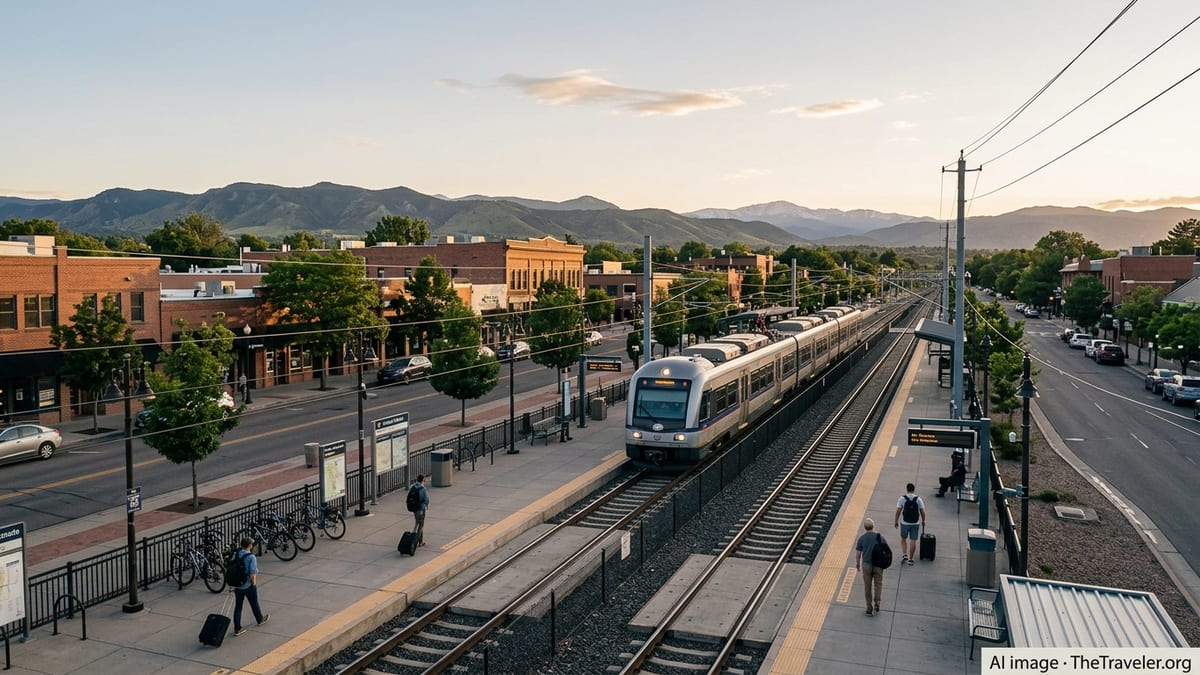
A Strategic South Metro Gateway on the Front Range Line
Publicly available planning documents for Colorado’s Front Range Passenger Rail show a preferred alignment following Burlington Northern Santa Fe right of way from Pueblo to Fort Collins, with a key South Metro stop identified in the Littleton area. That proposed corridor would link Pueblo, Colorado Springs, the Denver core and multiple northern cities, creating an intercity spine that passes directly through or adjacent to Littleton’s existing light rail infrastructure.
Information from the Front Range Passenger Rail District describes the line as a new, higher-frequency passenger corridor intended to complement, rather than replace, existing Regional Transportation District light rail. The South Metro segment is expected to concentrate on locations where transfers to current transit, park-and-ride lots and major road networks are already in place, and Littleton fits that profile. RTD’s Littleton stations are already among the southern anchors of Denver’s light rail network, tying into extensive bus routes and regional highways.
Recent service planning by RTD, including proposed service changes that would restore more frequent rail connections between Littleton and Denver Union Station, further strengthens the case for an intercity rail stop in the area. Better local rail frequencies and direct connections to the regional terminal at Union Station would make Littleton an attractive transfer point for Front Range trains, with minimal new surface infrastructure required.
Against that backdrop, Littleton’s transportation and mobility discussions are increasingly oriented toward being “rail ready” as the state moves from feasibility work into detailed service planning. Local boards have highlighted mass transit, including Front Range rail, as a central focus for their upcoming work programs, signaling that the city intends to be an active participant in route and station conversations.
Affordable Upfront Costs Compared With Highway Expansion
While statewide estimates for building Front Range Passenger Rail run into the billions of dollars, documents from the Front Range Passenger Rail District and Colorado transportation agencies indicate that station-area investments in individual communities are expected to be modest compared with major highway projects. The district has authority to create station-area improvement districts and to leverage targeted local funding for platforms, access upgrades and surrounding public spaces, keeping most heavy infrastructure spending at the corridor level.
For Littleton, that means the city can pursue a strategic role in the corridor without taking on the cost of new mainline tracks. Existing rail rights of way, nearby RTD stations and already urbanized land on the South Platte River corridor reduce the need for extensive property acquisition. In practice, local spending is likely to concentrate on elements such as pedestrian and bicycle access, transit connections, parking management, and redevelopment incentives near the chosen station site.
Colorado’s recent experience with “mobility hubs” along the I-25 corridor, which integrate regional buses, shuttles and future rail at a single point, offers a financial model that combines state, regional and local funding. Those hubs have been delivered at a fraction of the cost of full interchange rebuilds or lane additions, while still expanding capacity for people rather than cars. Reports on those projects suggest that similar cost structures could apply to a Littleton Front Range Passenger Rail station, especially if the city focuses on tying into existing assets rather than building entirely new facilities.
Service planning materials indicate that passenger rail along the Front Range aims to absorb a share of growth in regional travel that would otherwise be carried by congested highways. That shift can defer or reduce the need for expensive road-widening projects in future years, creating indirect savings that dwarf the upfront cost of a station.
Economic Ripple Effects for Downtown, Tourism and Talent
Front Range Passenger Rail advocates highlight a wide range of potential economic benefits, from construction jobs to long-term productivity gains as workers and visitors gain faster, more reliable access to cities along the corridor. State rail planning documents point to intercity rail systems elsewhere in the United States as evidence that improved connectivity can expand labor markets, support tourism and raise property values near walkable station districts.
Littleton’s historic downtown and riverfront are already established visitor draws, with independent shops, restaurants, cultural venues and easy access to the South Platte River Trail. A Front Range rail station with convenient transfers to downtown could extend that visitor base to new markets, including day trippers from Colorado Springs or northern cities who may be less inclined to battle highway congestion or limited parking.
The city’s role in the greater Denver technology and professional services economy may also deepen with direct intercity rail access. Reports from regional economic development organizations across the Front Range routinely cite transportation access and quality of life as factors in business recruitment. A station in or near Littleton would give employers a broader talent pool, allowing workers from multiple cities to reach South Metro jobs without long car commutes.
Property near successful rail stations in other regions has often seen higher demand for mixed-use development. Planners expect similar interest around potential Front Range rail stops, particularly when combined with local zoning that allows mid-rise housing, offices and ground-floor retail. For Littleton, careful station-area planning could channel that investment toward reinforcing the walkable, small-town character that is central to its tourism appeal, while adding new homes and workplaces close to transit.
Improved Mobility and Sustainability Along the Corridor
The broader Front Range Passenger Rail program is being framed by state and regional agencies as both a mobility and climate strategy. Transportation plans note that the corridor between Pueblo and Fort Collins has some of the fastest-growing travel demand in the country, driven by population growth and increasingly intertwined regional economies. Rail is presented as a way to increase person-carrying capacity without permanently widening key highway segments.
Littleton sits directly within this growth corridor, at the transition between Denver’s urban core and rapidly expanding suburbs to the south. A station in the city would strengthen multimodal travel choices for residents who currently depend on driving for trips to Colorado Springs, Pueblo or northern Front Range communities. Combined with RTD connections and local bike and pedestrian improvements, the rail line could support car-light lifestyles that are increasingly attractive to younger workers and visitors.
State rail planning identifies potential reductions in greenhouse gas emissions and criteria pollutants as a major benefit of shifting longer-distance trips from private automobiles to trains powered by increasingly clean energy. For communities along the alignment, including Littleton, those changes are expected to improve air quality over time, especially around highway corridors that currently carry heavy peak-hour traffic.
Public engagement summaries from the Front Range Passenger Rail District show significant interest in reliable all-weather travel. Stakeholders along the corridor have noted that frequent winter storms and holiday congestion can make highway travel unpredictable. A rail alternative that operates on a fixed schedule and is less susceptible to road conditions could appeal to both residents and tourists planning ski trips, events or family visits throughout the Front Range.
Positioning Littleton for Long-Term Growth
Timelines published by Colorado transportation agencies indicate that final service planning and environmental review for Front Range Passenger Rail are expected to continue into 2026, with detailed station designs and funding mechanisms to follow. That gives Littleton a window in which to refine land use policies, street designs and capital plans so that the city is ready to capitalize on a station decision.
Local advisory boards have already identified transit and downtown priorities as central topics for their upcoming agendas, including coordination with regional rail proposals, sidewalk expansion and main street improvements. Aligning those efforts with the likely location of a Front Range station could make early investments more effective, whether in wayfinding, plaza spaces, or safer crossings leading from neighborhoods to transit.
Regional coordination will also be critical. Planning documents emphasize that the success of the corridor depends on how well each city’s station integrates with local buses, shuttles, cycling networks and park-and-ride facilities. For Littleton, that means working closely with neighboring jurisdictions and the Front Range Passenger Rail District to ensure that a South Metro station functions as a seamless gateway rather than an isolated stop.
As Colorado advances one of its most ambitious transportation projects in decades, Littleton’s early, strategic positioning suggests that the city sees Front Range Passenger Rail not only as a new travel option, but as a cornerstone for sustainable economic growth. With comparatively modest local capital needs and the prospect of significant long-term gains in access, tourism and development, the city’s rail-focused planning is emerging as a calculated bet on the future of the entire corridor.