

More news on this day
A new pet-friendly residential cruise concept is taking shape in the United States, promising long-term life at sea for passengers who want to bring their dogs and cats along for the journey.
Get the latest news straight to your inbox!
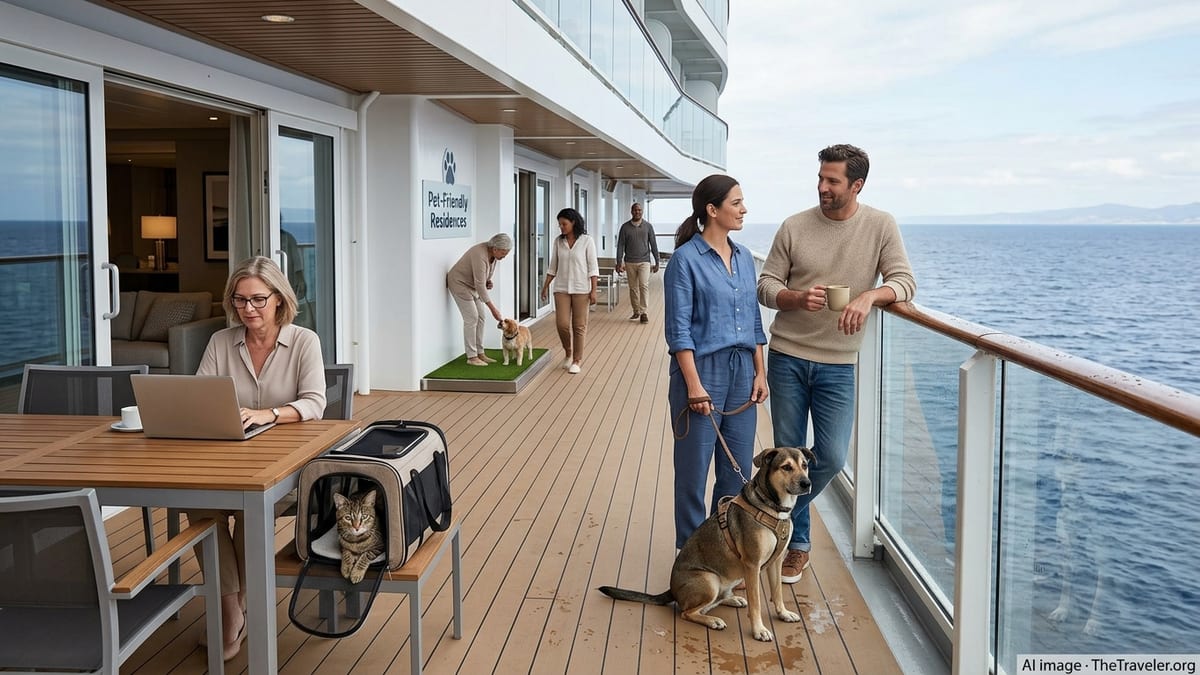
A Residential Cruise That Treats Pets as Part of the Household
Fabled Voyages, a US-based residential cruise start-up, is positioning its ship as a floating community where people can live for months or years at a time rather than a traditional seven-night getaway. Publicly available information describes the project as a “home at sea,” with private residences, co-working areas and social spaces designed for long stays while the ship follows a global itinerary.
Within that model, pets are not an afterthought. The company highlights that cats and dogs will be allowed on board in specific sections of the vessel, with a limited number of designated pet-friendly residences and associated rules and fees. The goal is to enable residents to maintain their household, including companion animals, without giving up the benefits of international travel.
The approach stands out in an industry where most large cruise lines allow only trained service animals and restrict other pets entirely. By weaving pet access into the core design of a residential ship, Fabled Voyages is targeting a niche of travelers who want to downsize on land while keeping their animals with them at sea.
Information on Fabled Voyages’ official channels indicates that the ship will operate more like a condominium community than a vacation ship, which may make extended pet ownership on board more practical. Residents are being offered both ownership-style arrangements and long-term rentals, with the option to personalize living spaces within safety guidelines.
How the Pet-Friendly Programme Is Expected to Work
Details published by the company indicate that only a limited number of cats and dogs will be permitted on board at any one time, housed in defined residential blocks and common areas. This zoning approach is intended to balance the needs of pet owners with those of residents who prefer a pet-free environment elsewhere on the ship.
Additional fees are expected to apply for pet-friendly cabins, reflecting the extra cleaning, infrastructure and staffing required to manage animals safely in a residential maritime setting. Regulations are also being prepared to address vaccination records, leashing rules, noise management and the protection of public spaces.
While specific deck plans for pet relief areas have not yet been fully disclosed, comparable pet-focused travel offerings on land and at sea typically provide designated outdoor zones, waste-disposal stations and cleaning protocols. Fabled Voyages has indicated that it is building its pet policy into the structure of the community rather than treating it as a one-off amenity.
As with any international travel involving animals, residents can expect to navigate port-by-port rules. Existing guidance on cruising and liveaboard life with pets points to health certificates, microchipping and country-specific requirements that can include waiting periods or quarantines. A long-term residential ship will need to coordinate these logistics so that pets remain compliant as the vessel moves between jurisdictions.
Why Pet-Friendly Cruising Is Gaining Momentum
The move by Fabled Voyages comes amid a broader shift across tourism where pets are being integrated into more premium experiences. Recent coverage of dog-focused sailings in the Caribbean and Atlantic, along with specialty “dog cruises” planned by niche operators, reflects growing demand from travelers who are unwilling to leave their animals at home for extended periods.
Industry explainers on pet policies note that, until recently, Cunard’s Queen Mary 2 was seen as a rare example of a mainstream ship consistently accommodating dogs and cats on transatlantic crossings under strict kennel rules. Other major lines have largely restricted non-service animals, offering pet-sitting and shore-side kennels rather than letting pets live in cabins.
Residential cruising is also expanding, with several companies developing ships where passengers can purchase or lease long-term residences at sea. Fabled Voyages is entering this emerging market by pairing the residential model with pet inclusion, aiming at US and international buyers who want to treat the ship as a primary or secondary home.
Travel commentators suggest that this combination is likely to resonate with remote workers, retirees and frequent travelers who have already restructured their lives around mobility. Many in these groups view pets as family members, and a programme that allows pets on board can be a deciding factor between moving to sea or staying on land.
Life On Board With Dogs and Cats
Living full time on a ship with pets introduces practical challenges that differ from short cruises. Accounts from liveaboard sailors and long-term cruisers describe the importance of training dogs to use specific areas for exercise and relief, planning frequent shore excursions where local rules permit, and investing in safety gear such as life vests and harnesses.
Cats, by contrast, are often kept indoors on vessels, with secure balconies or window views and robust litter-box setups. Residential ships like the one envisioned by Fabled Voyages are expected to provide more square footage per residence than typical cruise cabins, which could make it easier to manage litter, pet beds and food storage without sacrificing limited living space.
Noise control is another consideration. Reports from pet-friendly accommodation providers indicate that clear rules about barking, quiet hours and pet-free zones help maintain harmony in dense living environments. For a ship that functions as an apartment building at sea, similar policies are likely to be central to the pet programme’s long-term success.
On the positive side, advocates of liveaboard life with animals point to benefits that include companionship during long passages, increased social interaction among residents and structured daily routines built around walking and pet care. In a shipboard community, pets can become informal icebreakers, helping neighbors meet and form connections.
What Prospective Residents Should Watch Next
Fabled Voyages continues to refine its offering as it moves toward launch, sharing periodic updates on entertainment programming, residence options and the overall lifestyle it aims to create. Pet policies are part of that evolving framework, and more granular rules on maximum pet numbers, eligible breeds and required documentation are expected as the ship’s entry into service approaches.
Prospective residents considering a move to sea with their animals will need to weigh the stability of a residential cruise against the regulatory complexity of international pet travel. They may also compare Fabled Voyages’ model with other emerging residential ships and one-off pet-friendly cruises that focus on shorter, event-style sailings.
For now, the concept illustrates how quickly expectations are changing in the cruise and residential travel sectors. A decade ago, full-time life on a ship with a dog or cat was largely limited to private yachts and small liveaboard communities. Today, companies are marketing large-scale, organized programmes designed specifically for people who want their pets alongside them as they circle the globe.
As more information becomes available about pricing, itineraries and operational timelines, the pet-friendly framework at Fabled Voyages is likely to be closely watched by both the cruise industry and travelers who see their next home not on land, but at sea with their animals in tow.