

More news on this day
London North Eastern Railway has partnered with Destination North East England to support the 2026 Destination North East England Tourism Awards at Newcastle Civic Centre, strengthening ties between the region’s rail network and its fast-growing visitor economy.
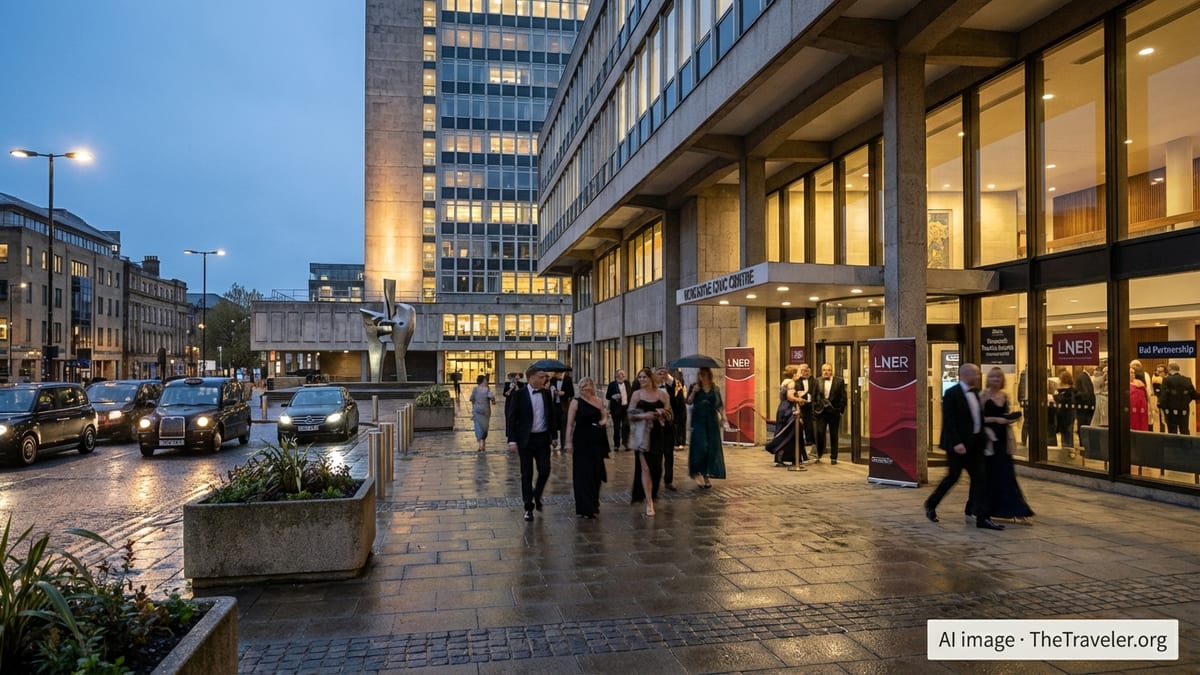
Flagship Awards Night Set for March 2026 at Civic Landmark
The 2026 Destination North East England Tourism Awards are scheduled to take place on Thursday 19 March 2026 at Newcastle Civic Centre, bringing together leading tourism operators, cultural venues and hospitality businesses from across the region for an evening that organisers describe as a showcase of the sector’s “quality elite”. Guests will attend a drinks reception followed by a formal dinner and the awards ceremony, with gold winners invited on stage and additional photography sessions arranged for silver, bronze and highly commended recipients.
The Civic Centre, with its distinctive modernist architecture and position close to Newcastle’s nightlife districts, has become the established home of the awards. Hosting the 2026 edition there once again reinforces the event’s role as a high-profile fixture in the city’s calendar and a focal point of English Tourism Week. Organisers say the partnership with LNER will add further national visibility to the occasion, highlighting the North East as one of the country’s most connected and accessible destinations.
Ticketing for the gala reflects its positioning as a premium but industry-focused event. Individual seats are priced in line with comparable regional award dinners, while tables of ten are capped to ensure a cross-section of businesses can attend despite limited venue capacity. Tourism leaders note that many finalists choose to make a full evening of it in Newcastle, with partner hotels in the city centre offering preferential rates to guests attending the ceremony.
LNER Strengthens Its Role as a Gateway to North East England
LNER’s decision to partner with Destination North East England on the 2026 awards builds on the operator’s longstanding presence in the region, with frequent intercity services linking Newcastle and other North East stations to London King’s Cross, Yorkshire and Scotland. The company has already announced major timetable changes from late 2025, with additional daily services serving Newcastle and other key North East hubs, positioning rail as a central pillar of the area’s tourism infrastructure.
By aligning itself with the awards, LNER underlines its role as both transport provider and tourism advocate. Rail industry observers point out that the route has become a vital access corridor for short breaks and business events, with faster journey times and greater service frequency making it easier for visitors to choose the train over car or domestic air. The partnership is expected to be highlighted in destination marketing, ticketing campaigns and on-board communications in the run-up to the March 2026 ceremony.
Executives involved in the collaboration say the focus will not just be on moving people into and out of the region, but also on encouraging sustainable patterns of travel once they arrive. Cross-promotion of local attractions, seasonal events and award finalists is anticipated on LNER channels, reinforcing the message that the North East is a rail-first region for visitors looking to combine city experiences with coastal and countryside escapes.
Celebrating a Diverse Tourism Landscape From Coast to Countryside
The Destination North East England Tourism Awards are widely regarded as the regional industry’s “Oscars”, with categories spanning accommodation, attractions, food and drink, events and individual achievement. The 2026 shortlist includes businesses from across Tyne and Wear, Northumberland and County Durham, ranging from boutique hotels and country inns to science centres, observatories, heritage railways and cookery schools. Previous editions have recognised venues such as Newcastle’s Life Science Centre for their work on accessibility, alongside coastal hotels and rural experiences that draw visitors into the wider region.
Destination North East England positions the competition as a benchmark of quality, requiring detailed submissions, site visits and independent judging. For many operators, just securing a place on the shortlist can translate into additional bookings and higher profile in national media and travel guides. Winners often progress to compete in national tourism awards, extending the region’s reach far beyond the North East.
For LNER, partnering with such a broad-based awards programme offers a unique window into the experiences that motivate people to travel. From family-friendly attractions and outdoor adventures to high-end dining and cultural festivals, the range of finalists reflects the varied motivations of rail passengers heading to the North East. Officials suggest that insights from the award entries can help shape future rail products, partnerships and promotional fares targeted at key visitor segments.
Spotlight on Regenerative and Responsible Tourism
One of the defining features of the Destination North East England Tourism Awards in recent years has been the emphasis on regenerative and responsible tourism. Categories such as the Regenerative Tourism Award sit alongside recognition for accessibility, inclusion and community impact, reflecting a wider regional strategy to grow visitor numbers while reducing environmental pressures and distributing benefits more widely among local communities.
The North East has been at the forefront of several high-profile sustainability initiatives, including funded Green Tourism membership for qualifying visitor economy businesses and specialist support for event organisers to measure and reduce carbon and resource impacts. This policy backdrop is expected to frame the 2026 awards, with judges looking beyond traditional visitor metrics to assess how finalists are cutting emissions, supporting local supply chains and protecting landscapes and heritage assets.
LNER’s involvement intersects with this agenda at several points. Rail is frequently positioned as among the lowest-carbon mainstream transport options for domestic trips, and additional services to and from Newcastle create opportunities to displace car journeys on key corridors. Industry commentators say the partnership could help normalise rail-inclusive itineraries and encourage organisers of festivals, conferences and major events to promote train travel as the default choice for attendees.
Newcastle Civic Centre’s Growing Role as a National Events Hub
Newcastle Civic Centre has emerged as one of the North East’s most prominent civic venues, regularly hosting national and regional award ceremonies, professional dinners and cultural events. Alongside the Destination North East England Tourism Awards, the building has been selected as the site for occasions ranging from community rail celebrations to planning and engineering award nights, reinforcing Newcastle’s reputation as a destination for major gatherings.
The Civic Centre’s location, within easy reach of Newcastle Central Station and the wider city centre, is critical to that success. Delegates arriving on LNER services from London, the Midlands, Yorkshire or Scotland can step from intercity trains onto local transport or make the short transfer to hotels and the venue on foot. Tourism advocates argue that this proximity is a competitive advantage in the meetings and events market, where convenience and reduced travel time are key decision factors.
For the 2026 tourism awards, organisers plan to capitalise on the building’s flexible spaces to stage both the formal ceremony and the networking elements that surround it. Banqueting halls will host local food-led menus that highlight North East produce, while dedicated areas will be used for sponsor activations, press interviews and photography. The Civic Centre’s modernist interiors and public art also provide an evocative backdrop for storytelling about the city’s evolution as a cultural and visitor destination.
Tourism Awards as a Catalyst for Skills, Careers and Inclusion
Beyond celebrating successful businesses, the Destination North East England Tourism Awards have increasingly been used as a platform to nurture local talent and promote careers in hospitality, tourism and events. Recent editions have involved students from regional colleges working alongside venue and catering teams at the awards night, giving them first-hand experience of large-scale event delivery and high-pressure service environments.
Education partners argue that this model helps bridge the gap between classroom learning and industry expectations, particularly in areas such as customer service, food and beverage operations, digital marketing and event management. In a sector facing ongoing recruitment challenges, the awards provide an opportunity to showcase progression routes and inspire young people to see tourism as a long-term career rather than a short-term job.
The partnership with LNER could deepen this skills focus by highlighting rail-specific roles linked to the visitor economy, from on-board hospitality and station customer service to operations planning and sustainability management. With rail travel forming a major part of many visitors’ first impressions of the North East, organisers say there is growing recognition that skills development must span the entire journey, not just what happens at the destination.
Boosting Year-Round Visitor Numbers Across the Region
Although the 2026 awards will be staged in a single evening, their ambition is to influence visitor behaviour and business performance throughout the year. Destination North East England sees the programme as a cornerstone of its wider strategy to grow the visitor economy, extend stays and encourage exploration beyond well-known hotspots to emerging destinations across the region.
Shortlisted businesses often report that recognition drives fresh interest in shoulder and off-peak periods, particularly when combined with targeted marketing and joint promotions. For rural and coastal operators, a gold or silver award can help attract new domestic markets and diversify away from heavily concentrated summer trade. In urban centres such as Newcastle and Gateshead, accolades for city attractions, venues and festivals support efforts to position the area as a year-round city break and events destination.
LNER’s network reach means the operator is well placed to amplify these messages. Rail-led itineraries built around award-winning experiences, coupled with advance fares and seasonal offers, could encourage more visitors to plan multi-stop trips that take in both the city and its surrounding landscapes. Tourism leaders suggest that, over time, this could support more balanced visitor flows and help smaller communities share in the benefits of a growing regional profile.