

More news on this day
A sudden spike in liquefied natural gas prices, driven by severe supply disruptions in the Middle East, is spilling into global aviation, with the United States, Canada, France, Denmark, Australia, Japan, Singapore and other markets reporting mounting route cancellations, network reshuffles and sharp airfare increases on key long-haul corridors.
Get the latest news straight to your inbox!
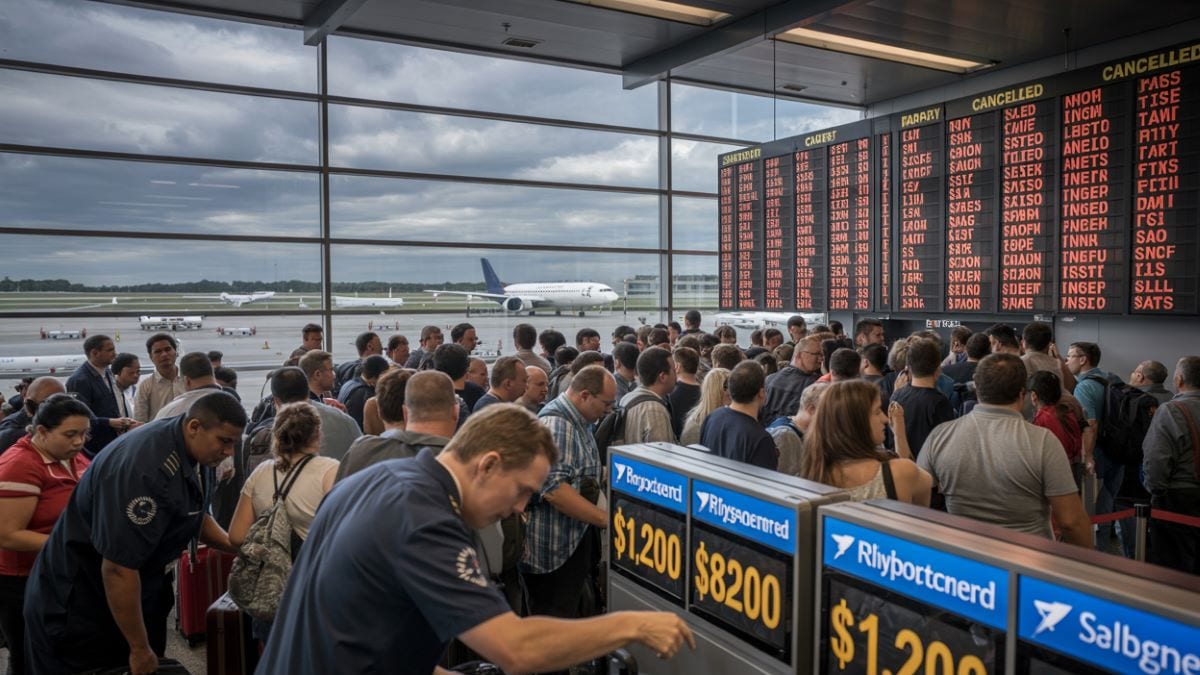
Image by Travel And Tour World
Energy Supply Shock Pushes Up Aviation Costs
The latest upheaval in liquefied natural gas markets follows the effective closure of the Strait of Hormuz and missile strikes on major LNG export infrastructure in Qatar, which together have sidelined a significant share of global supply almost overnight. Publicly available analysis indicates that the Ras Laffan complex in Qatar alone represents close to one fifth of the world’s LNG export capacity, magnifying the global impact of any outage.
European benchmarks for natural gas have climbed markedly in recent weeks, with traded prices jumping by more than a third in some sessions, according to energy market coverage. Forward contracts linked to LNG deliveries into Europe and Asia show a similar surge, signaling that elevated costs are likely to persist at least through the current northern hemisphere summer travel season.
While jet fuel is refined from oil rather than LNG, the tight interconnection of fuel and power markets means higher gas prices are feeding through via more expensive electricity, refinery operating costs and competition for alternative fuels. Analysts cited in recent energy reports describe the current environment as one of the most severe energy supply shocks in decades, with aviation among the sectors most exposed to sudden swings in fuel and routing costs.
As airlines adjust to the new reality, several carriers in North America, Europe and Asia are reviewing their capacity plans for 2026, trimming marginal routes and cautioning that fares will need to reflect substantially higher operating expenses if fuel and navigation costs remain elevated.
Middle East Airspace Disruptions Reshape Global Routes
The LNG shock coincides with a rapidly evolving airspace crisis across the wider Middle East. Published tracking data compiled by specialist aviation outlets indicates that more than 14,000 flights touching the region have already been cancelled since late February, primarily affecting services that normally transit Gulf hubs between Europe and Asia.
Carriers based in the United States, Canada, Europe, Japan and Australia are being forced to reroute around closed or high-risk air corridors, adding hundreds of miles to many long-haul journeys. Flights that once relied on efficient paths over the Middle East are now taking northerly or southerly detours, which lengthen flight times, increase fuel burn and reduce the number of rotations an aircraft can operate each day.
Reports focused on Asia–Europe traffic show that the loss of direct connectivity via Gulf hubs has created bottlenecks across alternative gateways, including Singapore, Tokyo, Seoul and major European capitals. These hubs, already busy at the tail end of the post-pandemic travel rebound, are now grappling with congestion as airlines consolidate passengers onto fewer, longer routes that skirt restricted airspace.
The combined effect of detours and higher fuel input costs is particularly evident on premium long-haul sectors. Monitoring by independent fare trackers suggests that economy tickets on some Europe–Asia and North America–Asia routes have risen by double-digit percentages within weeks, while last-minute business-class and first-class fares have climbed even more steeply.
Hammered Networks in the US, Canada and Europe
North American and European networks are feeling the strain as carriers reassign aircraft away from secondary transatlantic and transpacific routes to shore up core long-haul operations. Recent route announcements and schedule changes compiled by industry analysts show a pattern of cuts or reductions on thinner city pairs in favor of maintaining capacity on trunk routes linking major hubs.
In the United States and Canada, this has translated into reduced frequencies on some services to smaller European and Asian destinations, as well as the suspension of newly launched seasonal routes that had been planned for the 2026 summer period. Travelers in regional markets now face more connections and fewer nonstop options, particularly for trips that once relied on Gulf or European hubs for onward access to Asia and Africa.
Across Europe, traditional network airlines in France, Denmark and other countries are under similar pressure. Publicly available schedule data shows that several carriers have pared back flights to secondary North American cities to free up widebody aircraft for extended Asia and Middle East bypass routes. Low-cost carriers, often more heavily hedged on fuel and less reliant on ultra-long-haul flying, appear somewhat more insulated for now, though they are not immune to broader cost inflation in airport charges and ground handling.
Industry commentary suggests that the current wave of cancellations and rescheduling is likely to continue into the mid-year timetable, with airlines emphasizing flexibility and shorter booking horizons as they wait for clearer signals from fuel and energy markets.
Asia-Pacific Hub Strain: Australia, Japan and Singapore
In the Asia-Pacific region, Australia, Japan and Singapore have emerged as critical pressure points in the reconfigured global network. As airlines avoid traditional Middle East waypoints, more traffic is funneled through these established hubs, intensifying competition for airport slots, ground resources and available hotel accommodation for disrupted passengers.
Coverage from regional business and travel publications highlights that flights between Europe and destinations such as Sydney, Melbourne, Tokyo and Singapore are among those seeing the steepest fare increases. Some routings that previously relied on one-stop itineraries via Gulf hubs now require two or even three connections, increasing both journey times and volatility in final pricing.
Singapore in particular, home to one of the world’s busiest international airports, is playing an outsized role. Aviation data shared in recent analyses indicates that select Europe–Singapore itineraries briefly spiked to several multiples of normal economy fares in early March as rerouted demand collided with constrained capacity and surging fuel costs. Japanese and Australian carriers are also recalibrating networks, prioritizing routes that can sustain higher yields under the new cost structure.
Regional governments are closely monitoring the fallout, with public statements in several Asia-Pacific markets pointing to concerns over tourism, trade flows and the resilience of critical air links. However, there is limited short-term scope to add new capacity, given long lead times for aircraft deliveries and pilot training.
Travelers Face Higher Prices and Growing Uncertainty
For passengers across the United States, Canada, Europe and Asia, the immediate consequence of the LNG-driven energy shock and airspace disruption is a travel environment characterized by higher prices and heightened uncertainty. Forward booking data cited by travel platforms indicates that many consumers are delaying long-haul purchases or opting for closer-to-home destinations in response to rising fares.
Travel advisory services report that flexible tickets, multi-carrier itineraries and travel insurance with robust disruption coverage are gaining popularity as travelers look to hedge against late schedule changes. At the same time, corporate travel managers are reassessing budgets and trip approval policies, particularly for itineraries that now require longer routings and higher cabin classes to maintain crew rest and safety requirements.
While some energy market forecasts suggest that new LNG export capacity from North America and other regions could eventually ease global gas prices, most outlooks published in recent days emphasize that the balance of 2026 remains highly uncertain. Much will depend on the evolution of the conflict affecting the Strait of Hormuz, the speed of repairs to damaged infrastructure, and the ability of other producers to fill the gap.
Until then, international air travel is expected to remain vulnerable to further fuel price swings and operational disruptions, leaving airlines and passengers alike navigating one of the most volatile environments the industry has faced since the height of the pandemic.