

More news on this day
AI travel startup Lobby has raised 2.2 million dollars in fresh funding to accelerate the rollout of its automated booking platform, aiming to help travel brands streamline reservations, boost direct sales and deliver more personalized trip planning at scale.
Get the latest news straight to your inbox!
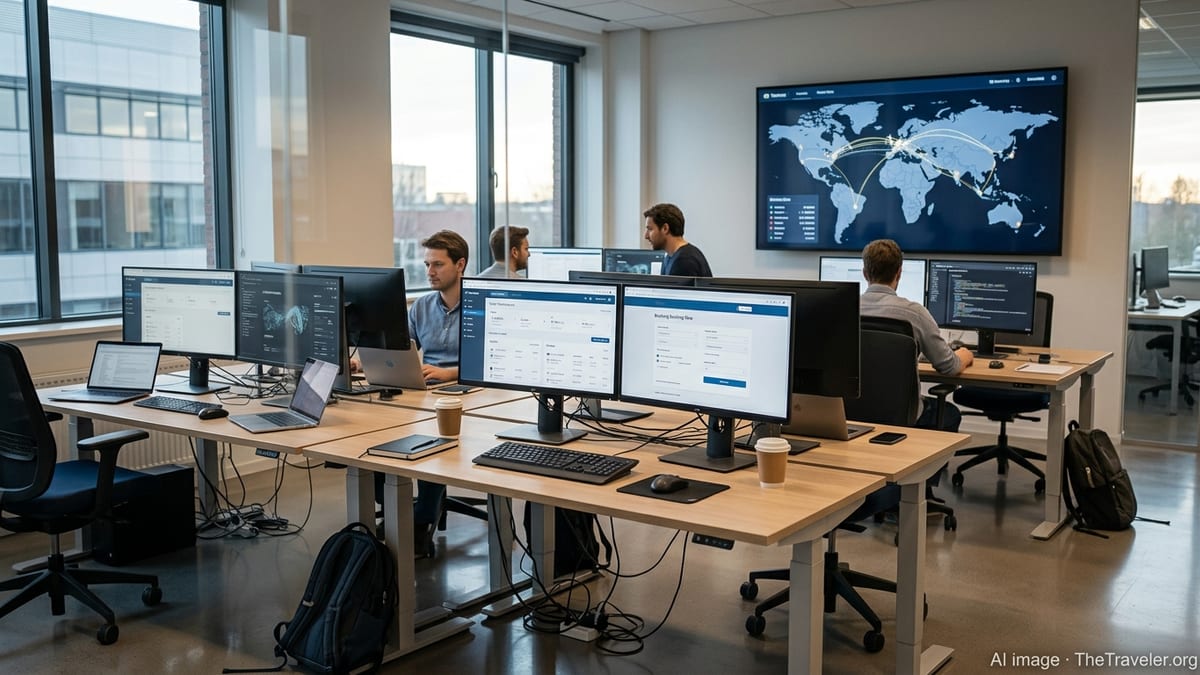
Seed Funding Fuels Expansion of AI Booking Platform
According to publicly available funding data and recent startup coverage, Lobby has closed a 2.2 million dollar round to deepen development of its AI-first booking platform and expand its reach across the travel sector. The new capital positions the company among a growing wave of travel-technology contenders using artificial intelligence to simplify the planning and purchasing process for both travelers and suppliers.
Reports indicate that the investment is structured as an early-stage round, giving Lobby additional runway to grow its engineering and commercial teams while accelerating product rollouts. Investors are said to be backing the company’s thesis that traditional booking flows remain too fragmented and manual, particularly for complex itineraries that cross multiple channels and suppliers.
Lobby’s technology is designed to sit behind the scenes of existing travel brands, powering conversational search, automated offers and frictionless checkout. Rather than asking travelers to navigate long forms and static search filters, the platform uses AI models to interpret intent, assemble options in real time and manage the downstream booking and modification workflows.
The 2.2 million dollar raise arrives at a time when travel startups working on automation and personalization are attracting renewed attention, after a period in which many investors remained cautious about consumer-facing travel businesses. Lobby’s focus on powering other brands, rather than competing directly with them, appears to be a key part of its appeal.
How Lobby’s AI Reimagines Travel Booking
Public product descriptions show that Lobby positions itself as an AI booking layer that can plug into airlines, hotels, agencies and other travel sellers. By drawing on inventory, pricing and profile data, its software seeks to generate tailored recommendations that go beyond simple price-and-date searches, surfacing options that better fit a traveler’s preferences and constraints.
The platform is built to support conversational interfaces, including chat-style interactions on web, mobile and messaging channels. A traveler might describe what they are looking for in natural language, such as needing a long weekend trip within a certain budget or a work itinerary that aligns with loyalty status and corporate policy. Lobby’s system parses the request, checks availability and returns bookable options, while also handling follow-up questions and changes.
On the supplier side, the technology aims to automate repetitive back-office tasks that still consume significant agent time. This can include reissuing tickets, processing schedule changes, repricing alternatives and updating confirmations. By offloading these processes to AI-driven workflows, travel companies can reserve human attention for exceptions and higher-touch service.
Lobby’s booking engine is also described as being built for integration into existing stacks, rather than requiring a full system replacement. Connectors to common global distribution systems, channel managers and payment providers are intended to make it easier for established players to test the AI layer on specific customer segments before deploying it more widely.
Implications for Travel Agencies and Suppliers
The arrival of new capital for Lobby underscores the wider shift in travel distribution toward automation and direct relationships. Traditional travel agencies and corporate travel managers have long relied on a combination of global distribution systems and proprietary tools, often supported by manual workflows that can be slow and costly to scale.
By offering an AI-based booking fabric, platforms like Lobby promise to help agencies and suppliers present more relevant choices without forcing travelers to become experts in fare rules or routing logic. This could be particularly valuable for mid-sized agencies and niche specialists that want to compete with larger online players but lack the resources to build advanced decision engines in-house.
For hotels and other accommodation providers, a smarter booking layer can support more dynamic packaging of rooms, services and experiences. Rather than listing only basic room types, a property could promote stay extensions, upgrades, on-site activities or add-ons that match the profile and history of the guest, all surfaced automatically during the booking journey.
In corporate travel, an AI system that understands policy rules and traveler preferences may reduce friction between compliance and convenience. Companies increasingly seek tools that keep bookings within approved channels while still giving employees consumer-grade experiences. Lobby’s positioning as an infrastructure provider suggests it is targeting these behind-the-scenes use cases as much as consumer-facing trip planning.
AI Momentum Builds Across Travel Technology
Lobby’s funding round takes place against a backdrop of intense interest in artificial intelligence across the wider travel and hospitality ecosystem. Established global distribution players, large online travel agencies and airline groups are publicly highlighting AI initiatives, from revenue management and demand forecasting to customer support and disruption handling.
Industry analyses note that automated trip assistants, dynamic packaging engines and predictive customer service tools are among the fastest-growing segments in travel technology. Startups focusing on these areas have been attracting capital as travel demand normalizes and companies look for ways to manage costs while improving service quality. Lobby’s focus on AI-native booking is consistent with this overall direction.
At the same time, commentators point out that many travel brands remain tied to legacy systems and fragmented data. Integrating AI effectively often requires cleaning and connecting information that may sit in separate reservation, loyalty and payment platforms. Vendors like Lobby that market themselves as adaptable overlay solutions are attempting to bridge that gap without forcing a complete technology overhaul.
The renewed funding activity around AI travel startups also reflects a broader investor shift toward B2B software models that generate recurring revenue and can scale without heavy marketing spend. Lobby’s emphasis on selling infrastructure to other travel companies, rather than competing directly for end customers, aligns with those priorities.
Challenges Ahead for AI-First Booking Platforms
Despite the momentum, AI-native booking platforms such as Lobby face a number of challenges as they scale. Travel distribution remains heavily regulated and dependent on complex supplier agreements, fare rules and content access arrangements. Any system that automates booking decisions must handle these constraints with high accuracy to avoid costly errors.
There is also rising scrutiny around how AI systems use and store personal data, particularly when combining booking history, payment details and preference profiles. Travel brands adopting new AI tools are expected to weigh potential efficiency gains against compliance requirements and customer expectations around transparency and control.
Another hurdle is change management within agencies and suppliers that have built processes around existing tools. Even when an AI platform can be integrated technically, front-line staff may need new training and workflows to trust automated recommendations and delegate routine tasks to software.
Observers note that Lobby’s fresh 2.2 million dollars in funding gives the company a window in which to address these issues, build reference deployments and prove that its AI-driven approach can deliver measurable improvements in conversion, customer satisfaction and operating costs. The coming period of growth will test whether the platform can turn strong investor interest in AI booking into long-term adoption across the travel industry.