

More news on this day
Hundreds of travellers were stranded across Boston today as operations at Logan International Airport were disrupted by 202 delayed flights and 16 cancellations, snarling connections on Delta Air Lines, American Airlines, JetBlue, United and other major carriers serving New York, Chicago, Atlanta, Los Angeles and Miami.
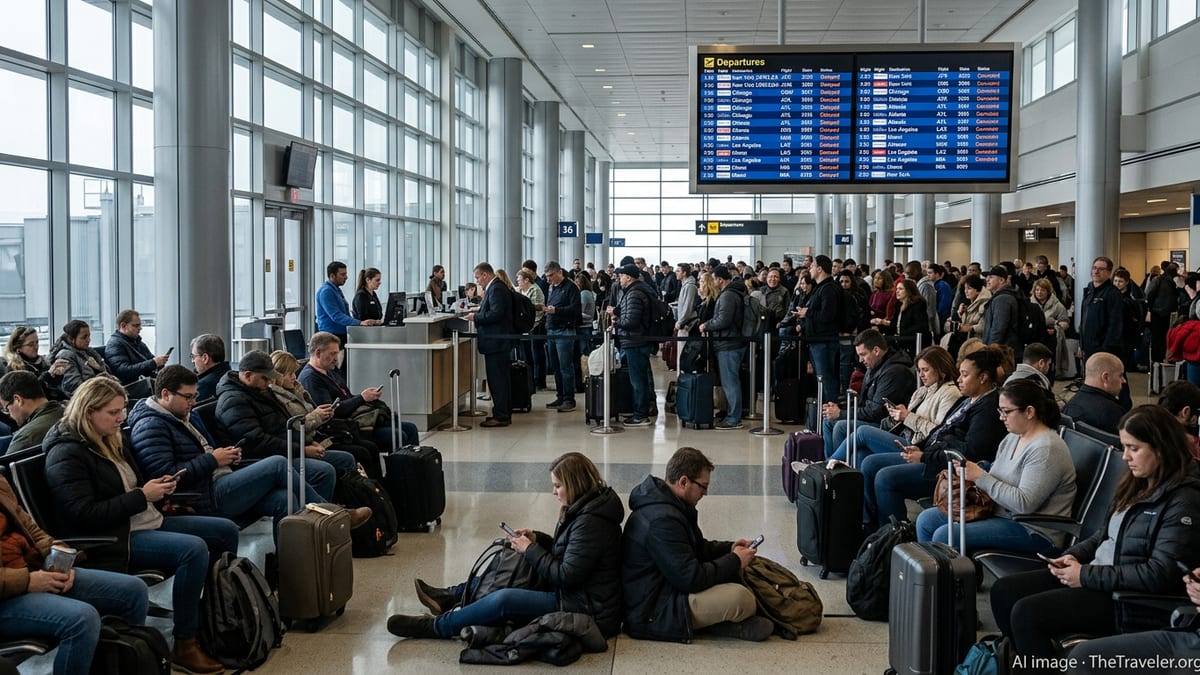
Operational Turmoil at Boston’s Main Gateway
General Edward Lawrence Logan International Airport, New England’s busiest air hub, saw its mid-morning and early afternoon schedules unravel as mounting delays rippled through departure boards and forced airlines to scrub a slate of services altogether. While Logan is no stranger to weather-related disruptions, today’s combination of low clouds, shifting winds and residual national congestion left carriers with little room to recover, pushing routine schedule pressure into full-blown gridlock.
According to live flight-tracking tallies referenced by airport and airline sources, 202 flights were delayed and 16 were canceled at Boston by early evening, affecting both domestic and connecting international passengers. The disruptions cut across terminals and alliances, impacting operations for Delta, American Airlines, JetBlue, United, Alaska Airlines and several regional affiliates that feed traffic into the big four networks.
As departure times slipped in 30 and 60 minute increments, passengers reported gate changes, rolling delay notices and long queues at customer service desks. Airport staff added additional wayfinding personnel on concourses and increased public-address announcements to direct travellers needing rebooking or overnight arrangements.
Key Routes to Major U.S. Hubs Hit Hard
The heaviest impact was felt on Logan’s busy shuttle and hub-to-hub routes, particularly services to New York, Chicago, Atlanta, Los Angeles and Miami. These corridors serve as critical spokes in the national network, funnelling New England passengers into onward flights across the United States, Latin America and Europe. Any disruption on these lanes quickly multiplies as missed connections cascade through airline systems.
New York-bound flights saw some of the earliest knock-on effects as carriers attempted to space arrivals and departures in response to flow-control measures further down the East Coast. Boston to Chicago services, vital for business travellers and Midwest connections, experienced a mix of extended ground holds and airborne holding patterns, forcing some aircraft to return to gates for additional fueling and crew duty-time checks.
On the southern axis, flights to Atlanta and Miami reported extended departure queues as airlines worked to sequence departures into already crowded arrival banks at those hubs. Westbound services to Los Angeles also felt the squeeze, with some flights pushed into late-evening departures that threatened to strand passengers overnight once they arrived on the West Coast.
Airline representatives said they were prioritising rebooking for travellers with tight onward itineraries, especially those connecting to once-daily international departures. However, limited spare seat capacity at the start of the spring travel period meant that some passengers were being shifted to flights one or even two days later.
Travellers Face Long Lines and Limited Options
Inside the terminals, scenes were familiar to anyone who has travelled during a major disruption: snaking check in lines, packed seating areas and passengers clustered around power outlets as they refreshed airline apps for updates. Families with young children stretched out on terminal carpets near gates, while solo travellers balanced laptops on carry on bags as they attempted to work through the delays.
At Logan’s ticketing level, travellers reported waiting more than an hour to speak with airline agents about rebooking and hotel vouchers. Many turned instead to digital tools, using airline mobile apps and call centres to secure alternative flights while remaining close to their original gate in case departure times improved. Some passengers attempting to salvage same day arrivals to New York, Chicago or Washington opted to abandon air travel altogether and switch to train or intercity bus services from downtown Boston.
Local hotels near the airport and in Boston’s inner suburbs began to fill quickly by late afternoon as airlines issued overnight accommodation vouchers for those facing missed connections. Ride-hailing pick up zones at Logan saw elevated demand as stranded travellers sought last minute rooms or alternative transport options, adding road congestion around the Sumner and Ted Williams tunnels leading into the city.
Airlines Scramble to Restore Schedules
Airline operations teams spent the day recalibrating schedules, repositioning aircraft and monitoring crew duty limits in an effort to stabilise the situation before the late-evening departure window. With aircraft and crews tightly scheduled across the national network, a cluster of delays at one airport can leave carriers juggling equipment shortages and out-of-position crews at multiple hubs.
Delta, American Airlines, JetBlue and United all issued brief operational updates to passengers through mobile notifications and gate announcements, urging travellers to verify flight status before heading to the airport and to allow extra time for security screening and terminal transfers. While no single carrier bore the brunt of today’s cancellations, JetBlue’s large presence at Logan meant its customers were especially visible in congested gate areas, while American and Delta shuttle passengers to New York and Washington faced a sequence of short rolling delays.
Industry analysts noted that Logan’s disruptions were exacerbated by wider national strains following several days of weather and staffing challenges at other major hubs. With aircraft already out of their ideal rotations from earlier storms and air traffic control slowdowns, airlines had less reserve capacity to absorb fresh delays in Boston, making it more difficult to rapidly restore normal operations.
What Travellers Should Do Next
Transport officials and airline representatives urged affected passengers to stay informed through official airline channels, arrive early for any remaining evening departures and keep flexible expectations for arrival times. Travellers whose flights were significantly delayed or canceled were advised to check their carrier’s policies on meal vouchers, hotel coverage and compensation, which vary by airline and the cause of disruption.
For those still scheduled to travel through Boston later tonight or tomorrow, experts recommended confirming flight status repeatedly in the hours before departure, using mobile boarding passes to reduce time at check in counters and packing essential medications and a change of clothes in carry on bags in case of unexpected overnight stays. Travellers with critical commitments at their destination, such as cruises or international tours, were urged to build in additional buffer time or consider alternative routings through less congested airports if options were available.
While airport officials said they expected operations to gradually improve as the evening peak subsided, they warned that residual delays could continue to affect early morning flights on Tuesday as aircraft and crews return to their normal positions. For now, hundreds of passengers in Boston are facing a familiar travel reality: a day planned around a straightforward domestic flight turned into a long, uncertain wait at Logan’s crowded gates.