

More news on this day
Hundreds of travelers across the northeastern United States faced daylong disruptions after a wave of cancellations and rolling delays at Boston Logan International Airport affected key routes to New York City, Chicago, Indianapolis and other destinations.
Get the latest news straight to your inbox!
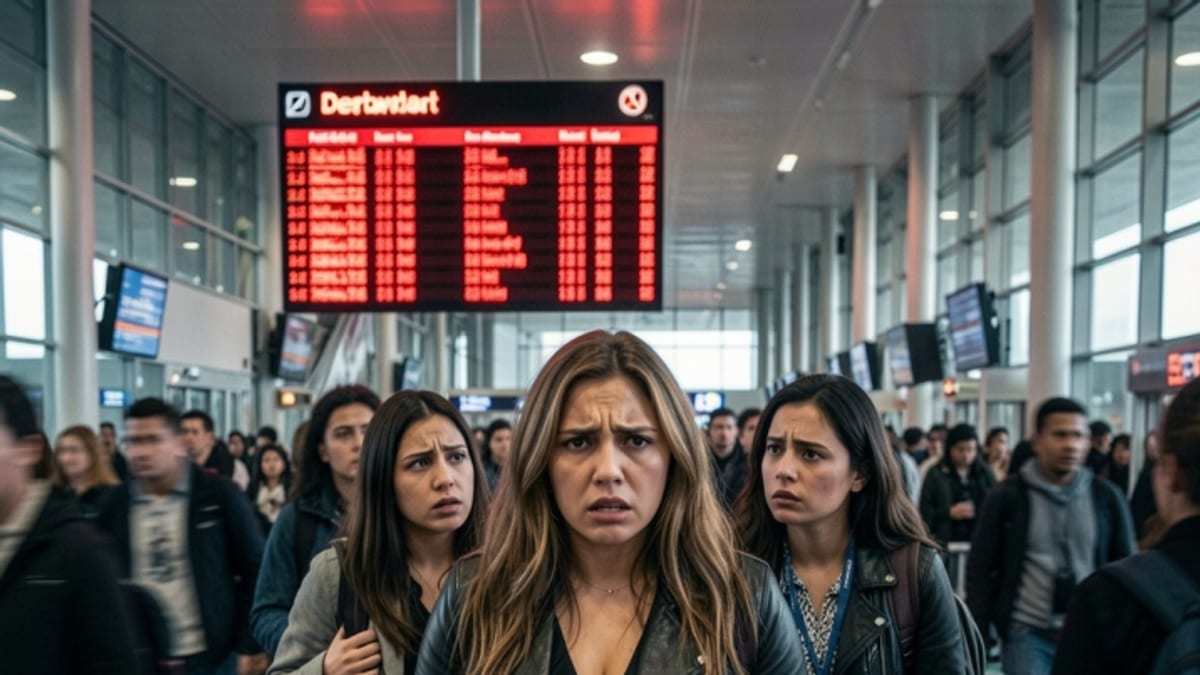
Image by Travel and Tour World – Tourism, Airline, Destination, MICE, Gobal Travel Market, Hotel news that you will find only over here.
Storm Systems Intensify Pressure on Boston Operations
Publicly available weather and aviation tracking data indicate that a series of late winter storm systems moving through New England and the Midwestern United States have placed renewed strain on airline operations at Boston Logan International Airport in recent days. The broader pattern follows a winter of heavy disruptions, including major storms in January and February that produced thousands of cancellations across the national network and significant snowfall at Logan.
On the latest travel day, operational data from flight-tracking services show that Logan registered over a dozen outright cancellations and numerous delays clustered around late morning and afternoon departure banks. While the total number of affected flights remains well below the peak levels seen during large blizzard events earlier in the season, the concentration of disruptions on a limited set of routes created acute bottlenecks for travelers attempting to connect between major hubs.
Industry analysts frequently note that Logan’s tightly scheduled runway operations and exposure to coastal weather make it particularly vulnerable when strong low-pressure systems pass offshore. Even modest reductions in arrival or departure capacity can ripple through the day’s schedule, forcing airlines to consolidate flights, reassign aircraft and crews, and in some cases cancel rotations outright.
In this latest episode, a combination of gusty winds, residual de-icing needs and airspace flow restrictions appears to have contributed to extended turnaround times on the ground. As delays mounted, carriers increasingly turned to pre-emptive cancellations on shorter-haul routes in an effort to stabilize their mid-afternoon and evening operations.
Regional Routes to New York and Chicago Hit Hardest
Flight-status boards for Boston Logan showed that some of the most heavily affected services were short-haul routes to New York City area airports and to Chicago, corridors that normally support a dense shuttle-style schedule throughout the day. Travelers bound for New York’s LaGuardia and John F. Kennedy airports reported a succession of rolling departure-time changes, with some flights ultimately cancelled after repeated pushes of 30 to 60 minutes.
Chicago-bound passengers faced similar disruption. Data from flight-tracking platforms and user reports suggest that morning and midday departures to Chicago O’Hare experienced compounding delays as connecting aircraft arrived late into Boston from other storm-impacted cities. Cancellations on these trunk routes not only stranded originating passengers at Logan but also affected travelers attempting to connect onward through Midwestern hubs to destinations further west.
Because New York and Chicago services typically operate at high frequency, airlines often use these routes as pressure valves when weather or airspace constraints develop. By cancelling select frequencies and consolidating demand onto remaining flights, carriers can recover some schedule integrity while freeing aircraft and crews for longer-haul segments that are more difficult to re-accommodate.
For passengers, however, this strategy can translate into hours-long holds in terminal gate areas and lengthy lines at customer service desks, particularly when storms also limit options at nearby alternative airports such as Providence, Hartford or Manchester.
Republic Airways and Major Partners Among Most Affected
Operational records and published coverage indicate that regional operator Republic Airways once again featured prominently in the disruption statistics. The carrier, which flies under contract for several large U.S. airlines, including American and Delta, provides a substantial portion of the short- and medium-haul lift along the East Coast and into the Midwest. When weather or crew disruptions hit this segment, the impact quickly spreads across multiple branded networks.
In the most recent wave of disruptions, Republic-managed flights feeding major hubs from Boston saw a higher-than-average share of cancellations. Aviation watchers have pointed out similar patterns on other recent storm days, when Republic’s flights at major airports showed elevated cancellation counts relative to some larger mainline operators. Because Republic operates under the branding of its partner airlines, travelers often experience these issues as delays or cancellations by American Eagle or Delta Connection, even though a regional provider is handling the operation.
American Airlines and Delta Air Lines also recorded cancellations and substantial delays from their own Boston operations, according to publicly accessible flight-status tallies. These disruptions primarily affected narrow-body aircraft on domestic legs, including services to New York City, Chicago and Indianapolis. In several cases, aircraft assigned to these routes arrived significantly behind schedule from earlier segments, forcing knock-on delays for subsequent departures.
Other carriers with a Boston presence, including low-cost and ultra-low-cost airlines, reported scattered disruptions, though the heaviest operational strain appeared concentrated among the large network carriers and their regional affiliates that move the bulk of connecting traffic through Logan.
Indianapolis and Secondary Markets Face Limited Options
While high-frequency routes such as Boston to New York or Chicago offer multiple daily alternatives, passengers traveling to smaller markets faced sharper challenges. Public flight data show that some services connecting Boston to Indianapolis and other secondary cities in the Midwest and Northeast were either significantly delayed or cancelled outright, leaving travelers with few immediate rebooking options.
On city pairs that see only one or two nonstops per day, a single cancellation can effectively wipe out same-day travel possibilities. Published travel-industry commentary notes that in these cases passengers are often rebooked through alternative hubs or routed via overnight connections, adding substantial time and complexity to journeys that would otherwise take only a few hours gate to gate.
Some of the affected routes are typically operated by regional jets under codeshare arrangements, which can further complicate customer service interactions. Travelers may purchase tickets from a major carrier but discover that day-of-travel decisions are heavily influenced by the operating regional partner’s aircraft availability and crew positioning.
These constraints are especially visible on weekends and during shoulder travel periods, when schedules are slightly thinner and spare aircraft are limited. As a result, even a modest number of cancellations at Logan can cascade into multi-day disruptions for certain origin-and-destination pairs.
Travelers Navigate Rebooking, Refunds and Protection Policies
As cancellations and long delays accumulated, social media posts and traveler forums filled with reports of extended wait times at service counters and on airline support lines. Many passengers described being automatically rebooked on later departures, sometimes connecting through different hubs than originally planned, while others reported choosing refunds or travel credits when new itineraries no longer fit their needs.
Consumer advocates frequently emphasize the importance of understanding each airline’s contract of carriage and irregular-operations policies. While U.S. regulations do not require carriers to provide hotel or meal vouchers when weather is the primary cause of disruption, some airlines extend discretionary assistance, particularly to travelers facing overnight delays or missed last flights of the day. Publicly available guidance also notes that passengers on significantly delayed or cancelled domestic flights may be eligible for refunds if they choose not to travel, even when the ticket was sold as nonrefundable.
Travel experts often advise monitoring flight status several hours before departure, enrolling in airline text or app alerts, and tracking the inbound aircraft that will operate a given flight. These steps can give early clues about potential delays, allowing travelers to request voluntary rebooking before options become scarce.
In the wake of the latest disruptions at Boston Logan, industry observers expect airlines to continue adjusting schedules and deploying larger aircraft on select routes in the short term to clear backlogs. With winter weather patterns still active across the northern United States, travelers heading through major hubs such as Boston, New York and Chicago in the coming days are being encouraged by public travel advisories to build extra time into their plans and remain flexible about routings.