

More news on this day
Passengers flying through Boston Logan International Airport on April 3 faced a fresh round of disruption, with more than 160 flight delays and at least 11 cancellations affecting services operated by American, Delta, JetBlue, United and other carriers to major U.S. cities and key European hubs.
Get the latest news straight to your inbox!
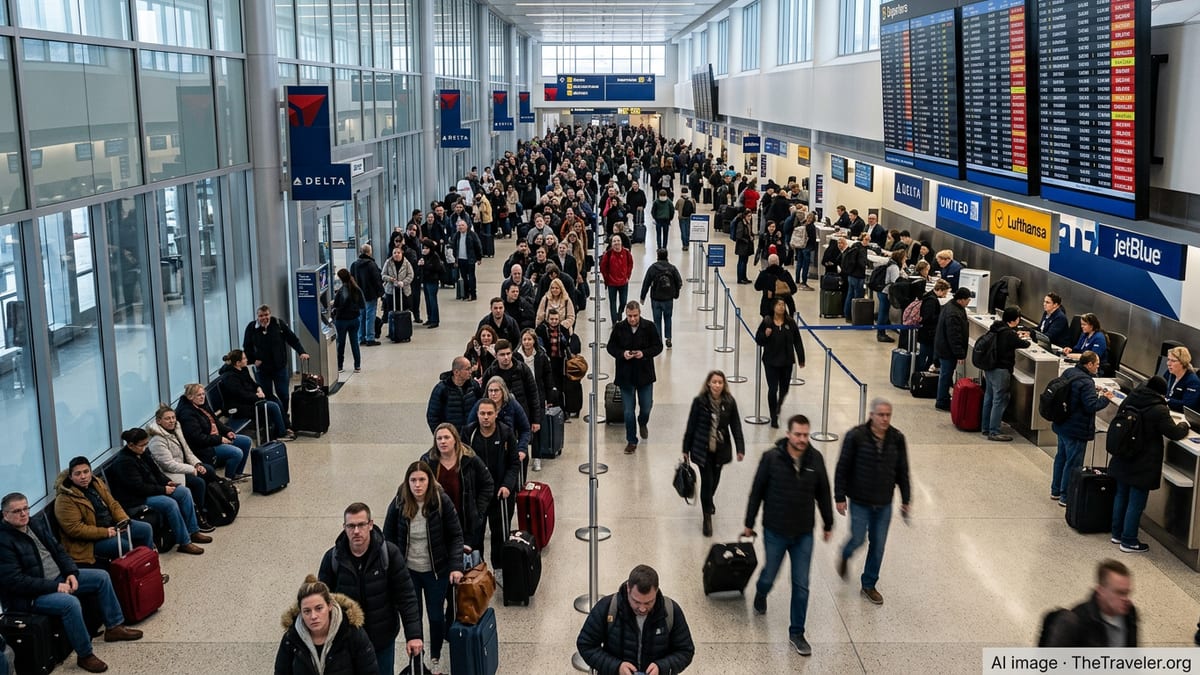
Logan Disruptions Ripple Across Domestic and Transatlantic Networks
Publicly available flight-tracking dashboards for April 3 indicate that delays at Boston Logan quickly reached into the triple digits, with more than 160 departures and arrivals running late and at least 11 flights canceled outright. The disruption touched a broad mix of carriers, including the largest network airlines and prominent low cost operators, complicating travel plans for business and leisure passengers alike.
Operational data shows that the issues were not confined to short-haul routes. Services linking Boston with major U.S. hubs such as New York, Chicago and Washington, as well as longer domestic sectors to cities like Atlanta, were affected, pushing back departure times and tightening already busy connection windows. Travelers connecting onward from those hubs reported knock-on impacts as delayed aircraft and crews moved through the system.
International links were also exposed. Flight-status boards and tracking tools show schedule pressure on some of Logan’s busiest transatlantic corridors, including services to London and Frankfurt. Even where departures remained listed as operating, extended ground times and shifting departure estimates heightened the risk of missed onward connections across Europe, the Middle East and Africa.
The pattern at Logan mirrored a broader national slowdown on April 3, with published coverage highlighting elevated disruption across a string of U.S. airports from the Northeast to the West Coast. Data aggregated by travel outlets pointed to thousands of delays nationwide, underscoring how quickly local issues can evolve into a systemwide strain when key hubs experience simultaneous challenges.
American, Delta, JetBlue and United Among Most Affected Carriers
Flight-status tallies for April 3 show that the disruption at Boston Logan cut across the portfolios of American Airlines, Delta Air Lines, JetBlue Airways and United Airlines, alongside other large and mid sized carriers. These airlines collectively handle a significant share of Logan’s daily schedule, meaning even modest operational issues can translate into a visible impact on departure boards.
According to published coverage summarizing the day’s national figures, American and United both contended with several hundred delays and dozens of cancellations across their networks, with Boston appearing among the airports reporting elevated disruption. Delta and JetBlue, both with sizable footprints at Logan, also featured prominently in delay statistics as they worked to manage schedule changes and equipment rotations.
At the individual flight level, tracking platforms recorded a mix of minor and more extended delays on high demand Logan routes. Selected services between Boston and Chicago, New York area airports and other major hubs showed departure pushes that, while often under an hour, proved significant for passengers connecting to tightly timed onward flights. Some transatlantic departures, including those to London and continental Europe, showed revised timings as upstream aircraft arrived late or faced ground handling backlogs.
Because many of the affected flights served as feeders into larger hub banks, disruption at Boston fed directly into broader network challenges. Aircraft and crew scheduled to operate multiple legs in a single day were forced into rolling delays, a dynamic that transportation analysts note is common once early day operations begin running behind schedule.
Weather, Airspace Constraints and Staffing Add to Operational Strain
While no single cause fully explains the April 3 disruption at Boston Logan, publicly available information points to a familiar combination of factors. Recent coverage of early April operations has highlighted unsettled weather across parts of the Northeast and Mid Atlantic, including periods of low cloud and drizzle in the Boston area, conditions that can reduce capacity and lengthen separation times between arriving and departing aircraft.
At the same time, broader airspace management measures have been in focus. Industry reporting over recent weeks has referenced new or tighter federal safety rules and intermittent ground stops affecting major corridors along the East Coast. When such constraints are layered on top of existing congestion in busy airspace, they can quickly translate into holding patterns and departure gaps that ripple back through airport schedules.
Staffing considerations also continue to shape operational resilience. Aviation analysts note that even as airlines rebuild schedules and add new long haul services from Boston, they remain sensitive to fluctuations in crew availability and ground staffing. On heavily scheduled days, relatively small mismatches between planned and actual staffing can slow boarding, baggage handling and aircraft turnaround, increasing the likelihood that minor delays accumulate into more serious disruptions.
The result on April 3 was a network in which Boston Logan functioned as both a source and a receiver of disruption. Flights arriving late from other affected hubs brought delay pressure into Logan, while departures leaving behind schedule exported that pressure onward to cities across the United States and to key European gateways.
Passenger Impact: Missed Connections and Longer Time at the Airport
For travelers, the immediate effect of the April 3 operational strain was longer and less predictable journeys. With more than 160 delayed flights at Logan alone, many passengers found their itineraries stretching beyond planned travel times, particularly those making same day connections in hubs such as New York, Chicago and Atlanta or linking from Boston to London, Frankfurt and other European destinations.
Travel advisories published by airlines and consumer outlets in recent months emphasize how quickly delays can cascade for passengers on multi segment itineraries. When an initial departure from a hub like Boston runs late, even by 30 to 45 minutes, a narrowly timed connection can be jeopardized, sending passengers into rebooking queues or forcing overnight stays if later flights are full.
On April 3, travelers departing from or arriving into Boston also had to navigate crowded terminals as rolling delays kept more people in the airport for longer periods. Industry observers note that intense departure and arrival peaks can strain everything from security screening and boarding gate areas to baggage claim, particularly at terminals heavily used by one or two major carriers.
Consumer advocates continue to remind passengers facing cancellations that publicly available guidance from transportation regulators generally entitles them to a refund of the unused portion of their ticket if they choose not to travel. In the case of substantial delays, airlines may also provide meal vouchers or hotel accommodations in certain circumstances, although policies vary by carrier and the underlying cause of the disruption.
What Travelers Through Boston Logan Can Do Next
With early April already showing signs of a challenging travel period, aviation analysts suggest that passengers using Boston Logan build additional flexibility into their plans. Monitoring flight status closely through airline apps and flight-tracking tools, particularly in the 24 hours before departure, can provide critical lead time if schedules begin to shift.
Travel industry guidance frequently recommends avoiding the tightest possible minimum connection times when routing through busy hubs such as New York, Chicago or major European gateways. On days like April 3, when Logan experiences elevated disruption, an extra hour between flights can be the difference between a stressful sprint across an unfamiliar terminal and a manageable transfer.
Passengers with transatlantic or long haul itineraries are also encouraged to pay close attention to the status of their first leg from Boston, as this flight typically determines whether longer journeys to destinations beyond London or Frankfurt remain viable on the original ticket. Where schedules allow, some travelers may prefer earlier departures from Logan to create a wider buffer before overnight or once daily connections.
As airlines refine their spring and summer schedules, Logan is expected to remain a key battleground for carriers such as American, Delta, JetBlue and United, each seeking to retain or grow their presence in New England. For passengers, that competition translates into a wide choice of routes and fares, but days like April 3 are a reminder that the region’s busiest airport remains vulnerable to the combined effects of weather, airspace constraints and tight operational margins.