

More news on this day
Loganair has surpassed a milestone of 250,000 passengers on its Liverpool to Isle of Man route, underscoring the vital role the service plays in sustaining regional connectivity, business travel and tourism between the north-west of England and the Crown Dependency in the Irish Sea.
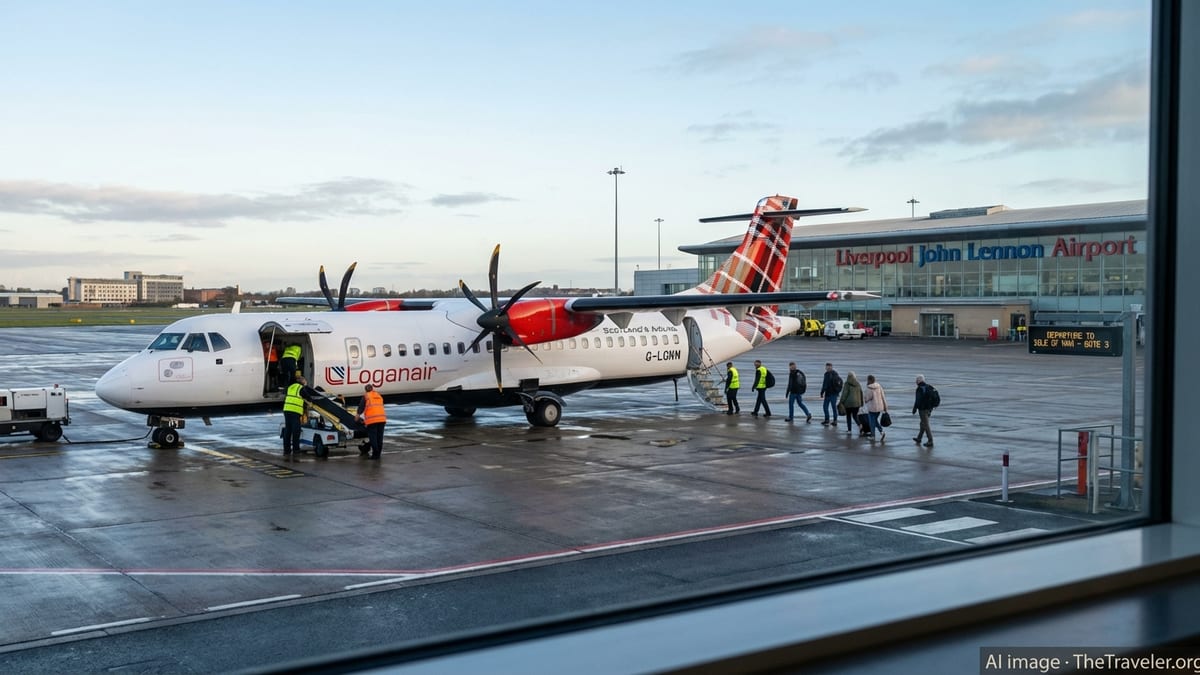
A Milestone Moment for a Key Regional Air Bridge
The Liverpool to Isle of Man air link has long been one of the island’s most heavily used routes, and Loganair’s announcement that it has now carried more than a quarter of a million passengers on the service marks a significant moment for both the airline and the region. The figure speaks to robust demand on a corridor that is crucial for residents, businesses, and visitors alike, at a time when regional connectivity is under renewed scrutiny across the UK.
While airlines have restructured networks and trimmed less profitable routes over recent years, the Liverpool–Isle of Man service has remained a backbone connection. It provides a fast alternative to ferry travel across the Irish Sea, particularly valuable for time-sensitive trips such as medical appointments, legal and financial services, and short-notice corporate travel. The growing cumulative passenger total suggests that confidence in the reliability and convenience of the link has continued to build.
Industry observers note that crossing symbolic thresholds such as 250,000 passengers may also strengthen the route’s long-term prospects. Demonstrable sustained demand makes it easier to justify continued investment in capacity, aircraft, and scheduling, particularly as airports and airlines weigh how best to allocate limited resources across their networks.
Reinforcing Connectivity Between Liverpool and the Isle of Man
The Liverpool–Isle of Man corridor is more than just a short hop across the Irish Sea; it is a strategic lifeline. Liverpool John Lennon Airport offers access to the wider north-west region of England and links into national rail and road networks, while Isle of Man Airport at Ronaldsway serves as the aviation gateway for the island’s finance, e-gaming, engineering, and tourism sectors. For many residents, Liverpool is the first choice for mainland connections, healthcare, and education.
Loganair’s performance on the route has helped underpin this connectivity at a time when some other regional links in and around the Irish Sea have faced uncertainty. The airline’s focus on consistent schedules and locally based crews has been central to maintaining confidence among passengers who often depend on the route for essential journeys rather than purely discretionary travel.
For the Isle of Man, strong air links to Liverpool are also vital in maintaining its appeal as a place to do business. The city region’s professional services, creative industries, and universities are important partners for companies and institutions on the island. A reliable flow of flights allows for same-day meetings, faster deal-making, and easier collaboration, reinforcing the island’s competitive position as a well-connected offshore financial and technological hub.
Timely Service and Schedule Reliability in a Challenging Market
Regional aviation across the British Isles has been under pressure in recent years, with volatile fuel prices, crew shortages, and shifting travel patterns all affecting performance. Against that backdrop, Loganair has emphasised its commitment to schedule resilience and punctuality on core routes such as Liverpool–Isle of Man. The airline’s network strategy, which concentrates on high-frequency links between regional centres, is designed to offer travellers dependable timetables and swift recovery when disruption occurs.
Passengers on the Liverpool–Isle of Man sector have benefitted from this approach, particularly during peak travel periods such as the Isle of Man TT motorcycle races, school holidays, and major events in Liverpool. Maintaining on-time performance on a short sector where a delay of even 30 minutes can be disruptive requires robust operational planning, from aircraft allocation and maintenance scheduling to crew rostering and ground handling coordination.
The milestone passenger figure suggests that Loganair’s focus on reliability is resonating with travellers who often have tight schedules and limited flexibility. For many frequent flyers on the route, the ability to rely on early morning and evening departures, and to trust that flights will operate even in shoulder seasons, can be as important as fare levels when choosing a carrier.
Fleet Investments Enhancing Passenger Experience and Sustainability
Behind the passenger milestone lies a wider programme of fleet modernisation that has reshaped Loganair’s presence on regional routes including the Liverpool–Isle of Man service. The airline has been rolling out ATR 72-600 turboprop aircraft on key sectors from the island, replacing older Saab models with larger, more efficient aircraft that offer increased capacity and lower emissions per seat.
For passengers, the newer aircraft bring tangible benefits in terms of comfort, noise levels, and perceived reliability. Cabins configured for regional business and leisure travellers, with generous hand and checked luggage allowances and complimentary refreshments on qualifying flights, have helped differentiate the carrier in a competitive short-haul market. The ATR’s performance is also well suited to shorter runways and variable weather conditions typical of airports around the Irish Sea.
From an environmental standpoint, the fleet shift aligns with broader efforts to reduce the carbon footprint of regional aviation. More efficient engines and airframes, combined with higher average load factors on busy routes like Liverpool–Isle of Man, allow Loganair to serve growing passenger numbers while moderating emissions growth. For an island that promotes its credentials as a UNESCO Biosphere destination, improving the sustainability of vital air links is increasingly important.
Supporting Tourism, Events and the Island’s Visitor Economy
Tourism remains a cornerstone of the Isle of Man’s economy, and the Liverpool route is a gateway for many visitors drawn by the island’s coastal landscapes, motorsport heritage and cultural attractions. Loganair’s quarter-million-passenger milestone is a reflection not only of local demand but also of the route’s importance to the visitor economy, particularly outside the high-profile TT period.
Convenient connections from Liverpool make it easier for short-break travellers from across northern England and beyond to choose the island for weekend escapes and special events. Flexible schedules, morning and evening options, and competitive fares all support the growth of two- and three-night stays that are especially valuable for hotels, guesthouses, restaurants, and tour operators.
Event organisers on the island also rely on robust air capacity to attract participants and spectators, from sporting competitions and festivals to conferences and corporate retreats. The knowledge that an established carrier is maintaining strong demand on the Liverpool link can help planners market events more confidently, reassure potential attendees, and justify investments in new programming that targets UK regional audiences.
A Lifeline for Residents, Students and Specialist Travel
Beyond tourism and business, the Liverpool–Isle of Man route serves a quieter but equally critical role as a lifeline for residents. Many islanders depend on mainland hospitals, universities, and specialist services concentrated in and around Merseyside, Cheshire, and Greater Manchester. For these travellers, regular, time-efficient flights can be essential rather than optional.
Medical travel in particular relies on predictable connections that minimise stress for patients and families attending appointments or treatment. Similarly, students commuting to or from universities on the mainland often plan term-time travel months in advance, requiring confidence that flights will operate broadly as scheduled. The accumulation of 250,000 passengers on the route underscores how many individual journeys, each with its own purpose and story, are supported by this air link.
Family and community ties also benefit from reliable services. Islanders with relatives in the north-west of England, and vice versa, depend on affordable, reasonably frequent flights to sustain personal connections. In that sense, Loganair’s milestone is not only an aviation statistic but a marker of thousands of family reunions, weekend visits, and last-minute trips that help keep communities on both sides of the Irish Sea closely linked.
Regional Connectivity Strategy and Network Synergies
The success of the Liverpool–Isle of Man service fits into a broader strategy in which Loganair positions itself as a regional specialist rather than a traditional hub-and-spoke carrier. By focusing on point-to-point services between smaller cities and islands, the airline has carved out a distinctive role in the UK aviation landscape, serving routes that might otherwise struggle to attract sustained interest from larger competitors.
From the Isle of Man, this strategy has seen the airline develop a network that includes links to major hubs such as London Heathrow as well as key regional cities including Birmingham, Edinburgh and Manchester. These combined services give island residents and businesses a portfolio of options for reaching both the UK mainland and onward international connections, with Liverpool forming a vital western gateway.
Network synergies are particularly evident for passengers making multi-leg journeys within the British Isles. The ability to book itineraries that combine the Liverpool route with other Loganair services helps smooth travel for those heading on to Scotland, the north-east of England, or the south-west, often with coordinated schedules designed to minimise connection times. The healthy performance of flagship routes such as Liverpool–Isle of Man underpins the sustainability of these wider regional links.
Looking Ahead: Capacity, Competition and Policy Priorities
As Loganair celebrates the 250,000-passenger landmark on the Liverpool route, attention is turning to how the service may evolve. Continued demand growth could justify incremental increases in capacity through additional frequencies at peak times or seasonal enhancements, especially around major events and holiday periods when both islanders and mainland visitors are seeking more flexibility.
At the same time, the broader policy environment for regional aviation in the UK is changing as governments and regulators debate how best to support connectivity while meeting climate commitments. Routes that demonstrably support economic development, island resilience and social cohesion are likely to feature prominently in these discussions, and the Liverpool–Isle of Man service sits squarely within that category.
Competition from other transport modes, particularly ferry services between the island and north-west England, will remain part of the picture. However, the latest passenger milestone underlines that there is strong and enduring demand for fast, reliable air travel on this corridor. For travellers, businesses and communities on both sides of the Irish Sea, Loganair’s quarter-million passengers are a sign that the Liverpool–Isle of Man air bridge is not only surviving but thriving, and set to remain central to regional connectivity in the years ahead.