

More news on this day
In June 2026, Lomé is set to host a high stakes African air transport gathering that regional decisions already on the table suggest could reshape how millions travel across West Africa and, in time, the wider continent.
Get the latest news straight to your inbox!
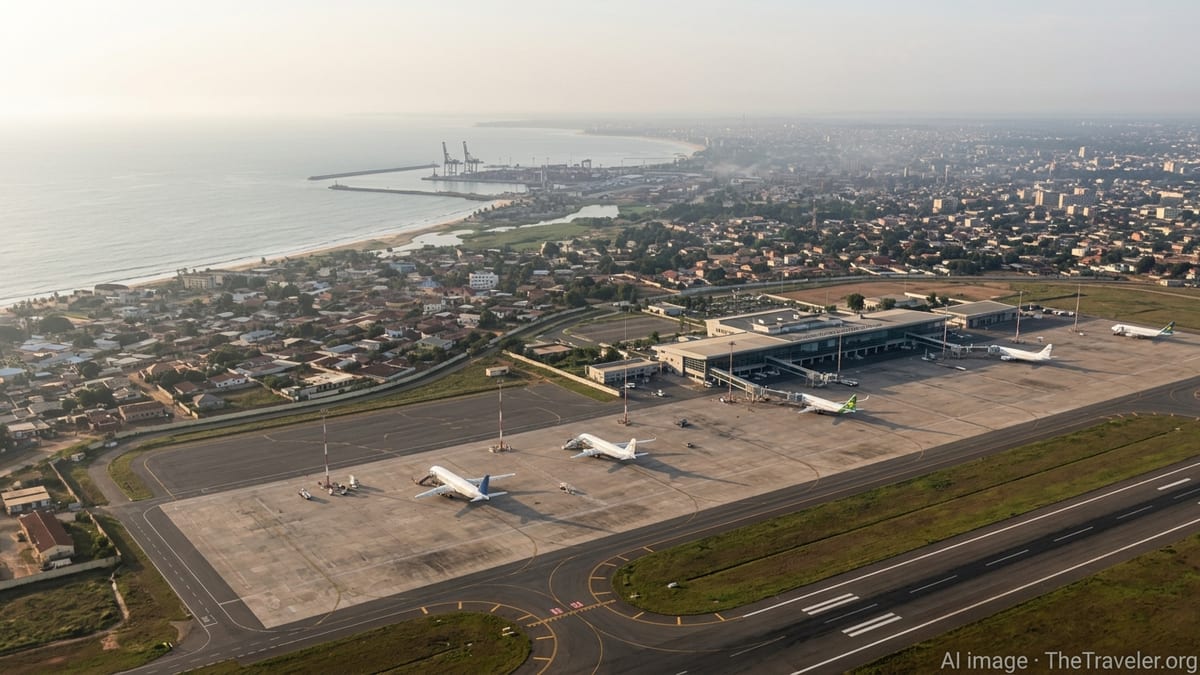
A New Lomé Moment for African Aviation
Lomé has quietly become one of the most important meeting points for Africa’s aviation reform agenda. In recent years, the Togolese capital has hosted a series of Economic Community of West African States air transport meetings that produced detailed plans to tackle some of the highest ticket charges in the world and to align regional policy with the African Union’s Single African Air Transport Market initiative.
Those discussions are converging on 2026. Publicly available African Union documentation indicates that a major continental air transport event is scheduled in Lomé in June 2026, under the leadership of the AU’s designated champion for the Single African Air Transport Market. Regional observers see this as the moment when earlier technical work, ministerial communiqués and heads of state decisions will be translated into concrete measures that passengers can feel in their wallets.
The stakes are high. Analysis frequently cited by regional bodies shows that airport taxes and charges in West Africa have been running far above the global average, with fees, surcharges and fiscal levies sometimes making up nearly half the cost of an economy ticket. For business travelers, diaspora communities and first time tourists, the price of a short regional hop can rival or exceed the cost of an intercontinental flight.
By anchoring the next phase of negotiations in Lomé, policymakers are signaling continuity with earlier gatherings in the city that have already mapped out a path toward lower costs and more open skies. The 2026 convention is expected to serve as both a stock taking exercise and a launchpad for a new operating environment for airlines and airports across West Africa.
From Technical Plans to Lower Ticket Prices
The foundations for the Lomé 2026 push were laid in November 2024, when ECOWAS air transport ministers met in the city and endorsed a regional strategy to slash taxes and charges on air travel. According to published coverage of that meeting, the plan targets the elimination of several non aviation taxes, a 25 percent reduction in passenger related charges and the creation of a harmonized framework for airport fees, all with an implementation horizon beginning on 1 January 2026.
Subsequent summaries from regional organizations and specialist aviation media show that ECOWAS heads of state later adopted the thrust of these measures, giving political backing to what had started as a technical reform agenda. The 2024 decisions were framed as a response to persistent complaints from passengers, airlines and tourism businesses about the affordability of flying within West Africa and the impact of fragmented regulation on connectivity.
By 2025, Lomé again hosted ECOWAS parliamentarians examining how to make those commitments a reality. Reporting on that session highlights strong pressure from legislators to ensure that governments follow through on the promised tax cuts and fee reductions, as well as calls for tougher scrutiny of any new levies that might erode the benefits to travelers.
The 2026 convention is expected to move the conversation further, from broad commitments to detailed timelines and monitoring. Industry watchers anticipate debate on how quickly airlines will pass savings on to consumers, how airports will adjust their business models and which routes will see the earliest fare relief. For travelers, the key question is when a typical regional ticket will start to look meaningfully cheaper.
Linking Lomé to Continent Wide Markets
While the Lomé centered reforms are regional in scope, they are being closely tied to pan African initiatives. The African Union’s Single African Air Transport Market aims to create a liberalized, continent wide airspace by easing market access restrictions, lifting frequency and capacity limits and fostering competition among African carriers.
Togo has positioned itself as an active supporter of this process. The country has been prominent in AU level discussions on air transport integration, and Lomé has previously hosted working groups on implementing the Yamoussoukro Decision, the foundational agreement behind today’s efforts at market liberalization. This track record helps explain why the AU chose the city as host for the 2026 continental gathering.
Parallel processes are also under way. The International Air Transport Association’s Focus Africa initiative has scheduled its 2026 conference in Addis Ababa under a theme that emphasizes safety, connectivity and operational efficiency, all of which are essential to realizing the benefits of more open skies. Together with the Lomé convention, these events are expected to shape how African regulators, airlines and airports coordinate on slot allocation, safety oversight and consumer protection.
For travelers, the link between regional fare reforms and continent wide liberalization could prove decisive. Lower charges in West Africa, combined with fewer market access barriers under the Single African Air Transport Market, create conditions for more carriers to open intra African routes, expand frequencies and experiment with new fare products that target price sensitive passengers.
What Cheaper Skies Could Mean for Travelers
If the measures associated with Lomé 2026 are fully implemented, analysts anticipate a tangible impact on everyday travel decisions. Modeling used by African aviation bodies for similar liberalization efforts suggests that reducing taxes and charges can stimulate demand, leading to more passengers, higher load factors and, over time, additional route launches.
For leisure travelers and the African diaspora, this could translate into more affordable long weekend trips between coastal capitals, easier multi destination itineraries across West Africa and eventually better links to secondary cities that are currently poorly served. The cost of visiting family, exploring regional beaches and cultural sites or attending festivals could fall enough to bring air travel within reach for a broader middle class.
Business travelers may gain from increased competition on key commercial routes connecting Lagos, Accra, Lomé, Abidjan, Dakar and other hubs. More capacity and new city pairs can reduce the need for circuitous routings that add hours and costs to relatively short trips. This, in turn, supports the African Continental Free Trade Area by shortening travel times for traders, investors and service providers.
Tourism boards in Togo and its neighbors are watching closely. More competitive fares are a prerequisite for attracting new visitor segments, particularly from within Africa. If airlines respond by bundling hotel partnerships, stopover programs and onward connections, Lomé could position itself as both a policy hub and a transit gateway for travelers exploring the Gulf of Guinea coastline.
Challenges on the Runway to 2026 and Beyond
The path from ambitious declarations to a genuinely more affordable and connected African sky will not be straightforward. Aviation stakeholders note that governments rely on some of the targeted taxes and fees for revenue, making rapid removal politically sensitive. Airports facing tight finances may also be cautious about cutting charges without clear plans to replace income through higher passenger volumes or alternative streams.
There are also concerns about ensuring that fare reductions are visible to end users. Even if statutory taxes fall, other components such as fuel surcharges, distribution costs and ancillary fees can keep overall ticket prices elevated. Consumer groups and regional institutions are expected to pay close attention to how airlines structure fares once the new regime takes effect.
Operational capacity is another factor. If reforms succeed in stimulating demand, West African airports and air navigation systems will need to handle increased traffic safely and efficiently. Investments in runway upgrades, terminal expansion, air traffic management and workforce training will be essential to prevent congestion from undermining the benefits of cheaper flights.
Despite these hurdles, the alignment of a major continental convention in Lomé, binding ECOWAS decisions on taxes and charges, and broader African efforts toward a single air transport market has created a rare window of opportunity. For travelers planning trips in the second half of this decade, 2026 may come to be seen as the year when West African skies began to open in earnest.