

More news on this day
When aviation leaders converge on Lomé, Togo, in June 2026 for a new African Air Transport Convention, the stakes will stretch far beyond technical regulation. The gathering is being framed by industry bodies as a pivotal moment for turning years of policy blueprints on open skies and lower airfares into concrete measures that could finally make flying within Africa significantly cheaper, more frequent and more reliable.
Get the latest news straight to your inbox!
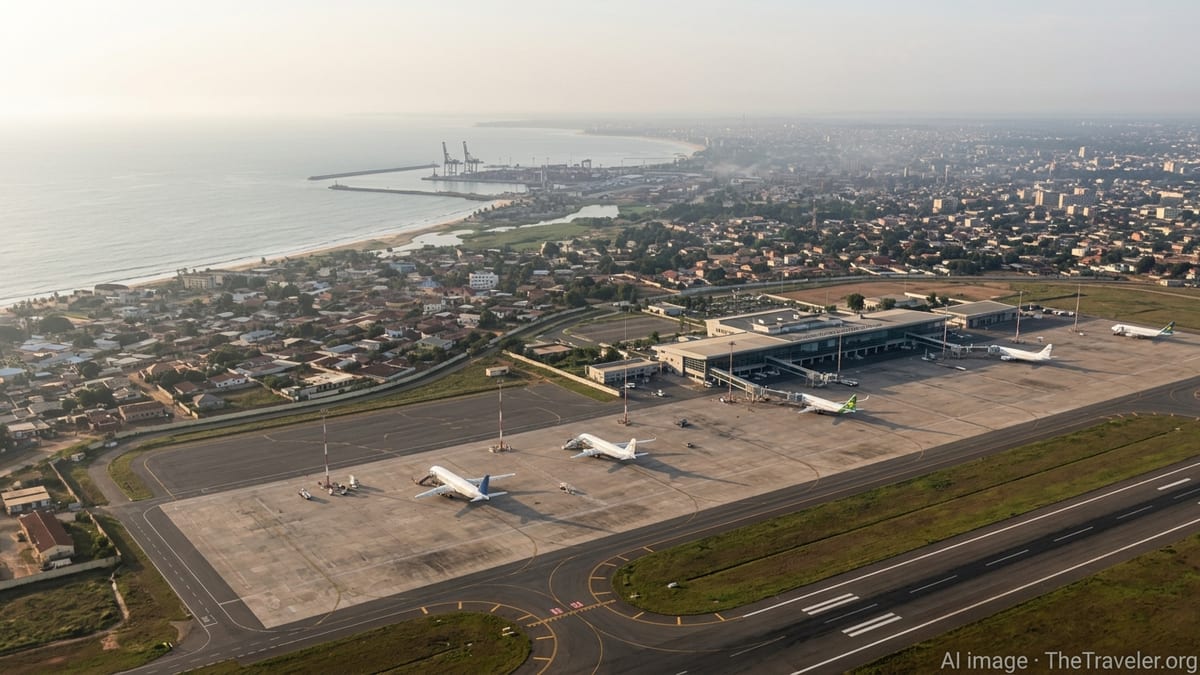
Lomé’s Rising Role in African Aviation
The choice of Lomé for the 2026 African Air Transport Convention and Expo underlines how the Togolese capital has become an influential platform for aviation policy on the continent. The African Civil Aviation Commission has announced that the event will run from 8 to 12 June 2026, bringing together regulators, airlines, airports, financiers and regional bodies to debate the next phase of liberalisation and integration in African air transport.
Lomé has hosted a string of high-level aviation and integration meetings in recent years, including African Union sessions on the Single African Air Transport Market and Economic Community of West African States negotiations on air transport reforms. Publicly available AU and ECOWAS documents show that several key policy decisions on market opening, safety, and charges have been drafted or refined in the city, helping to cement its reputation as a laboratory for an eventual single African sky.
Passenger data for Lomé’s main international airport point to steady growth, with regional carriers positioning the city as a connecting hub for West and Central Africa. Analysts note that this hub role gives Lomé a direct stake in policies that can stimulate intra-African traffic, especially measures that reduce ticket prices and simplify cross-border operations for airlines.
A Convention Timed With a 2026 Fare Reset
The 2026 convention will unfold just months after a major policy shift in West Africa’s airline economics. In late 2025, ECOWAS confirmed that member states would remove air transport taxes within the bloc and implement a strategy to cut selected airport and passenger charges by around 25 percent from 1 January 2026, following earlier ministerial endorsements in Lomé. Regional coverage indicates that this move is designed to tackle what have been described as some of the highest airfares in the world relative to income levels.
Studies and official communiqués from ECOWAS-linked meetings suggest that taxes and charges in West Africa can account for a substantial share of ticket prices, in some cases exceeding the global average by a wide margin. Projections cited in recent policy discussions forecast that a 25 percent reduction in passenger-related charges could lift traffic within the bloc by as much as 40 percent over the medium term, if accompanied by improved capacity and competition.
By June 2026, when delegates assemble in Lomé, the region will have several months of real-world data on how these charge reductions affect demand, airline schedules and state revenues. Industry observers expect this evidence to feature prominently in plenary sessions and technical panels, shaping continental debates on whether similar approaches could be scaled beyond West Africa and linked more systematically to the African Union’s open-skies agenda.
From Policy Declarations to a Single African Sky
For nearly a decade, the Single African Air Transport Market has been presented as a flagship project of the African Union’s Agenda 2063, building on the earlier Yamoussoukro Declaration on air liberalisation. According to AU publications, the number of countries formally joining the market has grown steadily, with Malawi becoming the thirty-eighth state to sign on in 2025. However, analysts and trade-law centres continue to highlight gaps between high-level commitments and on-the-ground implementation.
Briefings from African aviation specialists indicate that many bilateral air service agreements still restrict competition, frequencies and capacity, limiting the potential benefits of a unified market. Research released in 2025 on airline route decisions in Africa underscores that connectivity remains uneven, with some regions still underserved despite economic growth and rising demand.
The Lomé convention is expected to focus heavily on closing this implementation gap. Discussion themes flagged in advance include aligning national regulations with SAATM principles, streamlining approvals for new routes, and coordinating safety oversight and consumer protection rules. Observers say the combination of a maturing policy framework and fresh data from West Africa’s 2026 charge reforms could provide a more concrete basis for persuading hesitant states and stakeholders to accelerate liberalisation.
Lower Costs, New Routes and Wider Access
Across Africa, air travel has long been constrained by high prices, fragmented markets and limited connectivity, particularly for secondary cities. Industry reports regularly point to taxes, airport fees, fuel costs and relatively small aircraft fleets as key drivers of elevated fares. In West Africa, where incomes are often low and road and rail infrastructure can be fragile or slow, these constraints have made flying an option for a narrow segment of the population.
Economic assessments by regional and international bodies suggest that lowering ticket prices and relaxing market restrictions could unlock sizable gains in trade, tourism and labour mobility. Modelled scenarios for SAATM have previously indicated that fully liberalising air transport among participating states could generate millions of additional passengers, create new jobs and add percentage points to gross domestic product in several markets.
In this context, the Lomé convention’s focus on both affordability and integration takes on added significance for travellers. If charge reductions in ECOWAS are sustained and coupled with more open competition, passengers could see more direct routes between regional capitals, better schedule choices and entry of new or revived airlines on intra-African segments. For many travellers, the most tangible impact would be the possibility of multi-country itineraries within West and Central Africa that are financially feasible for business, education or family visits rather than limited to high-end corporate travel.
Why Lomé 2026 Matters for the Wider Continent
While the June 2026 event is branded as an African Air Transport Convention, its implications reach into broader debates about regional integration, industrial policy and inclusive growth. Air connectivity is a practical enabler for the African Continental Free Trade Area, facilitating movement of goods, services and people that cannot rely solely on surface transport. Policy commentators often note that without more competitive and affordable aviation, the trade area’s promise of a truly integrated market will be harder to realise.
Lomé’s selection also has symbolic resonance. The city has hosted important continental discussions not only on aviation but on Pan-African cooperation more broadly, including a major Pan-African congress in 2025 under the African Union’s decade of African roots and diaspora initiative. The 2026 convention is likely to draw on this heritage, presenting air transport reform as part of a wider project to connect African societies with each other and with their global diasporas.
For travellers following these developments, the key story is whether a long-discussed vision of open African skies is finally moving from communiqués to boarding passes. The combination of concrete cost-cutting measures in West Africa, renewed commitments to a single air transport market and a dedicated continental convention in Lomé gives 2026 unusual strategic weight. If the momentum holds, the city’s meetings next June could mark the point when affordable, frequent air travel within Africa starts to feel less like an exception and more like an emerging norm.