

More news on this day
Thai Airways and other Asian carriers are racing to add capacity between London and Bangkok as unprecedented Middle East airspace closures sever traditional Europe–Asia corridors and leave hundreds of thousands of travelers scrambling for alternative routes.
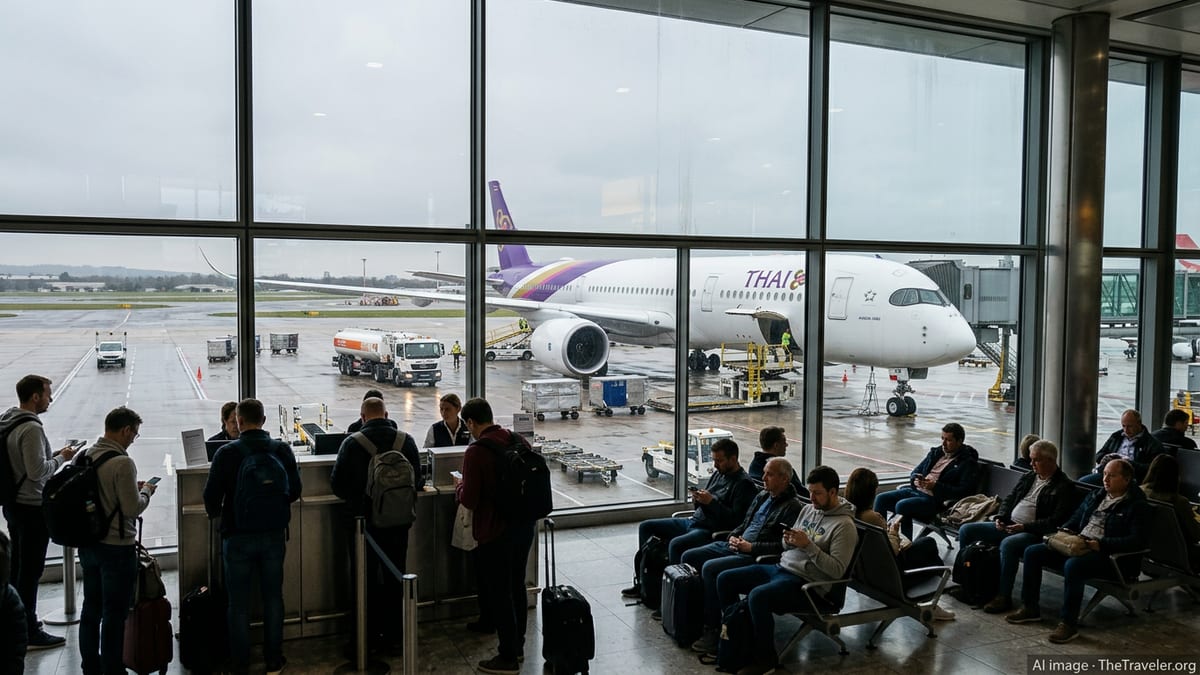
Nonstop London–Bangkok Route Becomes Lifeline
As airspace across much of the Middle East remains partially or fully closed due to the ongoing conflict involving Iran, Israel and the United States, the normally busy Gulf hubs that handle much of the traffic between Europe and Asia have fallen silent. With Dubai, Abu Dhabi and Doha operating only a handful of evacuation and relief services, the long-haul nonstop link between London and Bangkok has rapidly evolved into an emergency air bridge for stranded travelers.
Thai Airways, which does not rely on Iranian or Israeli airspace for its European operations, has seen a surge in bookings on its London–Bangkok services in the past week. Industry data cited by regional media shows one-way fares on the route more than doubling, with many flights sold out days in advance as passengers who would normally transit via the Gulf seek any available seats on nonstop alternatives.
Aviation analysts say the structural role of Middle Eastern hubs as a “bridge” between Europe and Southeast Asia has, at least temporarily, shifted north and east. With airlines forced to route around conflict zones and avoid GPS jamming hot spots over West Asia, longer overwater and Central Asian tracks have become the norm, making established point-to-point services such as London–Bangkok more attractive from both an operational and customer standpoint.
For UK and European holidaymakers in Thailand as well as Thai nationals in Britain, the London–Bangkok corridor has quickly become one of the most reliable ways to cross between the two regions, even as schedules are adjusted day by day in response to the evolving security picture.
Extra Flights, Bigger Jets as Carriers Scramble
Thai Airways has responded to the surge in demand by adding extra frequencies on certain days and swapping in higher-capacity aircraft where possible, according to people familiar with the airline’s planning. Widebody jets that might previously have been deployed on secondary European or regional routes are being reassigned to London in a bid to move as many people as possible between Thailand and the UK.
The shift is part of a broader regional pattern in which Asian carriers are stepping in to absorb traffic displaced from the Gulf. Data from airline schedule providers indicates that airlines across Southeast Asia have increased services on Europe-facing routes as Middle East carriers suspend or curtail operations, removing a significant share of daily international seat capacity from the global system almost overnight.
On the Thailand side, air traffic controllers are coordinating closely with airlines to manage new routings that skirt risk areas in West Asia while preserving long-haul links to Europe. Authorities in Bangkok have confirmed that traffic flows to and from Europe remain operational, albeit with extended flight times on some routes and additional fuel and crew planning requirements for airlines.
Other carriers are also tactically increasing capacity on Bangkok services from European gateways beyond London, creating more options for travelers prepared to piece together journeys using separate tickets or alliance connections. However, with aircraft and crews already tightly utilized at the tail end of the northern winter season, the scope for rapid capacity growth is limited.
Stranded Travelers Re-Routed via Thailand
The effective shutdown of major Middle Eastern transfer hubs has left an estimated hundreds of thousands of passengers stuck across the region or forced into long detours. Many whose original itineraries connected in Dubai, Doha or Abu Dhabi are now being rebooked through alternative hubs, with Bangkok emerging as one of the primary waypoints for those trying to reach or leave Southeast Asia.
Travelers describing their experiences on social media report cancelled tickets on Gulf airlines, hours-long waits at call centers and sudden rebookings that route them via Bangkok, Singapore or other Asian hubs before heading on to Europe. For some, this has meant last-minute overnight stays in Thailand or improvised onward travel to London when through-connections were not immediately available.
European and Asian carriers are prioritizing passengers whose journeys were directly disrupted by airspace closures, often waiving rebooking and rerouting fees in recognition of the exceptional circumstances. Even so, the sheer scale of the disruption means that many travelers face multi-day delays, circuitous routes and sharply higher walk-up fares if they were not already holding confirmed tickets.
At Bangkok’s Suvarnabhumi Airport, airport staff and ground handlers report sustained high passenger volumes at check-in desks for London flights, with some travelers arriving many hours early in the hope of securing standby seats. While operations remain orderly, the atmosphere reflects a mix of relief among those who have secured a place on the air bridge and frustration from those still waiting to move.
Longer Routes, Higher Fares and Operational Strain
With swathes of West Asian airspace now classified as high-risk or closed entirely, Europe–Asia flights are being forced into longer routings that skirt the Caspian Sea or track further south over the Indian Ocean and the Red Sea. For London–Bangkok services, this can translate into additional flight time, higher fuel burn and more complex crew scheduling, even if the aircraft never approaches the most volatile parts of the region.
Industry analysts say the loss of Middle Eastern capacity has already pushed average Europe–Asia fares up by double-digit percentages, with premium cabins especially tight on popular leisure routes. Dynamic pricing means that last-minute London–Bangkok tickets can now cost several times their usual off-peak levels, particularly on dates when extra sections added by Thai Airways and its competitors have already sold out.
Airlines are walking a tightrope between recovering their sharply higher operating costs and avoiding accusations of price gouging in a time of crisis. While some carriers have introduced capped fares or flexible rebooking policies for passengers directly affected by cancellations, those purchasing new itineraries are finding little respite from the spike in prices.
Behind the scenes, network planners and operations control centers are revisiting daily deployment decisions as the security and regulatory environment shifts. Any further escalation in the conflict or new government advisories could force yet more rerouting, underlining how fragile the current London–Bangkok lifeline remains despite the recent addition of extra flights.
What Travelers Should Expect in the Days Ahead
For travelers with imminent plans between the UK and Thailand, aviation and consumer groups are urging constant monitoring of flight status and flexibility over dates and routings. Even with the expanded London–Bangkok air bridge, demand is likely to outstrip supply for several days, particularly around weekends and the end of school holidays in key European markets.
Passengers whose original itineraries involved transiting Middle Eastern hubs are being advised to work directly with their airlines or travel agents to secure rebookings via Bangkok or other Asian and European gateways, rather than attempting to self-connect without confirmed onward seats. Given the tight capacity, missed connections caused by any additional delays could leave travelers stranded without immediate alternatives.
Regulators in both Europe and Asia have reminded airlines of their obligations to provide care, assistance and refunds in cases of long delays and cancellations, although the exact entitlements vary by jurisdiction and ticket type. Consumer advocates say keeping detailed records of communications, receipts for hotels and meals, and screenshots of flight status changes will be essential for anyone submitting claims later.
While airlines hope that partial reopenings of Middle Eastern airspace in the coming weeks will ease the pressure, contingency plans now assume a prolonged period of disruption. For the foreseeable future, the reinforced London–Bangkok corridor will remain a crucial artery for travelers determined to keep moving between Europe and Southeast Asia, even as the skies over the region’s traditional crossroads stay perilously quiet.