

More news on this day
London’s resilient hotel market and appetite for tech enabled operations are turning the UK capital into a proving ground for new hotel management platforms, as emerging players such as The Sirius Hotel Group position themselves for a fresh phase of growth.
Get the latest news straight to your inbox!
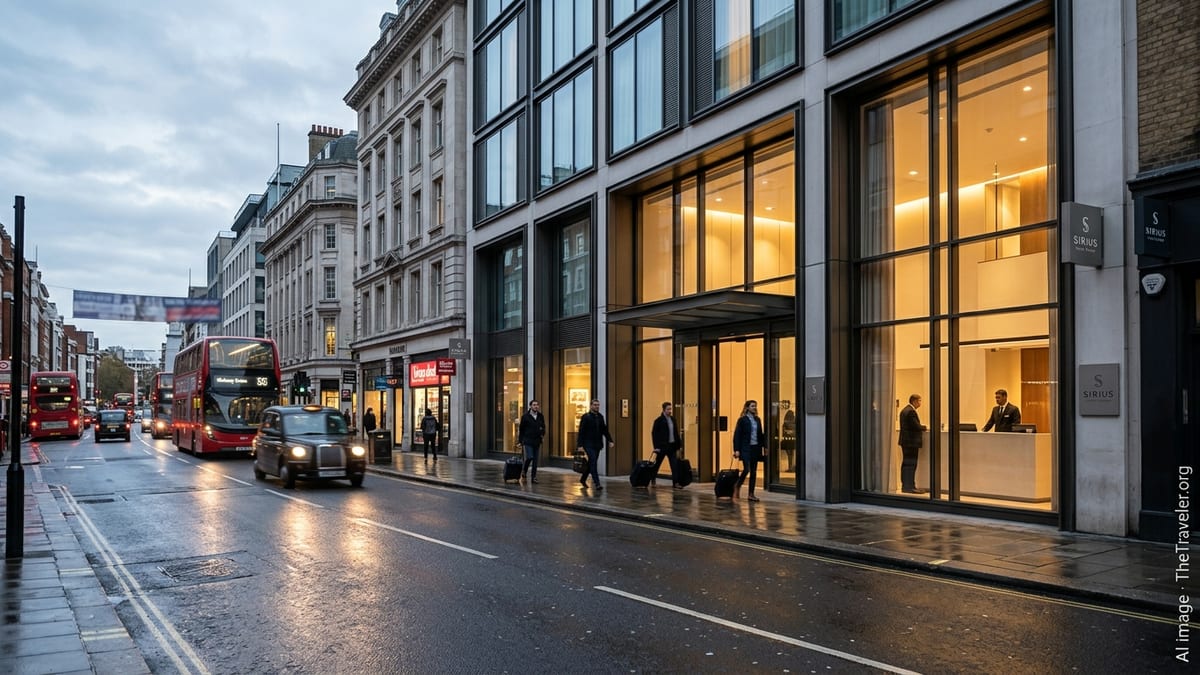
London’s Hotel Market Sets the Stage for Innovation
Recent market reports show that London remains one of Europe’s most dynamic hotel investment destinations, with global capital continuing to target the city’s prime assets. Analysts tracking 2024 and early 2025 performance highlight strong occupancy levels close to pre‑pandemic norms and robust average daily rates, creating conditions in which owners are willing to back new operating models that promise better yield management and cost control.
This weight of international investment is reshaping the ownership and management landscape. Institutional investors, private equity vehicles and listed property companies have been active buyers of branded hotels and development sites across the capital, while traditional owner‑operators have selectively recycled assets through sale‑and‑leaseback structures. The result is a more fragmented ecosystem in which specialist hotel managers, franchise platforms and third‑party operators are playing a larger role in day‑to‑day performance.
Within this context, London has become an attractive launchpad for new management groups that blend real estate expertise with hospitality technology. Such companies are building asset‑light models, focusing on contract management, brand partnerships and data‑driven revenue strategies rather than outright ownership. The Sirius Hotel Group’s preparations for expansion are emerging against this backdrop of capital inflows and experimentation with operating structures.
Market commentators note that this shift is also coinciding with a generational upgrade of the city’s hotel stock. High profile redevelopments and repositionings in areas such as the West End and Paddington are elevating expectations around guest experience, sustainability and digital services. New management entrants must therefore compete not only on pricing and distribution, but also on the sophistication of their operational platforms.
The Sirius Hotel Group Readies an Expansion Push
Publicly available information indicates that The Sirius Hotel Group is moving to capitalise on these market conditions by refining its management platform and preparing for portfolio growth. While the company remains a relatively small player compared with London’s established owner‑operators, its strategy aligns with broader trends of specialised operating partners stepping between property investors and global brands.
Industry coverage of recent UK hotel financing activity shows lenders increasingly backing targeted acquisitions and restructurings where experienced sponsors can demonstrate a clear operational uplift plan. Transactions introduced by specialist finance arrangers associated with the Sirius name have focused on borrowers undertaking strategic group reorganisations, signalling a focus on value creation through more efficient management structures rather than purely financial engineering.
For The Sirius Hotel Group, London offers a natural focal point for this growth agenda. The capital’s dense pipeline of refurbishments and repositionings, coupled with the presence of multiple international brand families, creates an opportunity for nimble managers able to operate across different flags and asset profiles. Market observers suggest that such groups can add particular value in midscale and upper midscale segments, where owners are acutely focused on operating margins.
As Sirius gears up, attention is likely to fall on how it selects projects, partners with capital providers and differentiates itself from larger management platforms. Its ability to demonstrate consistent performance improvements, especially in complex multi‑asset portfolios, will be critical in attracting further institutional support and securing long term contracts in London and regional UK markets.
Technology and AI Redefine Hotel Operations in the Capital
Technology adoption is rapidly becoming the defining feature of innovative hotel management in London. Sector analyses for 2026 describe a step change in how operators deploy digital tools, with AI now embedded across revenue management, guest engagement and back‑office automation. Rather than treating technology as a bolt‑on, leading managers are re‑engineering processes around cloud‑based property management systems, integrated payment platforms and data analytics.
Consultancy research on the hospitality sector points to the emergence of AI‑first hotel companies that use predictive models to guide everything from site selection and pricing to staffing and maintenance. These frameworks promise faster decision making and more granular forecasting of demand patterns across London’s neighbourhoods, from business heavy districts in the City to leisure‑oriented hubs in the West End and around major attractions.
The Sirius Hotel Group’s growth narrative fits squarely within this technology pivot. Information in the public domain suggests that Sirius and its finance partners have emphasised more modern, efficient operations when assembling and restructuring portfolios. In practice this may include the rollout of centralised revenue management, automated night audit functions, and digital guest journeys that reduce check‑in friction while capturing richer data on preferences and spend.
For owners, the attraction of such tech‑enabled management lies in both cost and revenue impacts. Automated workflows can trim labour expenses in non‑guest‑facing roles, while AI‑driven pricing engines can help push average daily rates and optimise length of stay. In a market as competitive as London, incremental percentage gains on each of these levers can materially improve asset valuations and support ambitious expansion plans by groups like Sirius.
New Capital Structures and Partnerships Shape Growth
Parallel to the technology shift, London’s hotel landscape is being reshaped by evolving capital structures. Recent disposals and acquisitions involving major UK hotel portfolios illustrate how sale‑and‑leaseback deals and long income strategies are unlocking capital for brands and owners, while transferring operational risk and upside to specialised platforms. These arrangements free corporate balance sheets for development and refurbishment, and create room for independent managers to enter as operating partners.
Research from real estate consultancies on 2024 and 2025 hotel investment trends in the UK highlights a threefold rise in annual transaction volumes and a continued tilt towards the capital. Buyers have ranged from global private equity firms to listed real estate investment companies, many of which rely on external operators rather than in house management. This has expanded the addressable market for growing management groups seeking scalable contracts.
The Sirius Hotel Group’s anticipated growth trajectory appears aligned with these developments. As investors look for operators who can help reposition underinvested hotels, execute capex programmes and deliver higher performance without taking ownership risk, there is scope for Sirius to pitch a partnership model that combines granular operating expertise with understanding of institutional reporting requirements.
Observers also note that banks and alternative lenders have become more comfortable underwriting hotel deals where operating strategies are clearly articulated and underpinned by data. Financing structures that support staged refurbishments or group restructurings can be especially attractive to management companies pursuing a buy‑and‑build or manage‑and‑improve strategy across London and key regional markets.
London’s Role in the Next Phase of UK Hospitality
Looking ahead, analysts expect London to retain its position as a laboratory for hotel management innovation in the UK. The city’s diversified demand base, encompassing corporate travel, conferences, leisure tourism and extended stays, offers a real time testing ground for new concepts in pricing, product design and guest experience. Successful models proven in the capital can then be adapted to secondary cities where domestic and international travel patterns differ.
The Sirius Hotel Group’s preparations for expansion reflect the broader momentum of mid‑sized operators seeking to harness this environment. By focusing on technology‑enabled operations, flexible branding partnerships and sophisticated capital relationships, such groups aim to carve out a niche between global brand parents and purely financial owners. Their performance in London over the coming years will provide an important signal of how far the UK hospitality sector can push innovation within existing regulatory and planning frameworks.
For now, London’s combination of resilient demand, active investment markets and accelerating digital transformation continues to attract experimentation from both established players and new entrants. As The Sirius Hotel Group gears up for growth, the city offers both opportunity and scrutiny, with operational discipline and technological edge likely to determine which management platforms ultimately emerge as long term leaders.