

More news on this day
One of Britain’s busiest rail hubs, London Euston, is set to shut to mainline trains for six consecutive days over the Easter period as major engineering works take place on the West Coast Main Line, prompting warnings of severe disruption for passengers between the capital, the Midlands, North West England and Scotland.
Get the latest news straight to your inbox!
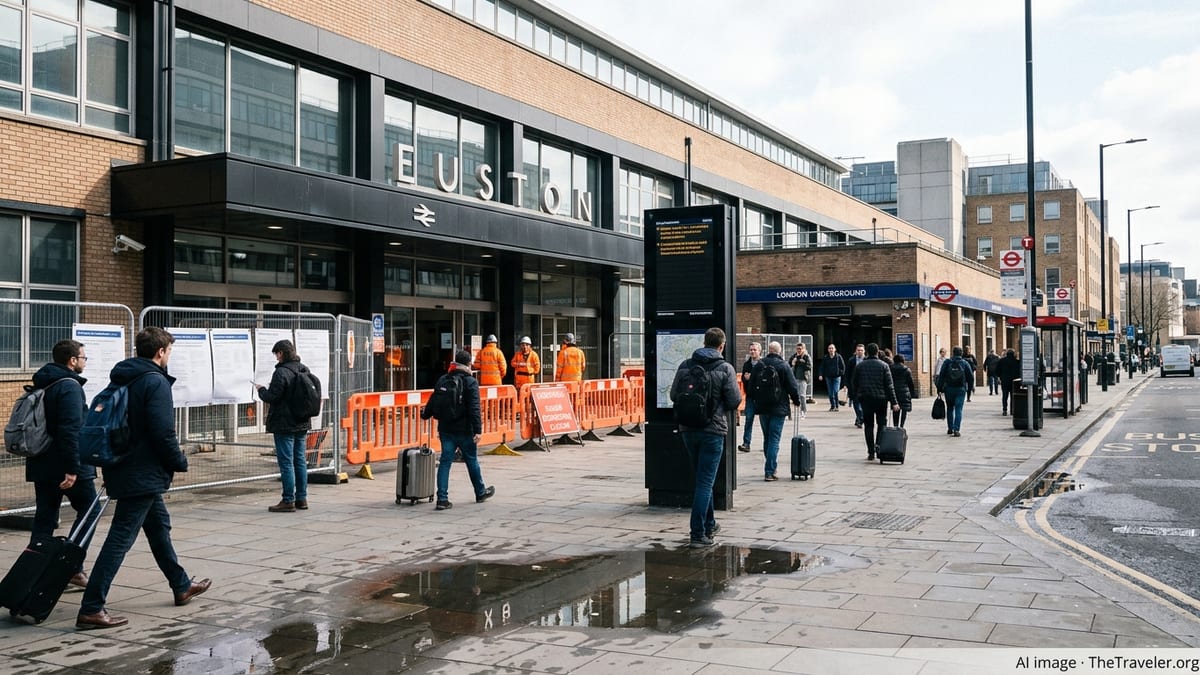
When Euston Is Closing and Which Routes Are Affected
Publicly available information from Network Rail and recent media coverage indicate that London Euston will be closed to main line services for six days over Easter, with no intercity trains operating between Euston and Milton Keynes Central throughout the shutdown. Trains on the West Coast Main Line will start and terminate at stations north of the closure, significantly affecting long-distance journeys linking London with Birmingham, Manchester, Liverpool, North Wales and Glasgow.
The six-day shutdown is scheduled across the Easter bank holiday and the following working days, a period normally chosen for heavy rail works because commuter demand is lower but leisure and family travel is often high. Reports highlight that thousands of journeys are likely to be disrupted, with reduced capacity on alternative routes and longer journey times for many passengers.
Services operated by Avanti West Coast and London Northwestern Railway are among those most directly impacted, alongside other trains that usually use the southern end of the West Coast Main Line to reach Euston. Some local and regional services into the capital are also expected to see changes, including diversions into other London termini or replacement bus legs between key stations.
While Euston’s National Rail concourse will be closed to most main line services, London Underground lines serving Euston are expected to remain open, allowing passengers to continue to use the station as a Tube interchange and to access nearby areas on foot.
Why the Six-Day Shutdown Is Taking Place
The closure is part of a package of works on Europe’s busiest mixed-use passenger and freight railway, the southern section of the West Coast Main Line. Network Rail has outlined a programme that includes installing new track near Willesden in north-west London, repairs and upgrades around Harrow and Wealdstone, and extra protection for a bridge at Ledburn in Buckinghamshire to reduce the risk of future damage and unplanned closures.
According to recent reports, the engineering programme represents an investment of around £30 million and is designed to improve long-term reliability on a corridor that carries millions of passengers each year. By concentrating disruptive activity into a single extended blockade, planners aim to deliver several years’ worth of maintenance and renewal work that would otherwise require repeated weekend closures.
The shutdown also links with longer-term changes around Euston, including continuing work connected with high-speed rail construction and the remodelling of approach tracks. Public documents on the station and its approaches show that Euston has been under sustained pressure from rising passenger numbers, and infrastructure managers have been seeking opportunities to reconfigure tracks, signalling and civils assets to support both current operations and future layouts.
Using the Easter period for such a large worksite allows engineering teams more continuous access to the tracks, reducing the need for overnight possessions and improving safety conditions for staff. However, it concentrates disruption into a short, high-profile window, which is why operators and passenger groups are emphasising the need for early journey planning.
Alternative Routes and How to Reroute Your Journey
Rail operators and journey planners are advising passengers who normally use Euston to consider travelling either side of the Easter period where possible, in order to avoid the heaviest disruption. For those who must travel during the shutdown, a combination of diversionary rail routes, other London termini and rail-replacement buses will be available, although seat availability may be limited.
On some long-distance flows, intercity services are expected to start or finish at Milton Keynes Central or other major stations north of the blockade, with passengers transferred to and from London by bus. Journey times on these options will be longer than usual and may involve multiple changes, particularly for travellers heading to or from Scotland and North West England.
Passengers may be able to reroute via alternative London stations on different main lines, such as London Marylebone for services to the Midlands or London King’s Cross and St Pancras for connections towards the North and Scotland via the East Coast and Midland Main Lines. However, reports suggest that these corridors will also be busier than normal as travellers shift away from the closed West Coast route.
Inside London, the Underground, Elizabeth line and other suburban services can help bridge gaps between termini. Travellers are being encouraged to build in extra interchange time, travel at quieter times of day where possible, and check for any separate planned works on the Tube or other rail lines that might affect connections.
Practical Advice for Easter Travellers
Journey planners and rail operators are urging passengers to check their specific route before setting off, using up-to-date timetables and journey-planning tools, as some details may change closer to the start of the works. Advance tickets may be valid on altered routes or at different times, but conditions vary by operator, so passengers should review any restrictions attached to their booking.
Travellers with onward connections, including domestic flights or international services from airports, are advised to allow significantly more margin than usual. With trains diverted or replaced by buses and some services running less frequently, a delay on one leg can more easily knock on to later parts of the journey.
Accessibility is another key consideration. Replacement buses and alternative routes may not offer the same step-free access or assistance options as the usual main line services into Euston. Passengers who require mobility support or additional help are encouraged, in publicly available guidance, to arrange assistance in advance with their train operator so that staff can be deployed at alternative stations or on coach links.
Luggage management will also be more challenging on crowded diverted trains and buses. Rail advice commonly suggests travelling as light as possible, keeping bags compact and clearly labelled, and allowing extra time for moving between platforms, bus stops and Underground lines at unfamiliar stations.
Impact on Local Area and Longer-Term Benefits
The closure will alter travel patterns in and around Euston for the duration of the works. Streets near the station are likely to see changes in traffic flows as passengers shift to buses, taxis and ride-hailing services, and as rail-replacement vehicles operate between central London and stations such as Milton Keynes Central or other key hubs.
Businesses around Euston that rely on passing rail trade may experience a short-term dip in footfall from long-distance travellers, even though the Underground remains open. At the same time, some nearby stations and routes, including those at King’s Cross, St Pancras and Marylebone, are expected to be busier, potentially redistributing custom to other parts of central London.
In the longer term, Network Rail and transport commentators argue that the six-day shutdown should deliver smoother and more reliable services on the southern West Coast Main Line, cutting the risk of speed restrictions or emergency closures caused by track, signalling or structure failures. For regular commuters and long-distance travellers, the aim is fewer short-notice disruptions and better on-time performance after Easter.
The works also sit within a wider picture of redevelopment and renewal around Euston, as plans continue for a modernised station capable of handling anticipated future demand. While the immediate impact over Easter will be challenging for many passengers, transport planners present this period as part of a staged effort to bring an aging yet vital rail gateway up to contemporary standards.