

More news on this day
Travelers across London’s main airports faced widespread disruption today as more than 30 key flights operated by Gulf Air, British Airways, American Airlines and other major carriers were cancelled, affecting links to New York, Berlin, Zurich, Dubai, Tel Aviv, Oslo and additional destinations.
Get the latest news straight to your inbox!
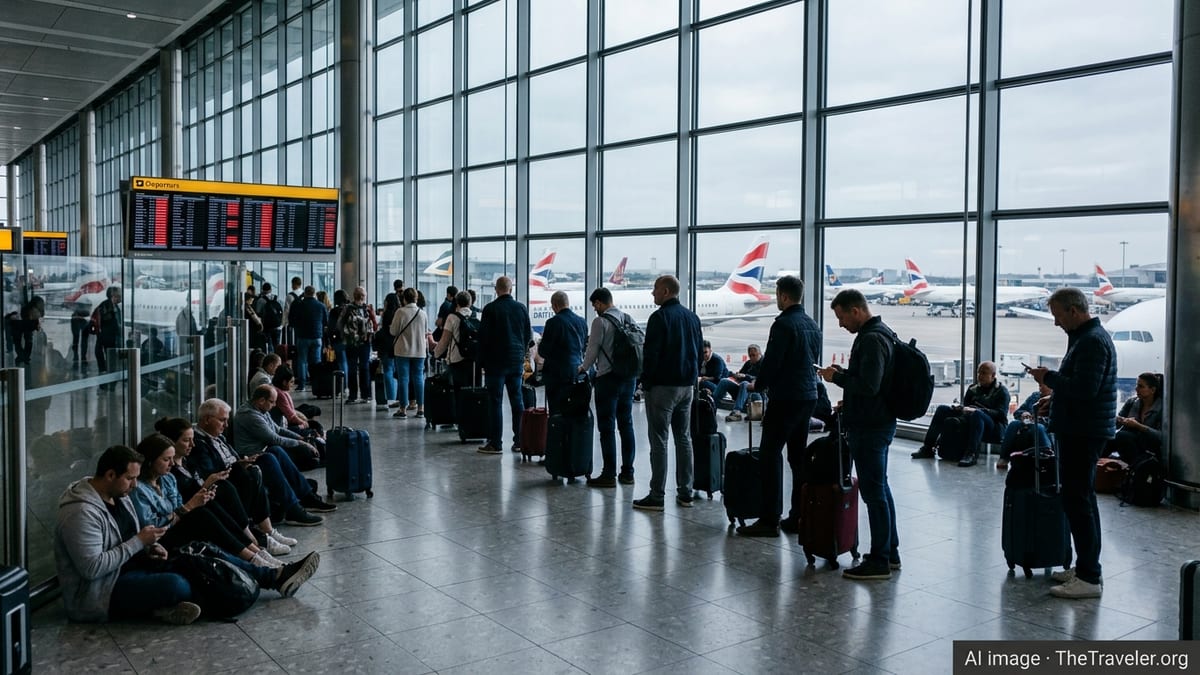
Wave of Cancellations Hits London’s Global Hubs
Published coverage from UK aviation trackers and major news outlets indicates that London Heathrow, Gatwick and other area airports experienced a sharp spike in cancellations, with over 30 departures and arrivals scrubbed across multiple long haul and European routes. The disruption was most visible on high demand corridors linking London with New York, Berlin, Zurich, Dubai, Tel Aviv and Oslo, where several rotations were pulled from schedules.
Flight data aggregators show that the cancellations were spread across daytime and evening banks, hitting both business and leisure travelers at the start of the busy spring travel period. While some passengers were able to rebook later departures on the same day, others faced overnight delays or rerouting through alternative European hubs.
The uneven pattern of cancellations, cutting across different airlines and alliance partners, has added to traveler frustration. Passengers reported crowded rebooking desks and long hold times with call centers, while airport displays in London showed clusters of red "cancelled" markers in departure halls serving transatlantic and Middle East services.
Gulf Air, British Airways and American Airlines Among Worst Hit
According to publicly available schedules and operational updates, Gulf Air, British Airways and American Airlines were among the carriers most visibly affected in London on the disrupted travel day. Gulf Air’s operations linking London with the Gulf region, including connections onward to Dubai and other Middle East points, saw select services withdrawn as a result of ongoing airspace and operational challenges in the wider region.
British Airways, the largest operator at Heathrow, cancelled multiple short haul and long haul flights, including some rotations to European cities such as Berlin and Zurich alongside long haul adjustments. Industry reporting suggests that the airline’s network has been under sustained pressure from knock on effects of regional instability, crewing constraints and aircraft positioning issues, leading to rolling schedule changes across its London hub.
American Airlines also cancelled services on key transatlantic routes, including at least one London to New York rotation, according to flight monitoring platforms. Publicly available information shows that some affected travelers were rebooked on later American flights or on partner airlines within the oneworld alliance, while others were offered next day departures depending on seat availability.
Regional Conflict and Airspace Constraints Weigh on Schedules
Analysts cite the continuing turbulence in Middle East airspace and the economic impact of the 2026 Iran conflict as a major backdrop to the latest wave of cancellations. Open source briefings on aviation and security have documented widespread suspensions and reductions of flights to Dubai, Tel Aviv and other regional hubs, with airlines in Europe and North America repeatedly adjusting schedules as airspace corridors open and close.
Published economic assessments note that airspace closures and damage to infrastructure at key Gulf airports have created a challenging environment for long haul scheduling. Airlines that traditionally routed traffic via hubs in the Gulf and Levant have been forced to design longer, more fuel intensive routings or to temporarily halt services, which can reverberate through network planning at European gateways such as London.
Industry observers point out that even when London itself is not directly affected by weather or technical outages, its status as a connecting hub means it quickly absorbs disruptions from other regions. A cancelled inbound aircraft from Tel Aviv or Dubai, for example, can cascade into a cancelled onward sector to New York, Berlin or Oslo if no spare capacity is available to operate the follow on flight.
Passengers Face Rebooking Challenges and Crowded Hubs
Reports from passengers and travel forums describe a familiar pattern of disruption at London airports as the cancellations materialised. Travelers bound for New York, Tel Aviv and Dubai described being called to gates only to see departures disappear from boards or be retimed repeatedly before final cancellation, prompting queues at customer service counters and airline lounges.
Publicly available guidance from airlines indicates that most affected passengers were offered seats on the next available flight, often on the same day for high frequency routes such as London to New York, but sometimes not until the following day for services to Tel Aviv, Dubai or smaller European destinations. Hotel and meal vouchers were provided in some cases in line with carrier policies and applicable passenger rights legislation.
Travel agents and online booking services have reported a surge in demand for alternative routings via continental European hubs including Paris, Frankfurt and Amsterdam as customers search for workarounds. However, with ongoing capacity pressures across the continent due to regional instability, spare seats on popular routes have become harder to secure at short notice, pushing some fares sharply higher for last minute rebookings.
What Travelers Should Expect in the Coming Days
Aviation analysts suggest that while the current cluster of more than 30 cancellations in London represents a significant disruption, it is part of a broader pattern of volatility that may persist in the short term. Public schedules remain in flux on routes touching the Middle East and Eastern Mediterranean, and further tactical cancellations or retimings from Gulf Air, British Airways, American Airlines and other carriers cannot be ruled out.
Publicly available information from airline advisories emphasizes that passengers booked on services to and from New York, Berlin, Zurich, Dubai, Tel Aviv and Oslo should monitor their reservations closely in the days ahead. Same day changes to departure times, aircraft types and operating carriers remain possible as airlines respond to shifting operational conditions and airspace restrictions.
Travel experts recommend that passengers build additional buffer time into itineraries involving connections through London, especially when onward flights touch conflict affected regions or constrained airspace. Flexible tickets, comprehensive travel insurance and advance registration for airline alerts are being highlighted as practical tools for mitigating the impact of sudden schedule changes during this period of elevated disruption.