

More news on this day
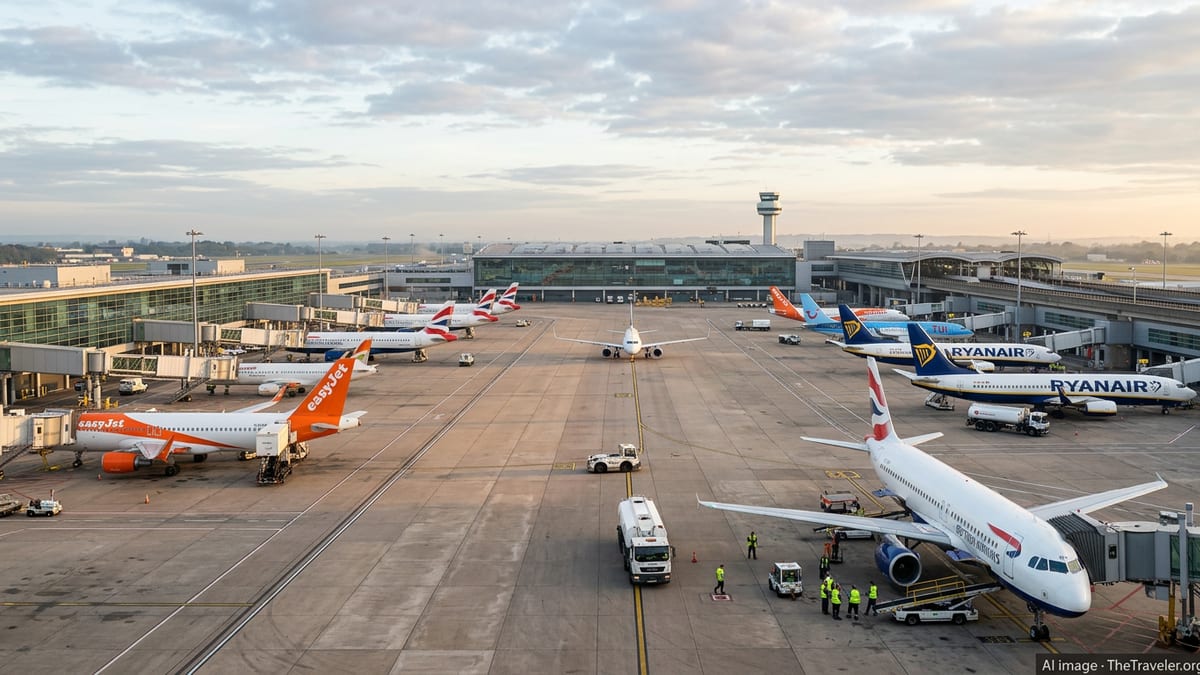
London Gatwick is entering one of its most ambitious growth phases in decades, combining a fast-expanding airline network with major infrastructure and operational upgrades that aim to make journeys smoother and increase capacity ahead of 2026.
Get the latest news straight to your inbox!
New Routes Put Gatwick Back on the Global Map
After several years of post‑pandemic rebuilding, Gatwick’s route map is growing sharply in 2025, as airlines add fresh leisure and long‑haul services. Low cost carrier Wizz Air is introducing a direct link between London Gatwick and Jeddah from March 31 2025, giving budget travellers a new option into Saudi Arabia and bolstering the airport’s Middle East coverage.
From Africa, Kenya Airways plans to launch nonstop Nairobi to Gatwick services from July 2 2025, providing an alternative UK gateway to London Heathrow for East African business and leisure traffic. The route is part of the airline’s wider expansion strategy and plugs Gatwick into Nairobi’s growing regional hub network.
British Airways, through its Gatwick‑based Euroflyer unit, is also building out its short‑haul schedule for summer 2025. The airline is leasing in additional Airbus A320 aircraft to meet strong Mediterranean demand and is adding more flights to holiday destinations in Greece, France and Austria, underlining Gatwick’s role as a key leisure gateway for London and the South East.
Longer term, Gatwick’s 2026 schedules are already taking shape. Jet2 is set to open a full base at the airport from March 26 2026 with six aircraft and an initial programme of 29 sun and ski routes, marking one of the largest leisure expansions at Gatwick in recent years and injecting new competition on key holiday corridors.
Looking Ahead to 2026: New Airlines and Market Shifts
The 2026 season is expected to see Gatwick welcome a wave of new and expanding carriers, reflecting renewed confidence in the airport’s growth trajectory. Jet2’s arrival will be closely watched by both package holidaymakers and rival operators, as its based aircraft allow for early morning departures and late evening returns that are highly prized by leisure travellers.
Industry sources also point to additional long‑haul developments on the horizon, including seasonal Asian and transatlantic services as airlines fine‑tune their post‑pandemic strategies. Chinese leisure carrier Capital Airlines has signalled its intention to operate limited seasonal flights between Qingdao and Gatwick in summer 2026, further diversifying the airport’s Asia portfolio and reinforcing its appeal beyond traditional European and North African markets.
At the same time, Gatwick’s North Atlantic network remains in flux, with some reductions in US flying offset by the growth of new long‑haul leisure players. While overall US frequencies from the airport have dipped compared with pre‑pandemic levels, airlines like Norse Atlantic continue to test new point‑to‑point models, and Gatwick’s management is betting that increased runway capacity and improved connectivity will help attract additional long‑haul operators into the next decade.
For passengers, the upshot in 2026 is likely to be a more competitive marketplace on both short‑haul and selected long‑haul routes, with greater choice of airlines, cabin products and price points, particularly for those heading to Mediterranean, Middle Eastern and selected Asian destinations.
Northern Runway Project Set to Transform Capacity
The most consequential change for Gatwick’s long‑term growth is the move to bring its existing northern runway into routine use alongside the main runway. In September 2025 the UK Secretary of State for Transport granted a Development Consent Order for the project, clearing the way for construction and detailed sequencing to move ahead.
The plan involves repositioning the northern runway and associated taxiways so that it can be used for regular operations, primarily for smaller aircraft, effectively enabling Gatwick to operate in a form of dependent dual‑runway mode. Airport documents indicate a phased build‑out stretching through the 2020s and 2030s, with supporting works that include new internal access roads, an autonomous vehicle station serving the North Terminal, and expanded office and hotel capacity on the South Terminal side.
For airlines, the northern runway offers the prospect of additional slot capacity at peak times, a critical factor in attracting new entrants and allowing incumbents to add frequencies. For travellers, the impact is expected to be more indirect at first, in the form of a broader choice of departure times and potentially improved on‑time performance as the airport gains more room to manage irregular operations.
The project remains contentious among environmental groups and local residents, especially around noise and emissions, but Gatwick argues that using an existing standby runway is a more measured way to grow than building a completely new strip. Either way, the green light for the northern runway has cemented the airport’s status as a long‑term competitor to Heathrow in London’s multi‑airport system.
Rail and Station Upgrades Improve Ground Access
Alongside the airside expansion, Gatwick has been working with Network Rail and train operators to improve surface access, which is critical in an era of higher passenger volumes. A multi‑year transformation of Gatwick Airport railway station entered service in late 2023, delivering a larger concourse, more gate lines and better integration with the terminal building to ease congestion at peak times.
Track upgrades on the Brighton Main Line are already cutting journey times between London and the airport, with some services now reaching the capital in around an hour. The upgrade programme has also been accompanied by a fleet‑wide refurbishment of Southern, Gatwick Express and related commuter trains, adding modern passenger information systems, power sockets and LED lighting to improve comfort on airport runs.
Looking to 2026, further engineering works north of the airport are planned to remove bottlenecks and enhance reliability, although passengers are being warned to expect some weekend closures and rail replacements while the final stages are completed. Operators stress that the end result will be a more resilient set of services linking Gatwick not only to central London but also to key destinations across the South East.
For travellers planning 2025 and 2026 journeys, these improvements should mean a smoother transition between train and plane, more frequent services at peak times and a station layout that copes better with modern passenger flows, particularly during summer holiday peaks.
Inside the Terminals: Operational Tweaks and Passenger Experience
On the terminal side, Gatwick is making a series of targeted changes to keep pace with rising traffic and evolving security standards. Recent committee papers highlight the near‑completion of a new multi‑storey car park serving the North Terminal, freeing up existing surface space for other development and helping to smooth vehicle flows around the forecourt areas.
The airport is also rolling out technology‑driven efficiencies in the tower and approach environment. A new “Intelligent Approach” system, developed with air traffic partners, has been introduced to refine the separation between arriving aircraft according to real‑time conditions. The system is designed to maintain safe distances while making better use of available airspace, supporting more consistent landing rates during busy periods and helping to cut delays when weather is marginal.
Security and check‑in processes continue to evolve too, with Gatwick among the UK airports trialling next‑generation baggage scanning equipment that will eventually simplify liquid and electronics rules at checkpoints. Coupled with expanded self‑service bag drop and biometric gates at immigration, the airport is working toward a more automated end‑to‑end experience, while still having staff on hand to assist less frequent flyers.
Although some of these changes can mean short‑term disruption, particularly as works continue around the South Terminal and in forecourt areas, the broader strategy is clear. By 2026 Gatwick aims to offer a more resilient, tech‑enabled operation that can support a denser schedule of flights, welcome new airlines and provide a smoother journey from train or car to departure gate.