

More news on this day
London Gatwick is reporting another day of significant disruption on Tuesday, April 7, with live flight data showing a high volume of delayed departures alongside a smaller but growing number of cancellations affecting passengers across Europe and beyond.
Get the latest news straight to your inbox!
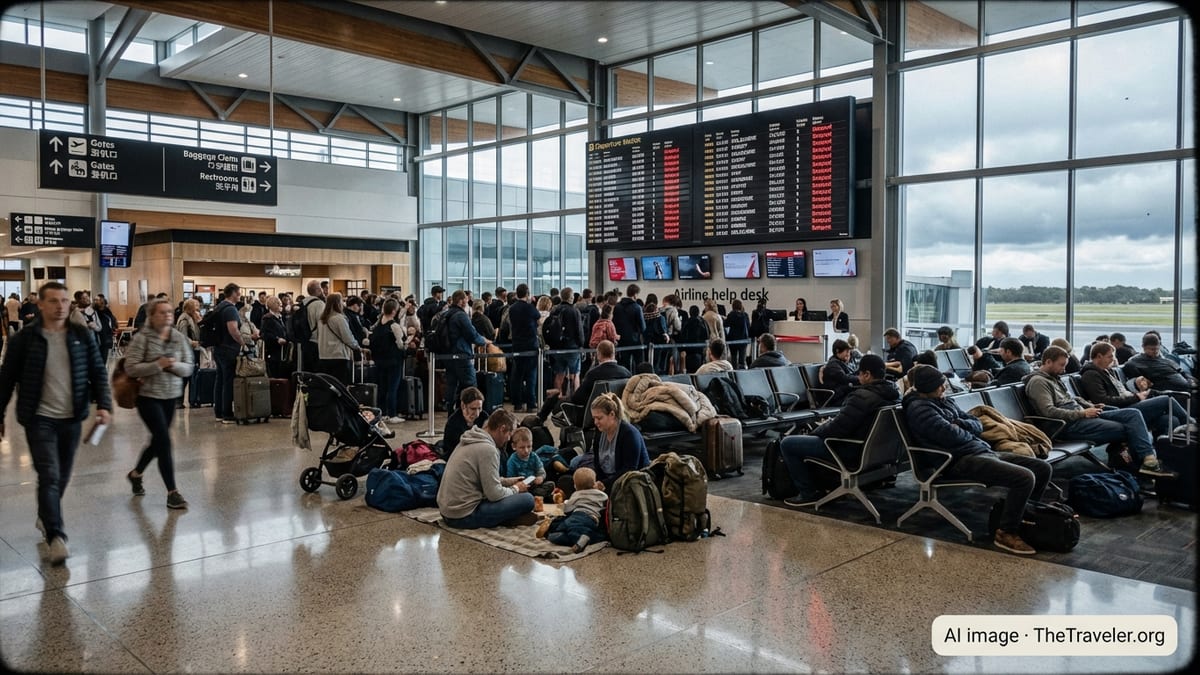
Live data shows elevated delays and scattered cancellations
Publicly available flight-tracking boards for London Gatwick on Tuesday, April 7, indicate that dozens of departures are running behind schedule by at least 30 minutes, with some pushed back by more than an hour. A smaller number of flights have been cancelled outright, affecting both early-morning and mid-morning operations.
Delays are most visible on short and medium haul routes, particularly services to major European hubs where wider regional disruption has been reported over the past 48 hours. Flights to cities such as Paris, Amsterdam and Frankfurt are among those showing knock-on schedule changes as the day progresses.
Arrivals into Gatwick are experiencing similar challenges, with inbound aircraft from continental Europe and the Mediterranean often landing later than timetabled. This pattern is contributing to a rolling impact on turnarounds, which in turn feeds into later departures through the rest of the morning and early afternoon.
Data collated by aviation analytics providers for early April suggests that overall disruption across European airspace remains elevated compared with typical spring conditions, with Gatwick among a cluster of large hubs experiencing recurrent delays rather than a single isolated incident.
European air traffic pressures continue to ripple into Gatwick
Recent reports from aviation industry analysts describe a broader air traffic squeeze across Europe in early April, following a period of widespread delays and cancellations on Monday, April 6. Airports in Germany, France, Denmark and other countries have all seen disrupted operations, driven by a mix of unsettled weather, airspace constraints and operational bottlenecks.
Coverage from travel industry outlets indicates that more than 1,600 flights were delayed and over 150 cancelled across Europe yesterday, with London listed among the major urban areas affected. Those knock-on effects are feeding into today’s schedules at Gatwick, where aircraft and crew are still repositioning after Monday’s disruption.
In the United Kingdom, Gatwick has been highlighted in recent months as one of the busier and more delay-prone airports, reflecting its heavy dependence on a single main runway operating at close to capacity. When wider European traffic is unsettled, that limited spare capacity means timetable slippage can build quickly, even if the local weather over Sussex remains relatively benign.
Industry briefings on European air traffic patterns this spring note that congestion at one or two large hubs can rapidly propagate across the network. For passengers using Gatwick, that means flights may appear to depart late even when no obvious local problem is apparent, simply because the incoming aircraft was held up earlier in the day at another airport.
Airlines most affected and routes under pressure
Low-cost and leisure-focused airlines, which use Gatwick as a major base, appear prominently in today’s list of delayed departures. Recent analyses of UK disruption patterns show that carriers such as easyJet, Vueling, Norwegian Air Sweden and TUI Airways have all been impacted at times when Gatwick experiences elevated congestion or wider European delays.
Many of today’s affected flights are short-haul departures to popular destinations in Spain, Italy, Greece and other Mediterranean markets, where aircraft typically operate tight turnarounds and multiple legs per day. Once an early rotation is delayed, subsequent sectors can struggle to make up time, resulting in a cascade of late departures through the afternoon and evening.
Some long-haul and mid-haul services are also experiencing schedule changes, particularly where routes intersect with regions recently affected by airspace restrictions and operational challenges. Industry updates this week highlight how disruptions in the Middle East and elsewhere have forced airlines to adjust routings, sometimes adding unplanned flying time and creating pressure on wider European schedules.
While cancellations at Gatwick today remain relatively limited compared with the number of delayed flights, they are concentrated on specific routes where aircraft and crew availability have been most heavily affected by the past two days of disruption. Passengers on those routes are being rebooked onto later services where capacity allows.
Passengers advised to check status and allow extra time
Travel advisories from airlines and consumer groups in recent days have consistently encouraged passengers flying from Gatwick to monitor their flight status closely on the day of travel. With live data showing a higher-than-normal volume of delays today, that advice remains highly relevant for anyone due to depart on Tuesday, April 7.
Public guidance typically recommends arriving at the airport in good time, particularly at peak morning and late afternoon periods, to account for potentially longer queues at check-in and security when multiple flights face schedule changes. Travellers are also urged to keep airline apps and notification settings enabled so that gate changes or revised departure times are not missed.
Consumer organisations continue to remind passengers that, under prevailing UK and European regulations, airlines may be required to provide care, rebooking options or compensation in certain circumstances when delays or cancellations are within the carrier’s control. However, where disruption stems from factors such as severe weather or airspace restrictions, compensation rules can be more limited, even if practical support is still offered.
For now, Tuesday’s pattern at Gatwick is one of steady, network-driven disruption rather than a complete breakdown in operations. Most flights are still operating, but many are leaving later than planned, and travellers are being urged to prepare for potential changes to their itineraries throughout the day.
Outlook for the rest of Tuesday at Gatwick
Forecasts for the remainder of Tuesday suggest that weather over southern England is unlikely to be the primary driver of further disruption at Gatwick, shifting attention instead to how quickly airlines and air traffic managers can work through the backlog created over the past 24 to 48 hours.
Operational planning updates from the wider aviation sector indicate that schedules are expected to stabilise gradually if no fresh shocks emerge elsewhere in Europe. However, with many aircraft already operating out of their usual rotation patterns, there is a risk that delays will continue into the evening peak, particularly on routes with tight turnarounds.
As of midday, the balance of live data points to continued elevated delays across both arrivals and departures rather than a rapid return to on-time performance. Travellers due to fly later today are being encouraged by travel advisers to keep plans flexible where possible, factor in potential missed connections, and ensure accommodation or onward transport can be adjusted if needed.
With the busy summer season approaching, recent disruption is likely to renew scrutiny of resilience at major European hubs, including Gatwick. For passengers travelling today, the immediate priority remains simple: check flight status regularly, arrive with extra time to spare, and be prepared for journeys that may take longer than scheduled.