

Understanding Heathrow’s Layout and Terminals
Heathrow currently operates four main passenger terminals: Terminal 2, Terminal 3, Terminal 4 and Terminal 5. Each has its own arrivals area, but the steps you follow when you land are broadly similar: disembark, walk to passport control, collect your luggage, clear customs and exit into the arrivals hall. Knowing which terminal you land in helps you choose the right meeting point and onward transport, so check your booking or boarding pass before you fly.
Most long-haul international flights from North America and Asia use Terminals 2, 3 and 5. For example, many Star Alliance airlines such as United and Air Canada typically arrive into Terminal 2, while Oneworld carriers like American Airlines often use Terminal 3 alongside some British Airways flights. British Airways also operates a large number of flights in Terminal 5, which has its own dedicated road and rail access. Terminal 4 is home to a mix of airlines, including some Middle Eastern and Asian carriers, and is slightly more isolated on the south side of the airfield.
All terminals are fully signposted in English with international pictograms, and walking routes from the gate to immigration are straightforward. In Terminals 2 and 3, most arriving passengers funnel into long corridors and down escalators or ramps to the UK Border. Terminal 5 often uses a short shuttle train from some satellite gates to the main building. Factor in 5 to 15 minutes of walking time from aircraft door to immigration, more if you are seated at the back of a large widebody aircraft and disembark last.
If you are being collected by friends or family, tell them to go to your specific terminal’s public arrivals hall. For example, if you land at Terminal 3, a classic meeting point is by the central information desk near the exit from customs. At Terminal 5, many people arrange to meet by the large arrivals board in the main hall. This avoids confusion, as driving or shuttling between terminals can easily add 20 to 30 minutes during busy times.
From Landing to Passport Control: Timing and Queues
Once your aircraft parks and the seatbelt sign switches off, you still have a journey before you reach the exit. On a typical morning arrival from New York into Terminal 5, for example, you might land at 7:00, reach the jet bridge by 7:10, and arrive at passport control by 7:25. At quieter times, you could be through the border in another 10 to 20 minutes; at peak times, you might wait closer to 45 minutes or more.
Heathrow’s immigration experience varies by passport type and arrival wave. UK and Irish citizens, many EU and some other eligible nationalities can usually use automated eGates, which often move faster than the all-passports line. In 2025 and 2026, wait times for eGates are often around 10 to 30 minutes outside the busiest peaks, though surges of long-haul flights can push queues longer. Evening arrival banks from North America and Asia, usually between about 6:00 pm and 9:00 pm, are notorious for heavier crowds.
Travelers who cannot use eGates must queue to see a Border Force officer. This includes many first-time visitors, some families with young children and passengers requiring visas or additional checks. Here, waits can be highly variable: one traveler on a late-afternoon Asian arrival into Terminal 3 might clear in 20 minutes, while another arriving just as several widebody flights land together could wait an hour or more. Business and some premium-class passengers may receive a Fast Track card to access a shorter line at certain terminals, although this is not guaranteed and depends on airline arrangements.
To speed things up, have your passport ready, remove headphones before reaching the front of the line, and avoid phone calls as you approach the desk. If you need to complete a landing card or present supporting documents, do it while you queue so you are prepared when called. Parents with children should keep everyone together and explain that photos and fingerprints at eGates or booths are normal procedure, which can help reduce stress at the border.
Electronic Travel Authorisation, Visas and UK Entry Rules
The UK has been rolling out a new Electronic Travel Authorisation system for many visa-exempt visitors. By early 2025 and into 2026, more nationalities are being brought into the scheme, which means some travelers who previously only needed a passport now also require an approved ETA before they fly. Rules are evolving, so you should always check your status with official UK government information before travel, especially if you are from the Gulf states, Europe, or countries that historically did not need a visa for short visits.
If you require an ETA or visa and arrive without one, you may not be allowed to board your flight in the first place, or you could face long interviews and possible refusal of entry on arrival. Airline check in staff typically verify your travel authorisation before issuing a boarding pass, but do not rely on this as your only safeguard. For example, a Canadian traveler arriving in 2026 for a two-week holiday might need to show a valid ETA confirmation email alongside their passport at check in and again at Heathrow if requested by Border Force.
Immigration officers may ask about your travel plans, finances and accommodation. It helps to have your hotel booking, return ticket and any supporting documents easily accessible on your phone or in printed form. If you are staying with friends in London, having their address written down is wise, since mobile data may not work immediately after landing. Students and those coming for work should have acceptance letters, employment contracts or sponsorship documents ready to avoid delays in the inspection booth.
Travelers merely connecting through Heathrow without entering the UK may be eligible to remain airside and avoid formal entry, depending on nationality and ticket type. However, if you collect bags or change airports, you must clear UK immigration like any other arrival. As rules for transit without visa and ETA exemptions can change, anyone with a tight connection or complex itinerary should double check requirements well before departure.
Baggage Claim and Customs: What Actually Happens
After passport control, you enter the baggage reclaim hall. Electronic screens list each flight alongside its assigned carousel. On a typical transatlantic arrival into Terminal 3, checked bags might begin appearing about 20 to 30 minutes after landing, though it can be quicker or slower depending on aircraft size, staffing and how many flights arrive at once. If you cleared immigration quickly and your priority-tagged suitcase is among the first off, you could be out of the airport within an hour of touchdown. If you arrive as multiple jumbo jets unload simultaneously, you might wait another 20 minutes by the belt.
Baggage trolleys are usually free to use, and you will find them lined up near the carousels. Families and long-haul travelers with multiple checked suitcases almost always grab one, particularly in Terminals 2 and 3 where the walk from customs to the public arrivals hall can involve ramps and gentle slopes. If your bag does not appear after most of your flight’s luggage has been delivered, look for the airline baggage desk in the reclaim area. Staff there can check tracking systems and help you file a delayed baggage report.
Customs at Heathrow is straightforward for most passengers. After collecting your luggage, you follow signs to three channels: green for nothing to declare, red for goods to declare and blue if you are arriving from within the UK or Ireland. There is no mandatory customs form for typical tourists. In practice, most passengers walk straight through the green channel without being stopped, although officers may select travelers for spot checks. If you are carrying expensive electronics for business, large quantities of alcohol or tobacco, or valuable items like professional camera gear, make sure you understand duty limits and be prepared to answer questions.
Remember that some items, such as certain foods, plants and large sums of cash, are restricted or must be declared. For instance, arriving from outside the UK with more than the cash threshold in euros or another currency requires a declaration, and bringing meat or dairy products from many countries can be prohibited. If in doubt, use the red channel and ask. A few extra minutes at customs is far preferable to potential fines and confiscations later.
Onward Transport: Getting from Heathrow to Central London
Once you exit into the public arrivals hall, your next decision is how to reach your final destination. Heathrow offers several main options, each with its own trade-offs in cost, speed and comfort. Your choice often depends on where in London you are staying and what time you land. For many visitors staying in central London hotels around Paddington, the West End or the City, the fastest combination is a mix of rail and Underground rather than a taxi.
The Heathrow Express is the premium non-stop train to London Paddington. Journey time is about 15 minutes from Heathrow Central (Terminals 2 and 3) and about 21 minutes from Terminal 5. Trains generally run every 15 minutes for much of the day. Ticket prices vary depending on how far in advance you book, but typical on-the-day standard-class fares are substantially higher than the Underground, with advance offers sometimes bringing one-way fares down to around low double-digits in pounds. For example, a traveler arriving on a business trip who values speed and has only hand luggage might happily pay more for the Express to be in a Paddington hotel within 30 to 40 minutes of landing.
The Elizabeth line is a newer rail service that runs directly from Heathrow into central London, stopping at stations such as Paddington, Bond Street, Tottenham Court Road, Farringdon and Liverpool Street. Travel times to central stops are usually around 30 to 35 minutes, making it noticeably quicker than the Piccadilly line Underground but slower than the Heathrow Express. Fares are higher than the Tube but lower than the Express, with a typical contactless or Oyster fare from Heathrow to Zone 1 in the low teens in pounds as of early 2026. For many tourists heading to areas like Soho, the City or Canary Wharf, the Elizabeth line strikes a good balance between speed, comfort and cost.
The Piccadilly line of the London Underground is the budget-friendly choice. Trains from all Heathrow terminals run into central London in around 45 to 60 minutes, depending on where you get off. As of March 2026, a single adult fare from Zone 1 to Heathrow using contactless or Oyster is typically under 6 pounds, making it the cheapest rail option for most visitors. During daytime hours, trains can be busy, especially with commuters between Hammersmith and Green Park, but they are entirely manageable with suitcases if you avoid the worst rush-hour peaks.
Taxis, rideshares and prebooked car services are convenient if you have heavy luggage, children or are headed somewhere in outer London not well served by rail. A black cab from Heathrow to central areas like Covent Garden or Kensington can easily cost from around 60 to 100 pounds depending on traffic and time of day. Prebooked private cars can be slightly cheaper, with fixed quotes arranged in advance. Coach services and long-distance buses operate from the central bus station near Terminals 2 and 3 and from other terminal forecourts. For example, direct coaches to cities like Oxford, Bristol or Cardiff are a common choice for international students and budget travelers who want to avoid hauling luggage across London rail hubs.
Money, Mobile Data and Practical Essentials on Arrival
Before leaving the terminal, take a moment to sort out basics like money, mobile data and local transport cards. While card payments are widely accepted across London, from Underground barriers to coffee shops, it is still useful to have a small amount of cash in pounds for occasional circumstances. ATMs are available in arrivals halls of all terminals, although using your home bank’s debit card may attract foreign transaction fees. Currency exchange kiosks also exist, but their rates are rarely as favorable as withdrawing from an ATM or using a fee-free card.
If you need mobile data, you can either rely on your existing roaming plan or buy a local eSIM or physical SIM. Heathrow has vending machines and retail outlets that sell UK SIM cards from major providers, typically bundled with 1 to 4 weeks of data suitable for short visits. A typical package in 2026 might cost in the range of 15 to 30 pounds for several tens of gigabytes. For many travelers, especially those who work remotely, purchasing a local solution at the airport ensures maps, ride-hailing apps and messaging are available as soon as they leave the terminal.
For using public transport, you do not need to buy a dedicated paper ticket if you have a contactless bank card or smartphone with NFC payments enabled. Simply tap in and out on the yellow readers for the Tube and Elizabeth line, or tap in only on buses. Visitors staying longer than a few days who do not have a compatible card might consider purchasing an Oyster card from machines in the Underground stations beneath each terminal. Daily caps ensure your total spend on Tube and bus travel does not exceed a certain amount, which can be cost-effective if you take multiple journeys each day.
Heathrow’s arrivals halls include supermarkets, pharmacies and convenience stores. For instance, it is possible to pick up basic toiletries, a UK plug adapter and a bottle of water in a single stop before heading into the city. If your luggage is delayed, buying an inexpensive change of clothes at the airport can make the first night in London more comfortable while you wait for delivery. Keep receipts for any essential purchases, as some airlines will reimburse reasonable costs linked to delayed baggage.
Meeting Points, Lounges and Freshening Up After a Long Flight
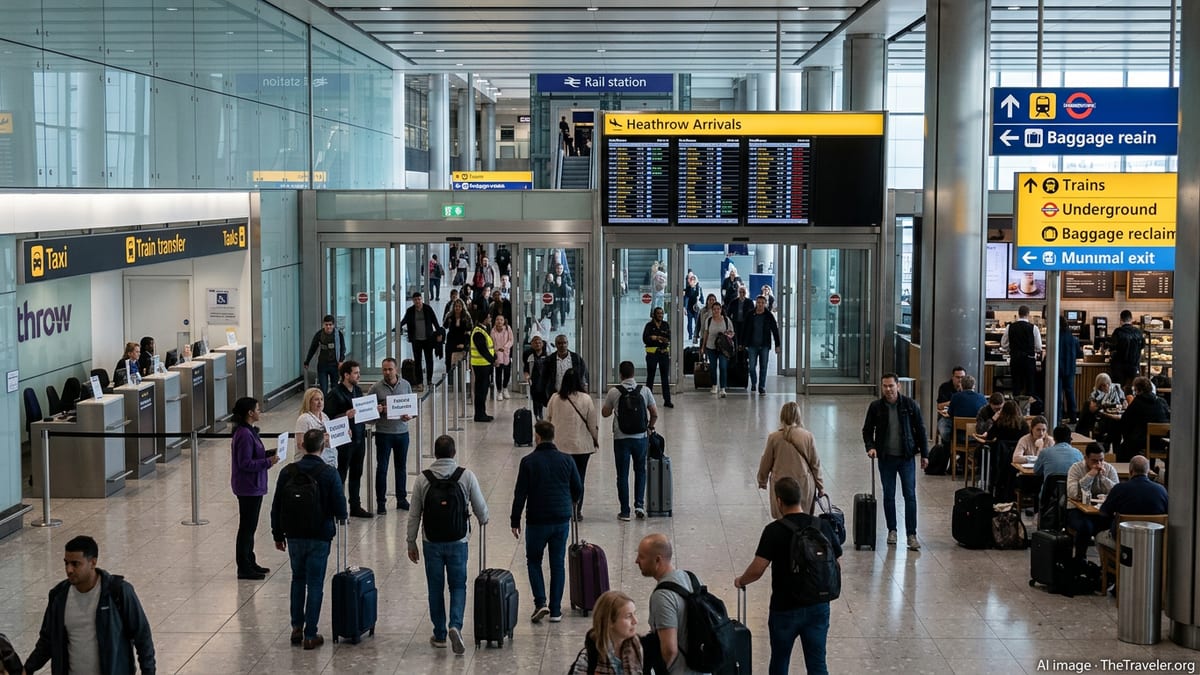
After clearing customs, you step directly into the public arrivals area where friends, family and drivers can wait. Each terminal has clearly marked meeting points, often near the exit doors or information desks. In Terminal 5, for example, drivers holding name boards tend to cluster behind crowd barriers facing the customs exit, while families often gravitate towards coffee shops like Costa or Pret where they can sit and keep an eye on the flow of arriving passengers.
Heathrow does not typically allow arriving passengers to access airside departure lounges once they have cleared immigration and customs, so if you want to shower or rest after a long-haul flight, look for landside facilities. Several terminals have landside hotels or day rooms within a short walk or shuttle ride of arrivals. Some airport hotels sell day-use rates that allow you to shower, nap and recharge devices before continuing to your final destination. This can be especially valuable for travelers landing early in the morning with hotel check in not available until mid-afternoon.
If you are waiting for another passenger who lands later, you must do so outside the secure area. There is no place to linger at the gate or in the baggage hall once you have passed customs. In practice, most people choose a café or seating area near the arrivals exit. For example, if you land at Terminal 3 at 7:00 am and your friend lands at 9:00 am, you might grab breakfast at a café in the arrivals hall, keeping an eye on the big screens that show flight statuses and approximate exit times for each flight.
For a quick refresh, many terminals provide restrooms with baby-changing facilities, and some have small prayer rooms or quiet spaces. If you need to change outfits before heading into a business meeting, finding a larger accessible restroom cubicle can give you enough space to reorganise luggage and clothing. Keep in mind that public seating can be limited during busy periods, so those needing a quiet corner may be more comfortable moving to an attached hotel lobby or the rail station concourse before continuing their journey.
The Takeaway
Arriving at Heathrow does not have to be chaotic. With a realistic sense of timings, from the walk to passport control to the wait at baggage claim and the journey into central London, you can plan your arrival day with confidence. For a typical long-haul arrival, many travelers find that it takes around 60 to 120 minutes to get from aircraft door to leaving the terminal, depending on immigration queues and baggage delivery.
Think ahead about three key decisions: how you will clear the border, how you will handle luggage and customs, and which transport option best suits your budget and destination. Check whether you need an Electronic Travel Authorisation or visa before you fly, keep essential documents handy, and have a backup plan if queues are longer than expected. Choose between the speed of Heathrow Express, the balance of cost and comfort on the Elizabeth line, the value of the Piccadilly line, or the convenience of a taxi or private car.
Finally, give yourself enough breathing room. Avoid scheduling rigid appointments immediately after landing, build extra time into your itinerary, and use the airport’s facilities to hydrate, freshen up and get connected before tackling London’s streets. Treated as the first chapter of your trip rather than an obstacle, Heathrow arrivals can be a smooth, even enjoyable introduction to the city.
FAQ
Q1. How long does it usually take to get through Heathrow on arrival?
For most travelers, it takes about 60 to 120 minutes from landing to exiting the terminal, including walking to passport control, clearing immigration, collecting bags and passing customs. During peak arrival times or if several large aircraft land together, it can take longer, so building in extra time is wise.
Q2. Can I use eGates at Heathrow and are they faster?
Eligible travelers, including UK and some other nationalities, can usually use eGates, which often move faster than manual passport desks. At busy times you may still queue, but many passengers report passing through in 10 to 30 minutes when using eGates, compared with potentially longer waits in the all-passports line.
Q3. What is the cheapest way to get from Heathrow to central London?
The Piccadilly line on the London Underground is typically the cheapest option for most visitors. As of early 2026, a single adult fare from Zone 1 to Heathrow using contactless or Oyster is under 6 pounds, and the journey to central stations like Leicester Square or Piccadilly Circus usually takes 45 to 60 minutes.
Q4. How much does the Heathrow Express cost and is it worth it?
The Heathrow Express is the fastest option to Paddington, taking about 15 minutes from Heathrow Central and around 21 minutes from Terminal 5. On-the-day tickets cost significantly more than the Underground, but advance fares can bring prices down to roughly the low double-digits in pounds. It is often worth it if you value speed, have light luggage and are staying near Paddington.
Q5. Do I need cash when I arrive at Heathrow?
You can pay for almost everything at Heathrow and in London with a debit or credit card or a mobile wallet, including transport. However, having a small amount of cash in pounds can be useful for occasional situations, such as tipping or small vendors. ATMs are available in arrivals halls if you need to withdraw money.
Q6. Can I buy a SIM card or eSIM at Heathrow?
Yes, Heathrow has shops and vending machines selling SIM cards from major UK providers, often bundled with data packages suitable for short visits. Many travelers also choose eSIMs purchased online before travel, which can be activated as soon as the plane lands, giving immediate access to maps and messaging.
Q7. Is there anywhere to shower or rest after a long flight?
While access to traditional airline lounges is generally limited to the airside departures area, several airport hotels near each terminal offer day-use rooms where you can shower and sleep for a few hours. Some independent lounges and wellness facilities also provide paid access to showers and quiet spaces landside, though availability varies by terminal and time of day.
Q8. How do I meet friends or a driver on arrival?
After customs, you enter the public arrivals hall, where friends, family and drivers can wait. It is best to agree on a clear meeting point, such as the main arrivals board or a specific café. Drivers holding name boards typically stand behind barriers facing the customs exit, especially in Terminals 3 and 5.
Q9. What should I do if my luggage is delayed or lost?
If your bag does not appear on the carousel, go to your airline’s baggage desk in the reclaim hall. Staff can check where your luggage was last scanned and help you complete a delayed baggage report. Provide a local address, such as your hotel, for delivery once the bag arrives, and keep receipts for essential items you buy in the meantime in case your airline reimburses you.
Q10. Do I go through customs and immigration again if I am connecting at Heathrow?
It depends on your itinerary and nationality. If you remain airside on a through-ticket and your bags are checked to your final destination, you may only follow flight connections signs and avoid UK entry formalities. If you need to collect luggage, change airports, or are not eligible for airside transit, you will go through UK immigration, collect bags, clear customs and then check in again for your onward flight.