

More news on this day
Londoners and visitors are preparing for another weekend of planned disruptions across the Underground and wider Transport for London network, as engineering works, maintenance programmes and ongoing capacity upgrades combine to close sections of key lines and divert passengers onto alternative routes.
Get the latest news straight to your inbox!
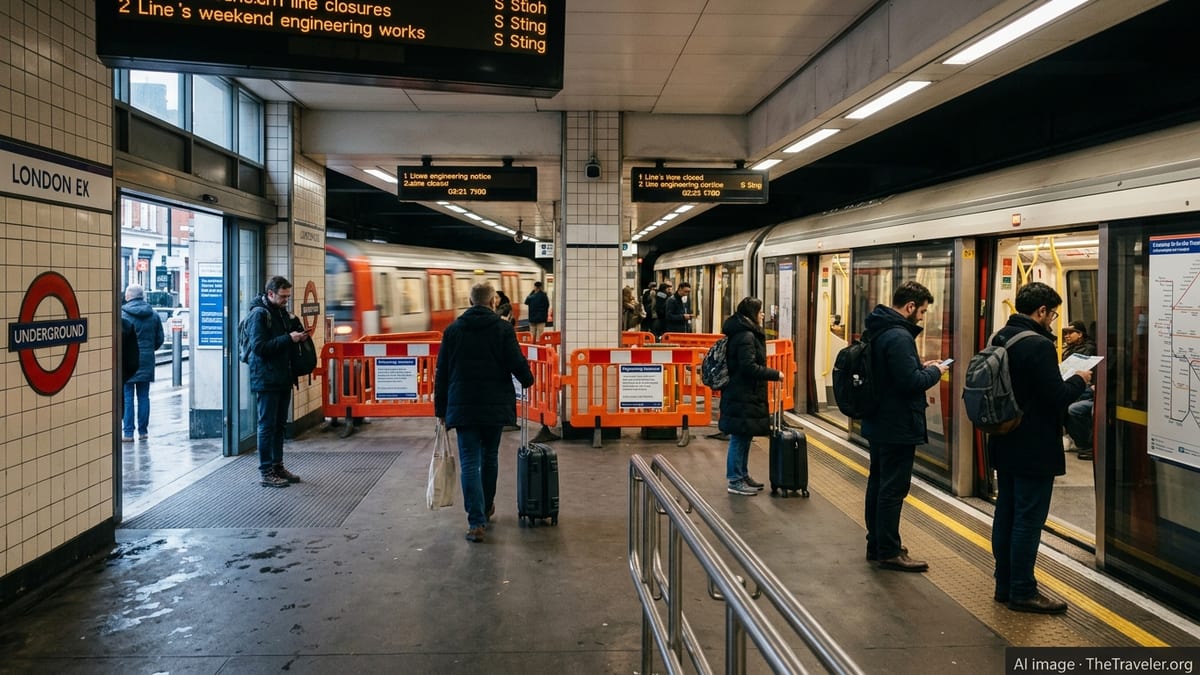
Key Underground and TfL Closures This Weekend
Publicly available transport updates indicate that multiple Underground corridors will again be affected by planned closures this weekend, with entire sections of lines temporarily shut to allow engineering and maintenance teams access to tracks, signalling and stations. Weekend works are concentrated on some of the busiest east to west and suburban links, which can significantly alter normal travel patterns for both commuters and tourists.
Recent disruption bulletins and passenger reports highlight particular strain on orbital and suburban services feeding into central London interchanges. Sections of the Hammersmith & City and District lines, as well as parts of the London Overground network, have been subject to repeated weekend closures in recent weeks, and a similar pattern is expected to continue as longer term upgrade schedules progress. Replacement buses and diversionary rail routes are being used to keep most areas connected, but journey times are likely to increase.
Beyond the core Underground system, there are also periodic weekend suspensions on TfL-managed rail corridors and river crossings that interact with Tube journeys. Planned closures at key road tunnels and bridges, along with maintenance on surface rail routes that interface with stations such as Stratford, Liverpool Street and Canada Water, can compound the impact of Tube works by shifting more passengers onto remaining Underground routes.
Night travel is also affected in places, despite the Night Tube offering 24-hour services on several lines from Friday to Sunday. When overnight work is scheduled, sections of these lines can be replaced by night bus services or diverted routes, altering how people return from late events, theatres and nightlife districts.
How Disruptions Affect Commuters and Tourists
For weekday commuters who also rely on weekend services, recurring Saturday and Sunday closures can reshape routines, especially for shift workers and those in hospitality, retail and healthcare. Reports from regular passengers suggest that when major lines are closed for a whole weekend, trains and platforms on neighbouring lines quickly become crowded, and standing journeys of 30 minutes or more are common along remaining open corridors.
Tourists are particularly exposed to disruption because itineraries often assume the Underground will offer the fastest and most direct route between attractions. When central interchanges or river crossings on the network are shut, popular journeys between areas such as the South Bank, the West End, Camden, Greenwich and key museums may require unexpected changes, longer walks between stations, or a switch to buses. Travellers arriving with luggage on days when key rail links are curtailed can face additional inconvenience if airport and mainline connections are affected by planned works.
Weekend closures can also interact with other forms of disruption, including days affected by industrial action. In periods when separate strike timetables are announced for later in the month, passengers are being advised through public information channels to treat each weekend as subject to change and to avoid assuming that a route which operated normally one week will be unaffected the next.
Accessibility is another concern. When step-free stations or lifts on heavily used interchanges are temporarily closed due to works, travellers with reduced mobility may have to make complex detours or rely on staff assistance at alternative stops. Policy documents from the transport operator emphasise that advance notice of these changes is provided through journey planners and service updates, but passengers still report that last-minute alterations can be challenging to navigate, particularly in unfamiliar parts of the city.
Alternative Routes Across the Capital
Despite the breadth of planned works, London’s layered transport system gives most passengers at least one workable alternative. When Sections of Underground lines are closed, the first option is usually to reroute via a different Tube line, even if that means travelling slightly out of the way to connect at a larger interchange. For example, when parts of the sub-surface network are suspended, journeys can sometimes be reconfigured to use the Jubilee, Victoria or Piccadilly lines to skirt around the affected area.
Where rail corridors are entirely shut between key stations, rail-replacement buses are often scheduled, serving intermediate stops that may otherwise lose their connection to the wider network. These services tend to be slower than trains, particularly where they traverse busy roads or river crossings that are already under pressure. Passengers are therefore encouraged by official journey-planning tools to consider faster orbital routes, even if they involve extra interchanges, rather than relying solely on replacement buses.
The bus network itself can serve as a robust alternative, especially in central and inner London. Frequent routes between major hubs such as King’s Cross, Victoria, London Bridge, Waterloo, Paddington and Stratford can often keep total journey times competitive with a disrupted Tube route, particularly outside weekday rush hours. At night, London’s extensive night bus network fills many of the gaps left when lines are closed for engineering or when Night Tube sections are temporarily withdrawn.
For some cross-river journeys in the east of the city, passengers may need to be aware of concurrent closures at road tunnels and bridges, which can slow surface transport. Where road crossings such as the Blackwall Tunnel are subject to maintenance programmes, published information advises drivers and bus users to expect heavier traffic and to allow extra time. In these circumstances, rail alternatives via Underground, DLR or Overground can, where available, provide a more predictable route than road-based options.
Practical Planning Tips for a Smoother Weekend Journey
Travel advice from transport planners and regular users stresses that advance preparation is the single most effective way to reduce disruption from weekend closures. Passengers are urged to check live status alerts and planned works pages on the morning of travel, and again just before setting out, as engineering timetables can change at short notice due to weather, overrunning works or operational constraints.
Building extra time into any weekend journey is strongly recommended, particularly when catching intercity rail, theatre performances, flights or timed attractions. Allowing at least 30 minutes of contingency for cross-city trips that depend on a specific connection can help absorb the impact of diversions, closures or crowded platforms that slow boarding and alighting.
For visitors unfamiliar with London’s geography, using detailed journey-planning apps that integrate live service data can be crucial. These tools can automatically re-route journeys away from closed sections, flag step-free options, and suggest alternative combinations of Tube, bus, DLR, Overground and walking. Keeping an eye on interchange stations, rather than just individual lines, is helpful because works at a single hub can affect several routes simultaneously.
Passengers are also encouraged to regard buses not as a last resort but as a planned part of weekend travel, especially in the central area where routes are dense and frequent. In some cases, walking between nearby stations, or across the river via pedestrian bridges, can be faster than waiting for a diverted service. Carrying a simple outline map of central London or saving an offline map on a phone can make it easier to adjust quickly if a particular link is unexpectedly closed or crowded.
What Regular Disruptions Mean for Future Travel
The current pattern of recurring weekend closures is closely tied to longer term investment across London’s transport network, including upgrades to signalling, track, power systems and accessibility features. While this concentrated work schedule can feel disruptive in the short term, the stated objective is to increase reliability, capacity and safety over the coming years, particularly on lines that handle the highest passenger volumes.
Public discussion in recent months has pointed to the balance between keeping the city moving at weekends, when leisure and visitor travel peaks, and pressing ahead with upgrades that are more difficult to deliver on weekdays. Some commentators argue that the clustering of works into certain weekends leaves parts of the network too fragile, while others note that spreading smaller closures over more dates could create a sense of constant low-level disruption.
For now, travellers are being asked through official communications and media coverage to treat weekend travel as something that requires the same level of planning as weekday peak journeys. By checking for closures early, identifying at least one back-up route, and being prepared to switch between Tube, bus and rail services, both commuters and tourists can continue to navigate London effectively, even as engineering works reshape the network beneath their feet.