

More news on this day
Londoners and visitors are being urged to plan ahead this weekend as a fresh round of engineering works brings line closures, part-suspensions and reduced services across the Underground, London Overground and wider Transport for London (TfL) network.
Get the latest news straight to your inbox!
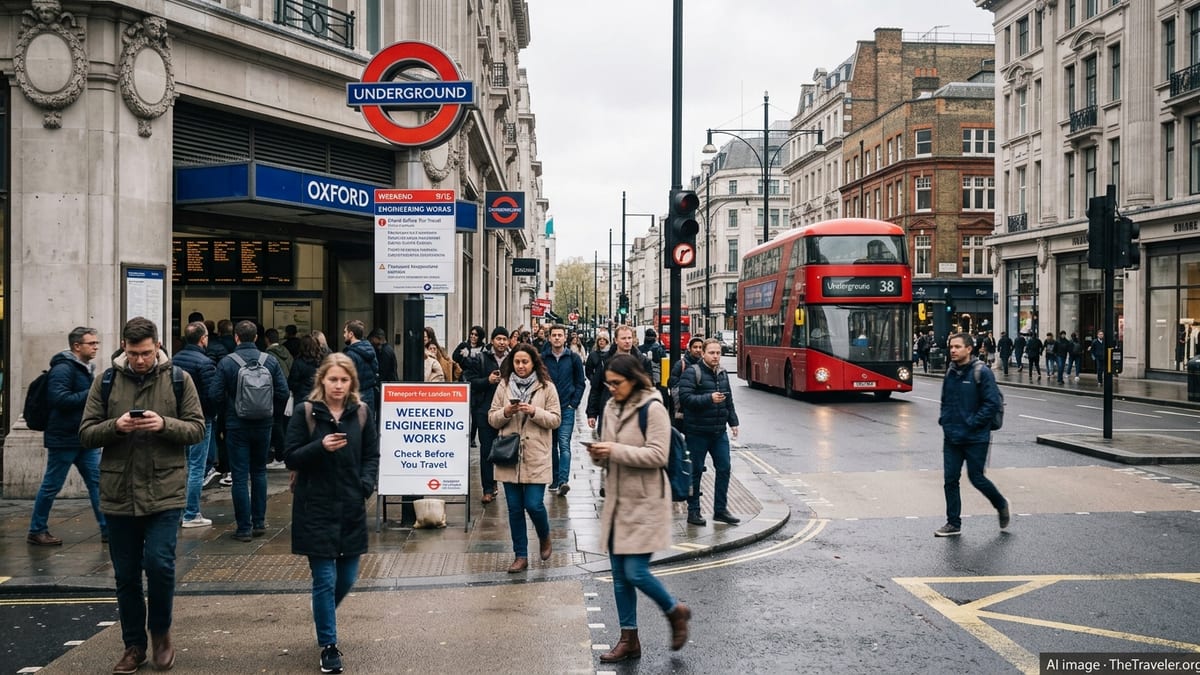
Major Underground and Rail Closures This Weekend
Publicly available service updates show that several Underground and TfL rail corridors will see significant disruption due to planned engineering works. Sections of London Overground in particular are affected, with closures on orbital links that many riders use to skirt around central London. Recent coverage and user reports indicate full or part-day shutdowns on stretches such as Gospel Oak to Barking Riverside, while other Overground branches face reduced frequencies and early evening finishes linked to track and signalling projects.
On the Tube, engineering work continues to target heavily used infrastructure and ageing assets, meaning weekend closures are concentrated on specific segments rather than whole lines. Past TfL planning documents and service patterns suggest that interchanges on the Central, District and Metropolitan lines are common focal points for maintenance blocks, particularly where multiple lines intersect or where complex junctions require longer possessions. Travelers can expect short-notice changes to first and last train times around works sites, even when most of a line appears to be running as normal.
Elizabeth line riders are also seeing intermittent impacts. While the core tunnels through central London generally remain open, surface branches to the east and west are periodically shut or reduced while track is renewed and stations are upgraded. Rail replacement buses and diversions via parallel National Rail services are being advertised where these closures occur, but journey times can lengthen considerably, especially for airport-bound passengers.
The Docklands Light Railway (DLR) continues to face intermittent weekend blockades on branches serving rapidly developing areas in east and southeast London. These works are typically timed to coincide with lower commuter demand but can still heavily affect leisure travel to hotspots such as Greenwich, Canary Wharf and the Royal Docks.
Full List: Affected Corridors and Typical Alternatives
Recent engineering schedules, transport forums and TfL planning PDFs outline a detailed pattern of weekend closures, which often repeat across several months. Sections frequently affected include orbital London Overground corridors through north and east London, where closures between hubs such as Gospel Oak, Barking Riverside, Stratford and Camden Road are paired with bus replacement services and suggestions to reroute via the Underground where possible.
For travelers normally relying on these Overground links, typical alternatives include switching to parallel Underground lines such as the Victoria, Jubilee or Central lines for longer-distance cross-city journeys. In some cases, rail users are encouraged to take National Rail services between key suburban hubs, then transfer back to TfL modes closer to central London. Past advisory examples highlight journeys that replace a single Overground trip with a combination of District line, further Overground segments and short Underground hops.
Where Elizabeth line branches are interrupted, published guidance frequently recommends rerouting via the Central line between east London and the West End, or using Great Western Railway and Greater Anglia for longer-haul substitutes. In east London, passengers have been directed between Forest Gate, Wanstead Park and nearby Overground stations to rejoin step-free routes into the core. These multi-leg alternatives can be unfamiliar for occasional visitors, so building in additional transfer time is strongly advised.
On the DLR, closures between key interchanges such as Bank or Tower Gateway and destinations in east and southeast London are often covered by additional bus capacity and signposted walking routes between nearby Tube and rail stations. For example, riders heading toward Canary Wharf may be advised to use the Jubilee line instead, while those bound for Greenwich or Lewisham can be directed to Southeastern rail services from central London terminals.
Travel Advice for Commuters Navigating Disruption
For regular London commuters, weekend engineering work has become a predictable feature of the city’s transport landscape, and many now build alternative routing into their weekly routines. Pre-planning is particularly important for those working shifts, on-call teams and hospitality staff who need to reach central venues before early-morning opening or after late-night closing. Allowing an extra 20 to 30 minutes for cross-city journeys during heavy works weekends is a commonly shared rule of thumb on transport advice forums.
Reports from recent weekends suggest that rail replacement buses can be particularly crowded at peak times, with limited luggage space and slower progress along congested roads. Commuters are often better served by identifying fixed rail alternatives, even if this involves a longer route on paper. Using interchange stations such as Stratford, Clapham Junction, Highbury & Islington and Whitechapel can provide more reliable links between lines that remain open.
Night Tube and Night Overground services, where operating, continue to provide essential connectivity on Friday and Saturday nights. However, late-night travelers are urged to double-check whether overnight engineering is planned on their route, as even lines that normally offer 24-hour weekend service can be partially closed. Where gaps appear, night bus links typically step in, but may lengthen end-to-end travel times for workers in hospitality, healthcare and logistics.
For those commuting by road, TfL’s wider works portfolio also includes periodic overnight and weekend closures on major tunnels and river crossings. Long-running maintenance on Blackwall Tunnel and the newer Silvertown Tunnel, for instance, can push extra traffic onto alternative crossings, feeding delays that then affect surface bus routes. Checking for road disruption as well as rail closures can help commuters avoid double delays when buses are themselves stuck in diverted traffic.
Practical Strategies for Tourists and Weekend Visitors
Visitors arriving in London for short city breaks are among the groups most at risk of being caught off guard by weekend closures, especially those who have planned their sightseeing schedules around quick Tube hops between landmarks. Tourist-focused guidance emphasizes the importance of checking for planned works before leaving accommodation each morning, particularly on Saturdays and Sundays when multiple closures often overlap across different modes.
For many city-centre sightseeing itineraries, buses provide a surprisingly effective backup when sections of the Underground are closed. A dense network of routes across central London offers direct links between popular attractions such as the West End, the South Bank, the City and major mainline stations. Travel writers and local residents frequently note that, outside of the very busiest peaks, buses can be almost as fast as short Tube journeys and offer street-level views that can be a bonus for first-time visitors.
Tourists heading to specific neighbourhoods like Shoreditch, Greenwich or the Olympic Park in Stratford may need to adapt if their usual Underground or Overground links are suspended. In these cases, combining one Underground leg with a short walk or bus ride often works well. For example, reaching Shoreditch when nearby Overground stations are affected can involve using the Central or Northern line to the edge of the area, then transferring to a local bus or walking the final stretch through the neighbourhood’s well-signed streets.
Travelers with theatre tickets, sports events or time-specific attractions are encouraged to avoid cutting it fine on disrupted weekends. Arriving at least 30 to 45 minutes earlier than usual reduces the stress of missed connections or unexpectedly long queues at ticket gates and bus stops. This is especially relevant around major venues such as West End theatres, stadiums and arenas, where simultaneous events can produce concentrated surges in demand on nearby lines and bus corridors.
Tools, Tickets and Accessibility Tips
Digital tools remain central to coping with weekend disruption across London’s transport network. Journey planners, mapping apps and the official TfL website and mobile tools provide live status updates, alternative route suggestions and real-time departure boards. Recent commentary from regular users highlights the value of setting up widgets and notifications in advance of travel, so that last-minute changes appear on home screens without needing to repeatedly check individual line pages.
For payment, contactless bank cards and mobile wallets are now the dominant options across the network, simplifying transfers between Tube, Overground, DLR, buses and some National Rail services within London. Guides to using smartphones and watches for transit payments in London point out that this approach avoids queueing at ticket machines during busy disruption weekends and guarantees that daily and weekly caps are applied automatically, even when detours involve unexpected extra transfers.
Accessibility remains a key consideration during planned works. When step-free stations on the Underground, Overground or Elizabeth line are closed for maintenance, travelers with mobility needs may need to rely on alternative step-free routes that are not immediately obvious from a standard map. TfL’s accessibility resources and station-by-station information outline which locations offer lifts, ramps and level boarding, while some third-party journey planners allow filtering specifically for step-free paths, even when closures force unusual combinations of buses and rail.
Visitors carrying luggage, families with pushchairs and anyone with limited mobility are advised to pay particular attention to interchanges that require stairs or long passageways when their preferred direct routes are disrupted. In many cases, opting for a slightly longer but step-free itinerary can be the more comfortable choice, especially on crowded weekends when escalators and narrow platforms become bottlenecks.