

More news on this day
As office returns and long commutes creep back into daily life, a growing number of travelers are countering the grind with long-haul island breaks designed less as quick escapes and more as deep resets for exhausted minds.
Get the latest news straight to your inbox!
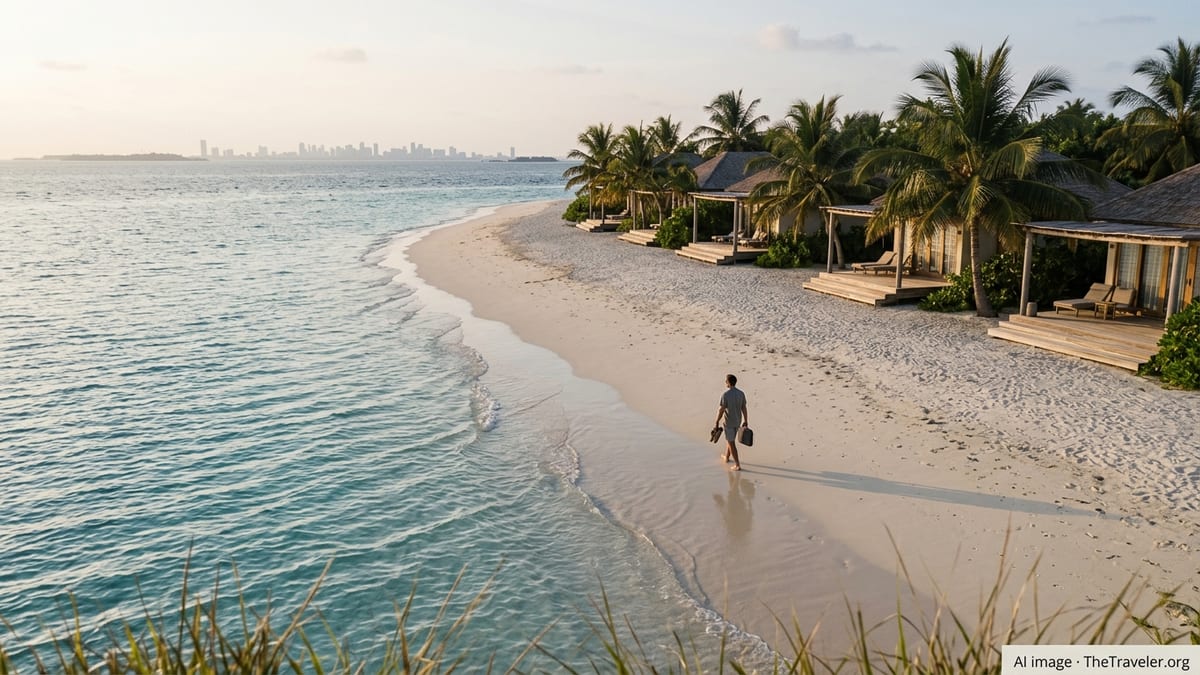
From Daily Commute to Deep Reset
Recent tourism data indicates that global travel has moved beyond pandemic recovery into a new phase where travelers are prioritizing time-rich, restorative trips over rapid-fire weekends away. UN Tourism figures show that international arrivals in 2024 climbed back to around pre-pandemic levels, supported by strong pent-up demand and expanded long-haul air connectivity. At the same time, analysts note a shift in how vacations are used, with more people seeking fewer but longer trips that feel meaningfully different from everyday life.
This shift is closely tied to changing work patterns. A global rise in remote and hybrid work has weakened the old rhythm of five days in the office and two days to recover, making it easier for employees to combine leave with remote days and stretch a holiday into several weeks. Research summarized in recent work and travel studies suggests that reduced commuting and greater control over work environments are linked to lower burnout and improved cognitive performance, giving travelers both the flexibility and the motivation to plan more ambitious journeys.
Against this backdrop, long-haul island destinations have gained fresh appeal as places where travelers can deliberately step out of familiar urban circuits. Instead of chasing an intense itinerary, visitors are increasingly looking for environments that encourage slower mornings, more sleep, outdoor time and digital boundaries. The goal is not just to see somewhere new, but to return home with a calmer nervous system and a clearer mindset.
Islands Position Themselves as Wellness Havens
Tourism boards and airlines serving island destinations in the Indian Ocean, South Pacific and Caribbean are responding to this demand with products that explicitly target rest, reflection and mental well-being. Coverage of new route launches and tourism campaigns for places such as the Maldives, Mauritius and Fiji highlights packages that emphasize quiet beaches, reef swimming, forest hikes and low-key village life rather than high-intensity sightseeing. Marketing language has increasingly shifted from counting attractions to promising space, slowness and simplicity.
Industry reports on wellness and “blended” travel show that travelers now actively seek experiences that support both physical and mental health, including nature immersion, spa and yoga programs, and food that feels restorative rather than indulgent. Travel analysts note that this wellness focus is no longer confined to luxury retreats. Mid-range guesthouses and small hotels on islands from the Caribbean to Southeast Asia are promoting sunrise swims, local walking trails and device-light communal spaces as core parts of the experience.
Broader tourism trend assessments from organizations such as the World Tourism Organization and the OECD suggest that this emphasis on well-being fits into a longer-term redirection of travel demand. Rather than adding more short breaks into already compressed calendars, travelers are consolidating leave into one substantial holiday that acts as a mental reset, often timed to coincide with seasonal weather patterns in tropical and subtropical islands.
“Slowmads” and the Rise of Longer Stays
Academic work on remote work and mobility has begun to track what some researchers call “slowmads,” remote workers and professionals who favor multi-week or multi-month stays over constant movement. Analyses of accommodation booking patterns between 2019 and 2024 point to a lasting shift toward longer stays after the initial pandemic shock, even as borders reopened and short city breaks became viable again. This trend is particularly visible in coastal and island regions that offer stable internet connections alongside natural settings.
Travel behavior studies indicate that these longer stays have distinct psychological effects. With more time, travelers are less pressured to maximize every day and more able to establish routines that resemble a healthier version of home life: regular sleep, time for exercise, and social contact with local communities. Publicly available survey data on digital nomads and remote workers suggests that those who stay longer in a single location report lower feelings of travel exhaustion and greater overall life satisfaction than those who change destinations every few days.
In practice, this means an increasing number of visitors are choosing to rent an apartment on a small island, work remotely a few days each week and use the remaining time for low-key exploration. The absence of a daily commute, combined with the ability to walk to the sea or a café instead of boarding a crowded train or highway, is often described in consumer research as a major contributor to reduced stress.
Airlines and Islands Expand Long-Haul Options
Airlines and airports serving island nations have played a significant role in making these long-reset holidays viable by expanding long-haul connectivity. Recent announcements show new or enhanced services from North America and Europe into island hubs in the Caribbean and Indian Ocean, as well as upgrades to aircraft that improve onboard comfort for travelers facing journeys of 10 hours or more. Some carriers have introduced premium economy cabins and upgraded in-flight connectivity on island routes, aiming to attract passengers who plan to work on the way to or from their destination.
At the same time, route changes illustrate how sensitive this segment remains to broader market conditions. For example, reports in British consumer media have noted the discontinuation of certain direct long-haul flights from the United Kingdom to islands such as Saint Lucia and Costa Rica, even as other airlines move in to serve similar markets through alternative hubs. Industry analysts interpret these adjustments as part of a wider realignment, with carriers focusing on routes that combine strong leisure demand with the possibility of higher-yield, longer-stay bookings.
For island destinations, these air links are central to strategies that seek to attract visitors who stay longer and spend more per trip, rather than relying purely on volume. Tourism development reports from organizations such as the World Economic Forum highlight that destinations are increasingly looking to balance growth with environmental and social impacts, and longer, slower trips are often seen as more compatible with that goal than frequent short breaks.
Turning Commute Fatigue into Conscious Travel
Underlying the popularity of long-haul island stays is a broader reassessment of how people use their limited discretionary time. Studies on remote work trends show that commuting is one of the least valued aspects of office life, with many workers citing the daily journey as a significant source of stress. As organizations experiment with hybrid models, employees are often more willing to accept a few intense weeks of in-office work if they can then decamp to a distant shoreline for an extended period.
Psychologists and workplace researchers who study burnout have long emphasized the importance of sustained breaks in reducing chronic stress, improving mood and restoring focus. Travel data from the post-pandemic years suggests that travelers are increasingly aligning with this evidence by planning trips that provide a genuine interruption to habitual patterns. Instead of spending two rushed days recovering from a week of commuting, a three-week island stay offers the chance to recalibrate sleep, attention and social connections.
For destination planners and airlines, the challenge will be maintaining this sense of calm as demand grows. Overcrowding, rising prices and environmental pressures could undermine the very qualities that make islands appealing as sanctuaries from urban life. For now, however, publicly available tourism and workplace research indicates that long-haul island holidays, especially when combined with flexible work arrangements, are emerging as one of the most powerful ways commuters are turning routine chaos into restorative calm.