

More news on this day
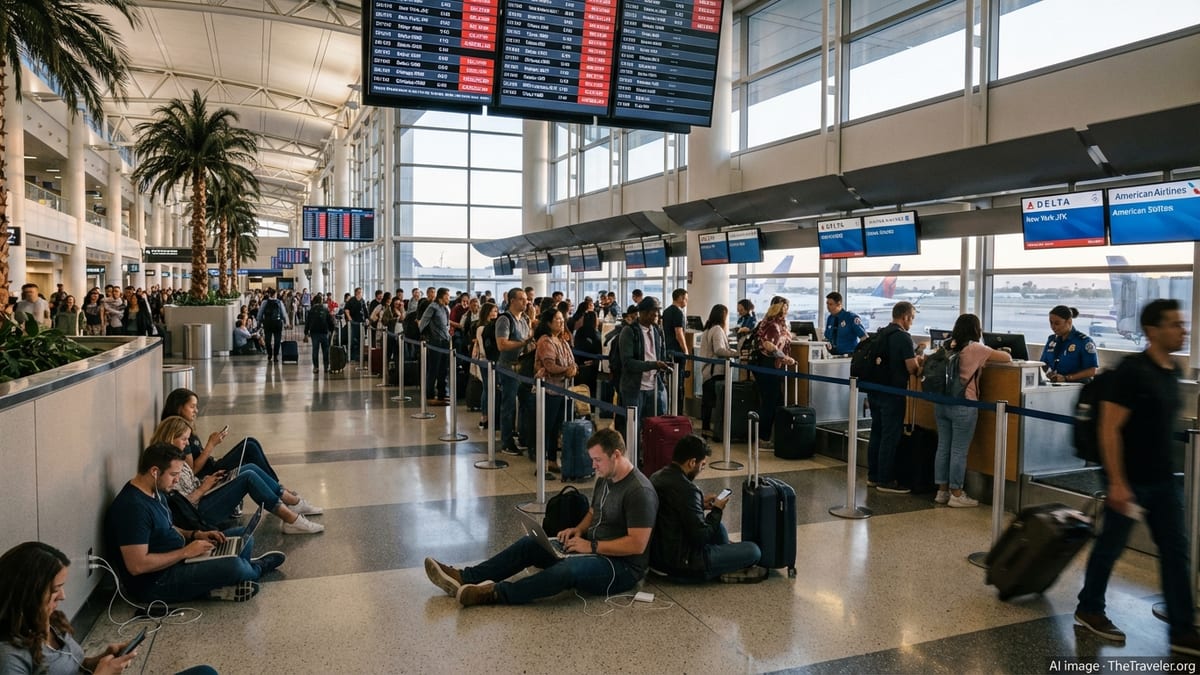
Travelers at Los Angeles International Airport faced extensive disruption today as more than 125 flights were delayed and at least 13 were cancelled, snarling operations for Delta Air Lines, United Airlines, American Airlines and several international carriers on busy routes to New York, Tokyo, Dubai and other major U.S. cities.
Blizzard in the Northeast Ripples Through Los Angeles
The latest wave of disruptions at Los Angeles comes as a powerful late-winter blizzard batters parts of the northeastern United States, forcing widespread schedule changes and ground stops at key hubs. While runways and weather conditions remained largely normal in Southern California, aircraft and crew positioned on the East Coast triggered a cascade of knock-on delays into and out of LAX.
Flights bound for New York area airports, including John F. Kennedy International, LaGuardia and Newark Liberty, were among the hardest hit, with rolling departure delays and a series of day-of cancellations. With aircraft stranded on snowbound tarmacs and arrival slots sharply reduced, airlines trimmed their schedules and consolidated services, leaving Los Angeles passengers facing extended waits and last-minute rebookings.
Operational data from major carriers showed transcontinental services from Los Angeles departing well behind schedule, even when listed as “on time” earlier in the day. Passengers already airborne toward the West Coast also encountered holding patterns and diversions, further complicating aircraft rotations and pushing subsequent departures at LAX into the evening.
Airport officials urged travelers to arrive early and stay in close contact with their airlines, noting that additional schedule adjustments were possible as East Coast conditions evolved. They also warned that disruptions are likely to spill into tomorrow’s operations because crews and aircraft remain out of position.
Major U.S. Carriers Hit on Key Domestic Links
Delta, United and American reported significant operational strain on some of their marquee domestic routes from Los Angeles. Transcontinental services to New York and Boston saw a higher concentration of delays, but knock-on effects extended to hubs such as Chicago, Dallas Fort Worth, Atlanta and Philadelphia as aircraft and crews were shuffled to cover priority flights.
Tracking data showed multiple Los Angeles departures operating behind schedule, including eastbound evening flights that typically carry a heavy mix of business and connecting passengers. Even services that ultimately departed appeared to do so after lengthy waits at the gate or on the taxiway, compressing connection times for travelers heading onward to secondary markets across the Midwest and East Coast.
Gate agents reported crowded boarding areas as airlines encouraged passengers on affected flights to volunteer for later departures in exchange for travel credits. With spare seats at a premium on alternative services, many travelers accepted revised itineraries that included connections or overnight stays in other hubs, rather than risk same-day standby from Los Angeles.
Although the bulk of the impact stemmed from weather-related constraints, airlines acknowledged that staffing and aircraft availability remained tight following a busy winter travel period. This left limited slack in the system to absorb sudden schedule shocks, especially on popular coast-to-coast routes.
International Services to Tokyo and Dubai Also Affected
Beyond domestic corridors, the disruption at Los Angeles extended to long-haul international routes, including flights to Tokyo and Dubai. Several Asia-bound services faced extended departure delays as inbound aircraft from connecting U.S. cities arrived late or were rerouted. In some cases, carriers consolidated departures, moving affected passengers onto later flights when load and crew resources allowed.
On the Middle East corridor, at least one Los Angeles to Dubai departure was delayed as ground teams worked through the knock-on effects of late-arriving passengers and aircraft from other U.S. gateways. With many travelers relying on these long-haul flights to connect onwards across Asia, Africa and Europe, missed connections became a growing concern, particularly for those with tightly timed itineraries.
Airlines operating the Tokyo and Dubai routes from Los Angeles implemented flexible rebooking measures, offering date changes and, in some cases, waived fare differences for passengers whose travel plans were affected by the cascading delays. However, limited seat availability on subsequent long-haul departures meant that some travelers faced waits of 24 hours or more for the next available connection.
Airport staff said that international check-in counters remained busy well into the evening as rebooked passengers returned to confirm revised plans and meet new departure times. Airline lounges and terminal seating areas were noticeably more crowded, with many travelers choosing to remain airside rather than risk missing updated boarding calls.
Passengers Confront Long Waits and Limited Options
For many passengers at Los Angeles, the most immediate impact was uncertainty. Flight status boards changed frequently throughout the day as airlines adjusted departure times in response to weather-related air traffic control measures and late aircraft arrivals. Travelers reported multiple successive delay notifications, sometimes culminating in late-afternoon cancellations as operational windows closed.
Those facing cancellations encountered limited same-day options, particularly on popular transcontinental and international sectors. Customer service lines at ticket counters stretched across parts of the terminal, and airline call centers and mobile apps saw heavy usage as passengers scrambled to secure alternative routes to their destinations.
Families traveling with children and international visitors with language barriers were among the most affected, often needing extra assistance to navigate rebooking options and updated security screening times. Volunteers and airline staff were deployed through the concourses to provide information, distribute water and direct travelers to customer service desks or baggage claim.
Local hotels near Los Angeles International reported an uptick in same-day bookings as stranded travelers opted to stay overnight rather than endure extended hours in the terminal. Rideshare pick-up zones and shuttle bus stops remained crowded into the night as passengers filtered out of the airport to regroup and await newly scheduled flights.
What Travelers Through Los Angeles Should Do Next
With residual disruptions expected to continue into tomorrow, travel experts recommend that anyone scheduled to fly into or out of Los Angeles in the next 24 to 48 hours closely monitor their flight status and build extra time into their airport plans. Even if conditions in Southern California remain calm, disruptions in other parts of the network can still ripple through to LAX operations.
Passengers are advised to confirm their contact details in airline apps to ensure they receive real-time notifications about gate changes, rolling delays or cancellations. Many carriers allow same-day self-service rebooking through mobile tools when flights are significantly delayed, which can reduce the need to wait in physical customer service lines inside the terminal.
Travelers whose flights are cancelled or heavily delayed should review their carrier’s published policies on meal vouchers, hotel accommodations and rebooking support. While U.S. regulations do not guarantee compensation for weather-related disruptions, several major airlines have public commitments outlining what they will provide when cancellations or delays are within their control, and some extend goodwill options more broadly during major systemwide events.
For now, Los Angeles International remains open and operational, but with 125 delayed flights and 13 cancellations already recorded, officials caution that schedules remain fluid. Travelers heading for New York, Tokyo, Dubai and other major U.S. cities are urged to treat published timetables as subject to change and to stay prepared for a longer-than-expected journey.