

More news on this day
Los Cabos is heading into a period of stronger ocean swells, with beach safety advisories and frequent high-surf conditions prompting reminders that many local beaches are not safe for casual swimming or some marine tours when the waves build.
Get the latest news straight to your inbox!
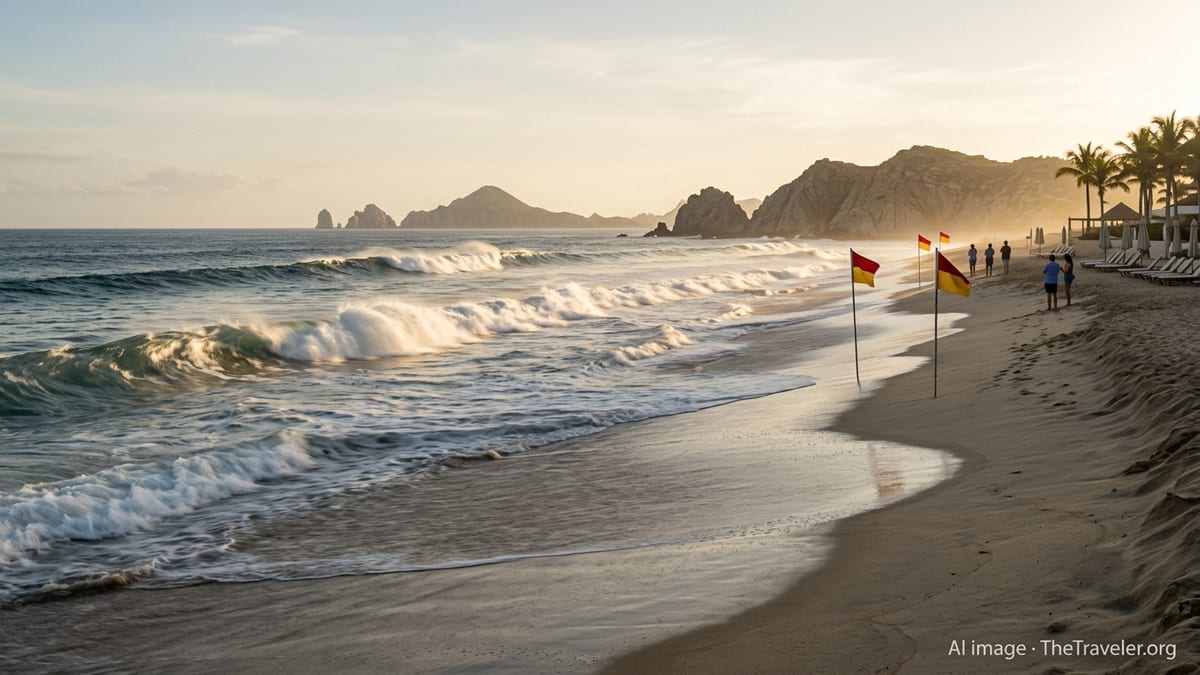
Why Los Cabos Seas Turn Dangerous So Quickly
Los Cabos sits at the point where the deep Pacific Ocean meets the Sea of Cortez, creating powerful wave energy, sudden drop-offs and strong rip currents that can catch even confident swimmers off guard. Publicly available guides describe December through March as a prime season for large Pacific swells driven by distant storm systems, with wave heights and currents that can intensify in a matter of hours as new swell pulses arrive.
Unlike gentler, gradually sloping beaches found in parts of the Caribbean or the Gulf of Mexico, many Los Cabos shorelines have steep underwater contours. Reports on local beach safety emphasize that this shape helps waves maintain their power right up to the sand, increasing the risk of knockdowns, shore-break injuries and fast-moving rips that pull people away from the beach before they realize what is happening.
Travel coverage focused on Los Cabos safety in 2026 notes that these ocean hazards remain one of the primary risks for visitors, even as broader crime indicators and tourism infrastructure have improved. The message across multiple public sources is consistent: swimmers should treat the ocean here with extra caution, particularly when larger sets are visible or the surf is noisy and rough.
Beach Flags, Closures and What “No Swimming” Really Means
Los Cabos uses a beach flag warning system similar to many coastal destinations, with green and yellow indicating relatively calmer conditions and red or black flags posted when the ocean is considered too hazardous for typical recreational swimming. Safety explainers from local tourism and transportation providers highlight that red flags signal strong currents and heavy surf, while black flags can indicate complete closure to entering the water.
During periods of increased swell, it is common for long stretches of coastline on the Pacific side to show red or black flags for extended hours of the day, even if the weather looks sunny and inviting. Public reports note that these decisions are based on wave height, current strength and past incidents, and they are meant to keep inexperienced swimmers out of situations that can escalate quickly.
Visitors should not treat warning flags as suggestions or assume that staying “just waist deep” is safe when red or black flags are posted. Beach safety guides for the region repeatedly stress that shore-break waves can knock people off their feet in shallow water, and that rip currents may form in seemingly calm gaps between breaking waves. Paying attention to flags and posted advisories is considered one of the most effective ways to reduce risk during a high-swell pattern.
Impacts on Swimming, Boat Tours and Marine Excursions
When swell increases, the first and most visible impact for tourists is often tighter restrictions on swimming from resort-front beaches, especially along the Pacific-facing corridor. Many popular properties front non-swimmable stretches of coast, and travel advisories for Los Cabos in 2026 emphasize that guests should expect and accept “no swimming” guidance from hotel staff when the ocean looks rough or warning flags are raised.
High surf can also affect marine excursions, including small-boat trips to iconic spots such as the Arch at Land’s End, snorkeling tours and some whale-watching departures. Publicly available cruise and travel updates show that tender operations in Cabo San Lucas port, where passengers transfer from larger ships to shore by smaller boats, may be delayed or temporarily paused if the sea state exceeds safe thresholds near the marina entrance or landing areas.
Increased swell does not necessarily mean that all tours stop, but it can lead to modified routes, cancellations of beach landings or a shift toward larger, more stable vessels operating from sheltered areas. Recent safety guides for the region recommend that travelers book refundable experiences during the more active swell months, monitor messages from operators regarding sea conditions, and remain flexible about timing and itinerary changes driven by surf forecasts.
Safer Alternatives: Swimmable Beaches and Pool-Focused Days
Despite the hazards on many open-ocean beaches, Los Cabos does offer a limited number of more protected, swimmable areas that are often recommended in official tourism materials and local safety blogs. Medano Beach in Cabo San Lucas is frequently cited as a primary option, with lifeguard coverage, gentler conditions on many days and quick access to restaurants and services. However, even there, larger swells can still generate strong currents, and visitors are urged to follow lifeguard instructions and flag colors closely.
On weeks when surf is elevated along the Pacific side, travel resources commonly suggest shifting to pool-focused relaxation and land-based activities instead of insisting on ocean swimming. Resorts across the corridor and in San Jose del Cabo are built with extensive pool complexes precisely because the adjacent sea is often not suitable for casual bathing. This design allows guests to enjoy ocean views and breezes while staying safely out of hazardous surf.
Those determined to get on the water can look at larger-boat excursions that depart from the Cabo San Lucas marina and remain in more sheltered sections of the bay, provided operators are running and local harbor authorities keep navigation channels open. Public information encourages travelers to confirm conditions on the morning of departure, understand any modified routes intended to avoid rougher outer-coast exposure and heed crew instructions about remaining seated and using life jackets when sea conditions are choppy.
Practical Safety Tips for Travelers During High Swell Periods
Current on-the-ground safety briefings for March in Los Cabos emphasize that visitors can enjoy the destination while still respecting the ocean by adopting a few simple habits. Travelers are encouraged to check daily beach flags before heading down from their hotel, look for any posted advisories or notices in lobbies and along beachfronts, and ask resort staff which nearby beaches, if any, are considered safer for that particular day.
Tourism-focused safety guides also highlight the importance of never turning one’s back on the waves, avoiding standing on wet rocks or near the waterline for photos, and resisting the temptation to walk onto exposed sandbars or rocky outcrops during low tide. Swell-driven surges can quickly reclaim these areas, and there have been widely reported incidents in past years where visitors were knocked over or swept into deeper water by a single larger set wave.
For marine tours, publicly available advice suggests booking with reputable, well-reviewed operators, confirming the type of vessel and safety equipment, and being prepared for last-minute changes when surf or wind picks up. Travelers are reminded that a canceled or rerouted boat trip due to heavy swell is a sign that operators are prioritizing safety in a region where ocean conditions are dynamic and sometimes unforgiving.