

More news on this day
As thousands of holidaymakers and Spring Break travelers descend on Los Cabos this March holiday weekend, local conditions highlight a familiar but serious risk: not crime or unrest, but the powerful ocean that borders this booming resort destination.
Get the latest news straight to your inbox!
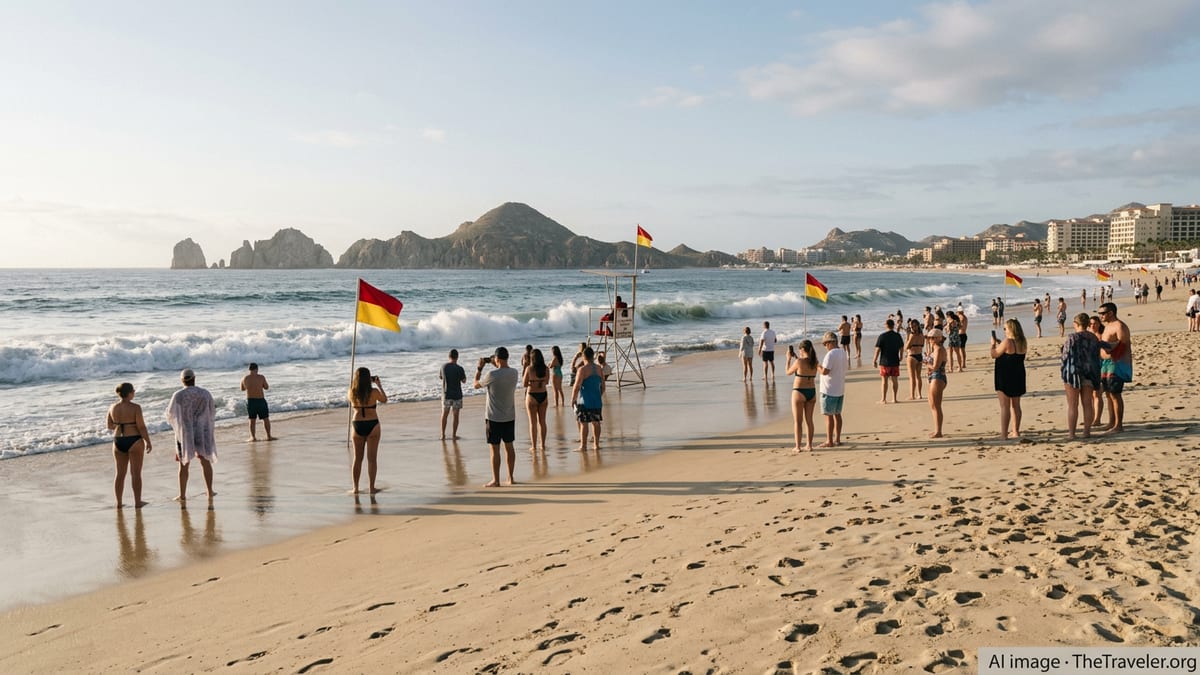
Holiday Crowds Converge On A High-Surf Destination
Los Cabos is preparing for one of its busiest Spring Break periods in years, with local tourism coverage projecting as many as 70,000 student travelers in March alone, on top of regular holiday visitors. Reports indicate that some resorts in Cabo San Lucas were already operating at or near full occupancy before the start of the break period, signaling heavier use of the region’s most popular beaches.
At the same time, publicly available information on regional ocean patterns shows that March falls within the peak Pacific swell season for Baja California Sur, when powerful north and northwest swells regularly impact exposed coastlines. On the open Pacific side of Los Cabos, wave heights during these events can reach several meters, creating steep shore breaks and strong rip currents that are difficult to judge from the sand.
Travel media and destination guides consistently highlight that the primary day-to-day risk for visitors in Los Cabos is not violent crime, but the strength and unpredictability of the sea where the Pacific Ocean meets the Sea of Cortez. This combination of seasonal swell energy and record visitor numbers is prompting renewed emphasis on basic ocean-safety awareness for those planning to spend the long weekend on the sand.
For travelers accustomed to gentler Caribbean or Gulf coast beaches, the visual appeal of Los Cabos’ rugged coastline can obscure the fact that many stretches of sand are considered unsafe for swimming under normal conditions, and quickly become hazardous when surf increases.
Understanding Beach Flags, Rip Currents And Hidden Shore Breaks
Publicly available municipal and tourism guidance indicates that Los Cabos uses an internationally recognized color-flag system at official beaches to signal daily ocean conditions. Green flags indicate relatively calm water, yellow flags signal caution and stronger currents, red flags warn of dangerous surf, and black flags are used when beaches are closed to swimming altogether.
Recent safety advisories and travel reports emphasize that flag colors can change more than once in a single day as tides, wind and swell patterns shift. This means that a beach that appears tranquil during a morning walk can become far more dangerous by afternoon, especially along the Pacific-facing shoreline and at exposed headlands where currents can intensify quickly.
Local beach safety resources describe the Pacific side of Los Cabos as particularly treacherous due to steep underwater drop-offs and heavy shore break. Even in seemingly shallow water, waves can pitch forward with force, knocking travelers off their feet and driving them into the sand. This phenomenon is frequently cited in regional coverage as a factor in neck, back and head injuries among unsuspecting swimmers and waders.
Rip currents remain another central concern. Travel safety guides for the region note that these fast-moving channels of water can form with little visual warning, pulling swimmers away from shore in seconds. The presence of red or yellow flags is often tied to these invisible hazards rather than simply to wave height, underscoring the importance of heeding posted signage even when the ocean appears manageable from the beach.
Pacific Versus Sea Of Cortez: Where Conditions Differ
Geography plays a key role in the risks visitors face. Public information from local beach resources states that swimming along most of the Pacific-side beaches near Cabo San Lucas is strongly discouraged due to powerful surf and currents. Long, exposed stretches facing directly onto the open Pacific are routinely cited as non-swimmable, regardless of season.
By contrast, parts of the Sea of Cortez side, most notably sections of Médano Beach in Cabo San Lucas, are widely promoted in travel coverage as among the destination’s most swimmable areas. The bay’s natural protection and gentler slope generally create more manageable conditions, and this area is often a focus for resorts, water sports operators and cruise visitors tendering ashore.
However, publicly available reporting on recent high-surf episodes stresses that even typically swimmable beaches can become hazardous during strong swell events. When powerful swells wrap around the cape or are refracted into the bay, Médano and other usually calmer beaches can experience elevated waves, stronger longshore currents and sudden drop-offs, occasionally triggering temporary restrictions on water activities.
This variability means travelers cannot rely solely on reputation or past experience at a given beach. Current-day conditions, local signage and the visible presence of lifeguards or patrols are more reliable indicators of whether entering the water is advisable on any given holiday weekend.
Context: National Security Alerts Versus Local Beach Safety
The holiday period arrives shortly after a series of high-profile security operations elsewhere in Mexico that prompted temporary alerts from foreign governments, particularly in states such as Jalisco, Michoacán and Guanajuato. According to recent media coverage, these advisories focused on urban unrest, road blockades and targeted criminal violence far from the tip of the Baja Peninsula.
By contrast, travel and tourism sources consistently describe Baja California Sur, including Los Cabos, as operating under a more favorable security environment than many mainland states. As of early 2025, publicly available U.S. government travel advisories did not single out Baja California Sur for the most restrictive levels of caution, and local tourism boards continue to promote the destination’s safety record.
For travelers weighing headlines about national security with their immediate holiday plans, this context is significant. Current reporting suggests that the more pressing and predictable risk in Los Cabos this weekend is environmental rather than criminal: strong surf, rip currents and the potential for localized beach or port disruptions if marine conditions deteriorate.
Past seasons have shown that tropical systems and strong Pacific storms, even when far offshore, can still prompt temporary closures of ports in Cabo San Lucas and San José del Cabo, along with red-flag conditions on exposed beaches. While no major storm system is currently dominating national coverage for this specific weekend, the broader pattern underscores how quickly marine advisories can develop along this coast.
Practical Guidance For Travelers This Holiday Weekend
Travel safety resources for Los Cabos consistently emphasize a few practical steps for visitors planning to spend the holiday weekend near the water. First, travelers are encouraged to treat posted beach flags and warning banners as firm guidance, not mere suggestions, and to avoid entering the water when red or black flags are displayed, even for quick wading or photographs in the shore break.
Second, published recommendations advise against swimming at unpatrolled or remote beaches, particularly on the Pacific side, regardless of how calm conditions may appear at first glance. Many incidents documented in local and regional coverage have involved visitors who ventured into the water at scenic but unsupervised coves and points without lifeguard presence or immediate rescue capacity.
Third, travel advisories aimed at Spring Break visitors highlight the compounding effect of alcohol and fatigue on judgment in the water. Even confident swimmers can underestimate the force of the surf after a day in the sun or after drinking, and rescue reports from past seasons frequently mention situations where bystanders attempted to help a struggling swimmer and were themselves pulled into danger.
Finally, travelers are encouraged to make use of official information channels before planning beach and boating activities. Local tourism websites, hotel front desks, tour providers and, where available, municipal civil protection updates can provide same-day insight into wave conditions, beach closures and any temporary restrictions on water sports. For visitors intent on enjoying the sea during one of the busiest weekends of the season, aligning plans with these real-time signals may be the most effective step in ensuring that Los Cabos’ dramatic coastline remains a highlight, not a hazard, of the trip.