

More news on this day
Early long-range projections suggest the 2026 Atlantic hurricane season could be less active overall, yet new risk assessments point to Louisiana joining Mississippi, Alabama, Florida, Georgia and other U.S. coastal states in facing elevated odds of a damaging landfall.
Get the latest news straight to your inbox!
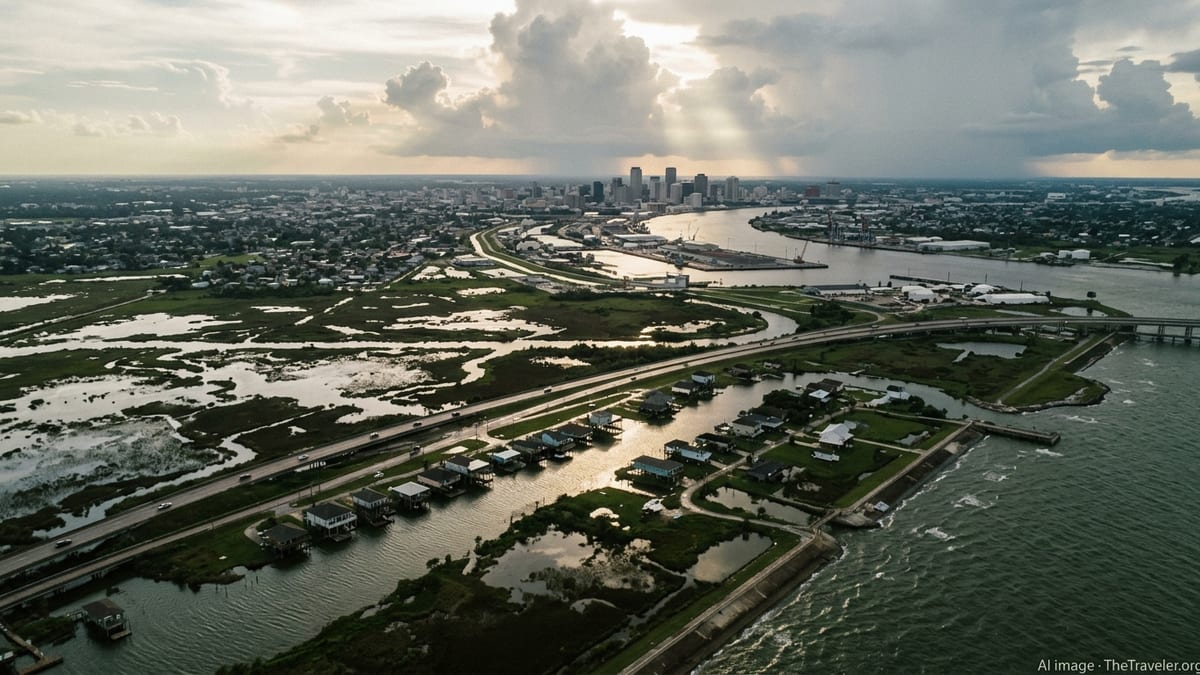
Below-Average Season Forecast Masks Local Landfall Threat
Extended-range outlooks for the 2026 North Atlantic hurricane season indicate the potential for a below-average number of storms and overall Accumulated Cyclone Energy, according to seasonal projections released by university research groups and private forecasting centers. These outlooks use long-term climate data, El Niño–Southern Oscillation expectations and Atlantic sea surface temperatures to estimate how active the basin may be from June through November.
However, specialists in seasonal risk repeatedly stress that basin-wide activity does not translate directly into reduced landfall danger. Even comparatively quiet years have produced destructive hurricanes when tracks align unfavorably with populated coastlines. Historical records show that a single major landfall can define the impacts of an otherwise subdued season, particularly along the Gulf Coast where shallow continental shelves can amplify storm surge.
For 2026, this disconnect between the broader seasonal signal and local exposure is central to the emerging picture for Louisiana and neighboring states. Forecast discussions emphasize that modestly lower storm counts do not eliminate the possibility of one or more hurricanes tracking into the northern Gulf, where warm waters and coastal geography can rapidly intensify hazards.
Researchers also note that forecast confidence remains limited several months ahead of the season. Early indications of slightly reduced storm numbers are accompanied by wide uncertainty ranges, and updated outlooks closer to June could shift if Atlantic or Pacific climate drivers evolve differently than expected.
Gulf Coast Hotspot: Louisiana Joins a High-Risk Corridor
Fresh analyses of hurricane exposure along the U.S. Gulf Coast highlight Louisiana as part of a continuous high-risk corridor that also includes Texas, Mississippi, Alabama and Florida. Publicly available catastrophe-model data and insurance industry summaries describe Louisiana’s combination of low-lying terrain, extensive wetlands, dense energy infrastructure and growing residential development as a key factor in its vulnerability profile.
Recent storm surge modeling and property risk reports point to millions of homes and businesses across the Gulf states lying within zones susceptible to coastal flooding during tropical cyclones. Detailed state-level breakdowns show Florida with the greatest number of at-risk properties, followed by Texas and Louisiana, while Mississippi, Alabama and Georgia hold smaller but still significant concentrations of exposed coastal communities.
In Louisiana, metropolitan New Orleans, the Northshore of Lake Pontchartrain, coastal parishes such as Terrebonne and Lafourche, and rapidly growing suburbs around Baton Rouge and Lafayette all feature prominently in these assessments. The state’s experience with hurricanes in the past two decades, including storm surge overtopping, prolonged power losses and repeated rebuilding in bayou communities, informs current modeling assumptions about potential damage from even a single strong 2026 landfall.
Mississippi, Alabama, Florida and Georgia, while differing in coastline shape and development patterns, share similar concerns. Barrier island chains, river deltas and resort-lined beaches remain exposed to surge and wind damage, particularly where recent population growth has expanded housing and tourism infrastructure into low-lying zones.
Climate Signals: Fewer Storms, Not Necessarily Weaker Ones
Seasonal outlooks for 2026 incorporate expectations for large-scale climate drivers, including a potential transition in the El Niño–Southern Oscillation and projected changes in vertical wind shear over the tropical Atlantic. Some modeling scenarios suggest conditions that could slightly suppress overall storm formation compared with the busiest years of the past decade.
Yet climate and risk studies underline that a lower storm tally does not guarantee weaker hurricanes. Research on recent Atlantic seasons shows that years with near- or even below-normal storm counts can still feature intense, long-lived hurricanes if environmental conditions briefly become highly favorable over warm ocean regions. Warmer baseline sea surface temperatures, influenced by long-term climate trends, support the possibility of rapid intensification near coastlines.
Gulf of Mexico waters are a particular concern for 2026 planning. Climatological studies and deep-learning storm surge experiments focusing on U.S. coasts have highlighted the Gulf as a basin where relatively small shifts in storm track can sharply increase local flood risk. Even if fewer systems form in the wider Atlantic, those that enter the Gulf may find ample energy to strengthen before landfall near Louisiana, Mississippi, Alabama or the Florida Panhandle.
These dynamics underpin warnings from researchers that focusing solely on counts such as the number of named storms or hurricanes can be misleading for residents and local governments. Instead, they point to hazard metrics such as storm surge heights, rainfall totals and wind damage potential near landfall locations as more meaningful guides for preparedness.
Travel and Tourism: Elevated Risk for 2026 Gulf Getaways
The travel sector along the northern Gulf Coast is watching the evolving 2026 signals closely. Louisiana’s tourism economy is heavily concentrated in New Orleans, coastal fishing communities and festival-driven urban travel, while neighboring states rely on beach destinations from Gulf Shores and Biloxi to the Florida Panhandle and Georgia’s barrier islands.
Industry analyses of recent seasons show that even near-miss storms can disrupt travel plans for days, as airports, cruise terminals, bridges and coastal highways temporarily shut down for high winds or flooding. Extended power outages and localized infrastructure damage can compound disruptions for weeks after a landfall, affecting hotels, short-term rentals, restaurants and tour operators.
Publicly available guidance from emergency management and tourism agencies along the Gulf emphasizes flexible planning for the 2026 season. Recommendations typically include monitoring long-range forecasts before summer travel, purchasing trip insurance that explicitly covers tropical weather disruptions, and confirming cancellation policies for accommodations in Louisiana, Mississippi, Alabama, Florida and Georgia.
Some coastal counties have in recent years updated evacuation routes, signage and shelter options in response to lessons from recent hurricanes. For travelers headed to these regions in 2026, awareness of local evacuation maps and storm surge zones is increasingly being treated as part of responsible trip planning during the June to November window.
Preparedness Priorities for Coastal Communities in 2026
As outlooks evolve, experts in disaster risk and coastal planning are focusing on practical steps that can reduce harm if a significant storm targets the Gulf Coast in 2026. Public information campaigns frequently highlight the importance of understanding flood, wind and surge exposure at the property level, not just at the state or county scale.
In Louisiana, this includes attention to homes in parishes where subsidence and erosion are ongoing challenges, and where flood defenses such as levees and surge barriers can be overtopped or bypassed by particularly strong or slow-moving systems. Across Mississippi, Alabama, Florida and Georgia, low-lying neighborhoods near bays, estuaries and tidal rivers are similarly encouraged to review elevation data, insurance coverage and evacuation options well ahead of peak hurricane season.
Insurance market assessments for the Gulf Coast also highlight continuing pressures from rising reconstruction costs and repeated claims. Some reports indicate that homeowners are facing higher premiums and tighter underwriting standards, especially in zones with a history of storm damage. These trends add urgency to efforts to retrofit buildings, adopt more resilient construction standards and, where feasible, consider relocation from the most exposed sites.
Overall, the message emerging for 2026 is that a potentially quieter Atlantic basin does not equate to a quiet year for the Gulf Coast. For Louisiana and its neighbors, the combination of geographic exposure, warming coastal waters and expanding development along the shoreline means that even a single landfalling hurricane could make the season memorable for all the wrong reasons.