

More news on this day
Louisville is rapidly emerging as one of America’s most sought-after river cruise ports, as major lines roll out new Mississippi and Ohio River itineraries that bring travelers directly into the city’s historic waterfront along the Ohio River.
Get the latest news straight to your inbox!
Major Cruise Lines Chart New Courses to Louisville
New itineraries from leading river cruise operators are helping transform Louisville from an occasional port of call into a marquee destination on America’s inland waterways. American Cruise Lines has expanded its Mississippi and Ohio River offerings for 2025, including a 12-day Mississippi River Gateway cruise between New Orleans and Louisville and a nine-day Ohio River route connecting Louisville and Pittsburgh. These itineraries explicitly position the Kentucky city as both a starting and ending port, giving visitors more time on the ground before and after their voyages.
Louisville’s profile is set to rise further later in the decade. In February 2026, tourism officials announced that Viking will add new Mississippi and Ohio River cruises beginning in 2027 that feature Louisville as a key destination and final port. Among the planned itineraries are a 15-day journey linking New Orleans and Louisville and a shorter Memphis to Louisville route. The company’s decision to formalize Louisville in its schedule follows a series of successful unscheduled calls in 2025, when high water on the lower Mississippi led to emergency diversions and gave passengers an unexpected introduction to the city.
The growing list of voyages that either begin, end, or overnight in Louisville is reshaping how travelers experience river cruising in the central United States. Rather than serving only as a mid-river stop, Louisville is increasingly marketed as a gateway city where guests can combine multi-day cruise itineraries with urban culture, bourbon tasting, and signature sporting heritage.
Waterfront Park, Historic Steamboats and an Evolving Riverfront
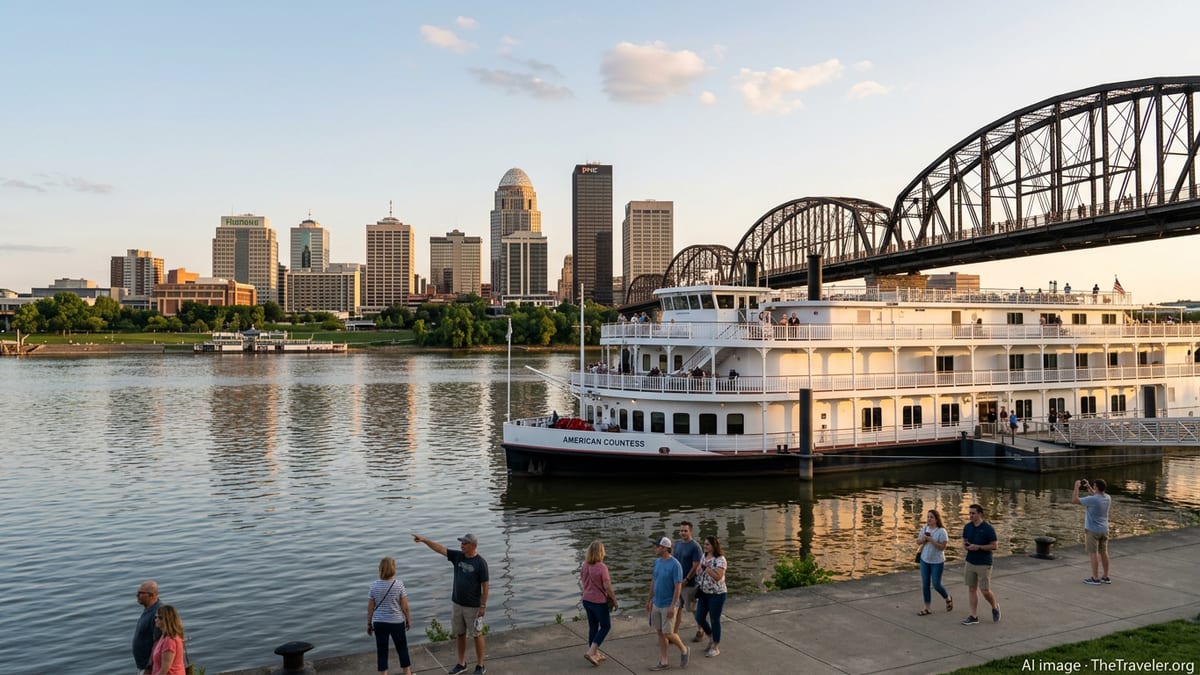
Central to Louisville’s appeal for cruise lines is its extensive riverfront infrastructure. The city’s 85-acre Waterfront Park stretches along the Ohio River adjacent to downtown, offering ample space for docking, motorcoach access and passenger movement between ships and city attractions. It also connects directly to the Big Four Bridge, a converted former railroad span that is now a pedestrian and cycling link between Louisville and Jeffersonville, Indiana, giving cruise passengers easy access to panoramic views of the skyline and the river corridor.
Louisville has long cultivated its river heritage through local excursion vessels. The century-old Belle of Louisville, a National Historic Landmark and authentic steamboat still operating public cruises, offers seasonal sightseeing and themed sailings that highlight the city’s maritime past. Its 2025 cruise lineup includes historic narration, dining cruises and special events, reinforcing the river as a central part of the local visitor experience. For out-of-town cruise passengers spending extra time in the city, these short trips provide an accessible way to explore the Ohio River beyond their main voyage.
Recent seasons have also brought frequent appearances from contemporary riverboats such as the American Harmony and Viking Mississippi, whose sleek profiles are increasingly familiar along the downtown waterfront. Their presence alongside traditional paddlewheelers underscores a broader shift: Louisville’s riverfront is evolving from a primarily local attraction into a mixed-use cruise gateway, where heritage vessels share the stage with modern small ships catering to a global clientele.
Historic Inland Waterways Tell a Broader American Story
The surge of itineraries linking the Mississippi and Ohio Rivers through Louisville taps into growing interest in immersive history-focused travel within the United States. Cruises that traverse both rivers trace routes once used by Indigenous communities, early settlers and traders, and later by steamboats that powered 19th-century commerce. From Louisville, ships can connect southward to New Orleans via the lower Mississippi or northeast toward Pittsburgh on the upper Ohio, stitching together river towns that helped shape American industry, music and migration.
Many of the new itineraries emphasize themed shore excursions that bring that history to life. Stops in river communities often include visits to local museums, preserved historic districts and cultural institutions, while onboard programming focuses on topics such as civil rights, the evolution of river trade and the changing ecology of the Mississippi watershed. For Louisville, whose own story is closely linked to the once-formidable Falls of the Ohio and the portage that grew up around them, this approach dovetails with longstanding efforts to interpret the city’s role in the development of inland river navigation.
Industry observers note that this demand for narrative-driven travel is helping smaller and mid-sized river cities attract visitors who might otherwise bypass them for coastal cruises or international itineraries. By linking Louisville into multi-state routes that highlight American culture, music and food, cruise lines are effectively marketing the region as a continuous story told from the water, with the city serving as one of its key chapters.
Tourism, Local Economy and Year-Round River Activity
Louisville tourism officials see the river cruise boom as a strategic complement to the city’s well-known events calendar, which is anchored by the Kentucky Derby each spring. As more overnight riverboats include the city in their schedules, hotel stays, restaurant visits and ticketed attractions are poised for a boost, especially during shoulder seasons when traditional leisure travel is softer. Local tour operators have already begun tailoring products to the cruise audience, offering curated experiences focused on bourbon, horse racing and Louisville’s vibrant arts scene.
The economic ripple effects extend beyond downtown. Coach tours carrying cruise guests are expected to visit distilleries along the Kentucky Bourbon Trail, regional horse farms and nearby historic towns, spreading visitor spending across a wider area. At the same time, the regular movement of river vessels through the Ohio and Mississippi system supports regional suppliers, marine services and shore-side logistics companies, reinforcing the economic value of maintaining navigable inland waterways.
Year-round, the riverfront remains active with local events and community programming, from festivals in Waterfront Park to seasonal cruises aboard the Belle of Louisville and her fleetmate, the Mary M. Miller. With national cruise brands now adding their schedules to this mix, Louisville’s identity as a river city is increasingly visible not only to residents but to international travelers seeking a new way to explore America’s interior.
Positioning Louisville as a Long-Term Inland Cruise Hub
The latest announcements from cruise lines suggest that Louisville’s role on the Mississippi and Ohio Rivers is shifting from opportunistic stop to long-term strategic hub. Viking’s decision to establish multi-day itineraries that begin or end in the city, following the success of emergency diversions during Mississippi flooding, indicates confidence in both guest demand and the city’s capacity to host large vessels and their passengers. American Cruise Lines’ continued investment in gateway and Ohio River cruises further signals that Louisville is firmly on the map for U.S. river cruising.
Local leaders are now focused on ensuring that infrastructure, transportation and visitor services keep pace with this growing interest. Priorities include maintaining adequate docking space along the downtown wharf, coordinating motorcoach flow for shore excursions and continuing enhancements to the public realm in and around Waterfront Park. As more ships call on the city, the visitor experience from gangway to downtown streets will play a critical role in shaping Louisville’s reputation among cruisers.
For travelers, the expansion of Mississippi and Ohio River itineraries that include Louisville offers a new way to experience the heart of the country. Sailing into a skyline framed by historic bridges, green parkland and a revitalized waterfront, guests are greeted not only by the allure of bourbon and Derby lore but also by the enduring story of America’s inland waterways, now being rediscovered from the decks of modern river cruise ships.