

If the high, dry air of the Rockies feels like home, you are not alone. Colorado’s mix of big western skies, alpine towns, dramatic parks and year round adventure inspires a particular kind of loyalty. The good news for devoted Colorado travelers is that you can find that same combination of mountain scenery, trail access and easygoing outdoor culture in other corners of the United States and beyond. From the Canadian Rockies to the Alps and several neighboring western states, here are destinations that echo the spirit of Colorado while bringing their own landscapes, traditions and flavors to the experience.
Canadian Rockies: Alberta’s Answer to the Front Range
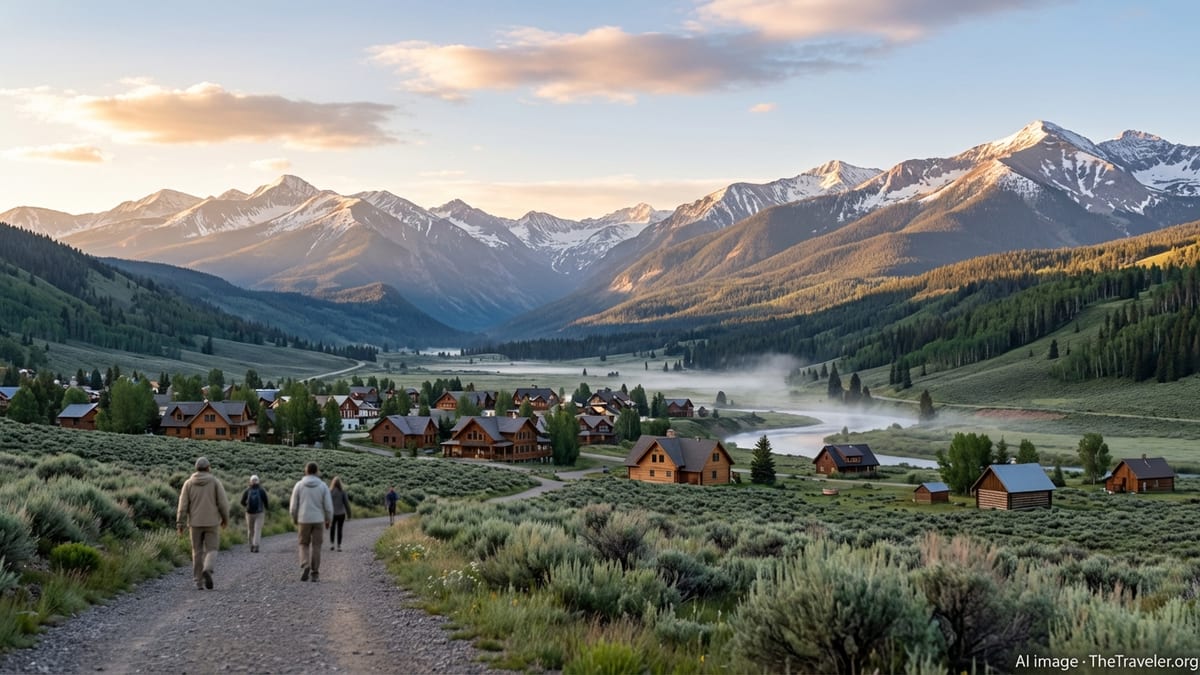
For many travelers who adore Colorado, the Canadian Rockies feel like a natural next step. Centered on Banff, Lake Louise and Jasper, this region delivers the same wall of peaks and evergreen valleys that define the Front Range, but on an even grander, glaciated scale. Travelers typically fly into Calgary and reach Banff in around an hour by car, then fan out along the Bow Valley and the famed Icefields Parkway, a 144 mile stretch of highway repeatedly cited as one of the most scenic drives in the world. The experience will feel familiar to Colorado fans used to crossing high passes and tracing river canyons, but here the mountains rise from teal glacial lakes and broad U shaped valleys carved by ice.
Banff National Park blends a classic mountain town with instant trail access, much like Estes Park does for Rocky Mountain National Park. Banff town offers a cluster of restaurants, lodges and gear shops, framed by peaks that catch the last alpenglow at dusk. Day hikes range from casual boardwalks to more demanding routes that gain thousands of feet, and in summer the region’s lakes and rivers draw paddlers much as Colorado’s alpine reservoirs do. Many visitors combine Banff with Lake Louise and Moraine Lake, where the color of the water alone can rival any view in the American Rockies.
Farther north, Jasper National Park feels more remote, with fewer people and long, empty stretches of road between trailheads. Travelers who love Colorado for its quieter corners and wildlife encounters will find plenty of appeal here. Overlooks along the Icefields Parkway deliver glimpses of receding glaciers and wide river plains, and it is common to spot elk or bighorn sheep along the shoulders. As in Colorado, summer is peak season for hiking and camping, while shoulder seasons reward those prepared for unpredictable weather with thinner crowds and moody, atmospheric light.
Winter travelers used to Colorado’s ski culture can also find kindred spirits in the Canadian Rockies. Resorts near Banff and Lake Louise offer extensive lift served terrain, while cross country skiers and snowshoers spread into the valleys once the lakes freeze. Conditions are typically colder than Colorado’s relatively sunny winter climate, but the reward is a deep, stable snowpack and landscapes transformed by hoarfrost and ice.
Wyoming and Montana: Big Sky Country With a Colorado Feel
Head north from Colorado and you quickly slip into terrain that feels both familiar and more untamed. Wyoming and Montana share the same backbone of the Rockies, but with even lower population densities and vast tracts of public land. Travelers drawn to Colorado’s national parks and high alpine basins often find that Wyoming’s Wind River Range, Bighorn Mountains and the fringes of Yellowstone offer a similar mix of jagged skyline and expansive meadows.
Yellowstone and Grand Teton national parks form a natural pairing for Colorado fans. The Tetons rise abruptly from the valley floor in a way that can call to mind Colorado’s more dramatic fourteeners, while the network of lakes and rivers around Jackson provides abundant opportunities for paddling, fishing and wildlife watching. Yellowstone, with its geothermal features and broad plateaus, feels less like Colorado in terms of terrain but offers the same sense of western vastness and big sky that many Front Range travelers love.
Montana extends that feeling even further. Glacier National Park’s sculpted peaks and high passes recall Colorado’s San Juan Mountains, but with a denser web of lakes and a distinct northern character. Mountain towns on the state’s western side blend university energy, ranching heritage and outdoor culture, creating a social atmosphere that will be familiar to anyone who has spent time in places like Boulder, Fort Collins or Durango. As in Colorado, shoulder seasons in Montana and Wyoming can bring quickly shifting weather, so layers and flexible plans are essential.
For travelers used to Colorado’s combination of trail networks and relatively easy access, it is worth noting that distances can stretch in this part of the Rockies. Drives between small towns and trailheads can run longer, and services may be more limited, especially outside peak summer. That said, the tradeoff is solitude on the trail and star filled skies at night, qualities many Colorado loyalists seek as development pushes ever farther into their favorite valleys at home.
Utah and Arizona: Red Rock Country With Familiar Skies
While Colorado is best known for high peaks and alpine forests, many of its most memorable landscapes are actually on the state’s western edge, where the Rockies give way to canyon country. If you find yourself drawn as much to Colorado National Monument, the Gunnison River’s chasms or the San Juan Mountains’ red rock spires as to snowy summits, then crossing into Utah and northern Arizona is a logical step. These states are home to a concentration of national parks and monuments that preserve mesas, slot canyons and natural arches under the same intense blue sky that Colorado is famous for.
Southern Utah’s parks echo Colorado’s combination of outdoor access and small town bases. Moab serves Arches and Canyonlands national parks, in much the same way that towns like Frisco or Durango anchor outdoor adventures in Colorado. Visitors can hike to viewpoints at sunrise, mountain bike slickrock routes in the afternoon and watch the cliffs turn gold in the evening. The high desert climate will feel familiar to Coloradans, with bright sun, low humidity and wide temperature swings between day and night.
Northern Arizona adds a different tone while still capturing that expansive western feel. The Grand Canyon’s sheer scale is unlike anything in Colorado, but travelers accustomed to long viewpoints over layered peaks will recognize the same sense of depth and time. High elevation hubs such as Flagstaff sit in ponderosa pine forest that could easily be mistaken for a Colorado plateau town, complete with casual breweries, local coffee shops and a community of climbers, skiers and trail runners chasing outdoor conditions from season to season.
One advantage for Colorado based or Colorado loving travelers is that much of Utah and northern Arizona are within a day’s drive of the Front Range. This makes them appealing for road trips where you shift from alpine passes to desert canyons in a single day, mimicking the variety many people love about Colorado itself. As always in the high desert, it pays to carry extra water, plan for limited shade on many routes and watch the forecast carefully during late summer monsoon storms.
Pacific Northwest Mountains: Oregon and Washington’s High Country
If Colorado’s appeal for you lies partly in the contrast between dry plains and mountain snowfields, the Pacific Northwest might seem like a stretch at first glance. Yet the volcanic peaks lining the horizons of Oregon and Washington offer a parallel to Colorado’s high summits, while the network of outdoor focused towns around them channels a similar energy. Instead of spruce and fir giving way to high alpine tundra, you move from mossy lowland forests into meadows filled with wildflowers and, eventually, permanent snowfields and glaciers.
Mount Rainier, Mount Hood and the North Cascades all offer the kind of trail access and scenic drives that Colorado travelers know well. National parks and forests in this region are laced with day hikes that climb to viewpoints, loop around lakes or trace ridgelines. In summer, when wildflowers peak, meadows around the volcanoes can feel reminiscent of Colorado’s high basins, though under a softer, more humid light. Winter shifts the focus to ski resorts and backcountry touring, with snowpack often deeper than typical Colorado conditions, though cloudier skies are common.
Mountain towns here have their own version of the Colorado formula. Places such as Bend in Oregon have developed strong reputations as year round outdoor hubs, with riverfront paths, nearby ski areas and extensive mountain biking networks. The culture leans heavily toward craft beer, local roaster coffee and independent shops, much as it does in Colorado’s most beloved resort towns and university communities. The key difference is the presence of major coastal cities within a few hours’ drive, which can add crowds on peak weekends but also broaden dining and cultural options.
Travelers used to Colorado’s more predictable sunshine should be prepared for variable weather in the Pacific Northwest. Clear, bluebird stretches certainly exist, especially in late summer and early autumn, but systems can move in quickly and linger. On the other hand, those same clouds and mists contribute to lush forests, layered atmospherics and waterfalls that feel almost otherworldly after time in Colorado’s arid basins.
European Alps: Colorado’s Cousin Across the Atlantic
For travelers ready to cross an ocean to find a place that feels like Colorado’s sophisticated cousin, the European Alps offer a near perfect match in spirit. Stretching across France, Switzerland, Italy, Austria and neighboring countries, this mountain range delivers familiar elements of high peaks, ski culture and alpine towns, wrapped in centuries of human history and distinctive architecture. The scale of the mountains can rival or exceed Colorado’s, yet villages and farms have clung to the slopes for generations, creating a more densely settled landscape than many Americans associate with the Rockies.
Resort towns such as Chamonix, Zermatt or St. Anton echo the vibe of Vail, Aspen or Telluride, with pedestrian streets lined by cafes, lodging options spanning simple guesthouses to luxury hotels, and cable cars whisking visitors straight into high terrain. Summer is prime time for hiking, with an extensive network of signed trails connecting villages, huts and passes. Travelers accustomed to carrying full backpacking setups in Colorado are often pleasantly surprised by the availability of staffed mountain huts where simple meals and overnight lodging can lighten the load.
Winter sports enthusiasts who cut their teeth on Colorado’s ski areas will find both similarities and differences in the Alps. Lift systems tend to connect multiple valleys into large, continuous ski domains, and the variety of on mountain dining and après ski options can feel more extensive than at many North American resorts. At the same time, snow conditions can be more changeable, and elevations may be lower than some of Colorado’s highest terrain, so timing and local knowledge are important for those seeking the best snow quality.
One of the biggest distinctions between Colorado and the Alps is cultural rather than physical. Mountain days in Europe often begin and end in villages where centuries old churches, open air markets and traditional festivals are part of daily life. That blend of outdoor immersion and deep cultural texture appeals to many Colorado fans who appreciate the mix of art galleries, live music and local history in towns like Aspen, Steamboat Springs or Crested Butte. In the Alps, those elements are layered even more densely and can be explored in multiple languages within a relatively compact region.
New Zealand’s Southern Alps: A Southern Hemisphere Parallel
Rotate the globe and you will find another mountain range that often sparks a sense of recognition among Colorado devotees. New Zealand’s Southern Alps, stretching along the South Island, combine sharp peaks, braided rivers and turquoise lakes under a strong outdoor culture. Towns like Queenstown and Wanaka occupy roles similar to Colorado’s adventure hubs, serving as bases for hiking, biking, skiing and lake based activities. The climate is maritime rather than continental, but in the high country, snow capped ridges and alpine basins feel strikingly familiar.
One of the most compelling aspects of the Southern Alps for Colorado fans is the concentration of national parks and protected areas within a relatively small geographic space. Parks such as Aoraki Mount Cook, Fiordland and Mount Aspiring preserve a range of environments from coastal fiords and temperate rainforest to high glaciers. Trail systems vary from short, well maintained walks to multi day routes that require more planning and backcountry experience, echoing the spectrum of options in Colorado’s public lands.
Because New Zealand sits in the Southern Hemisphere, the seasons are reversed compared with Colorado. That offers a practical benefit for those who love snow sports or high summer hiking and want to extend their season. Travelers can ski in July and August or plan alpine hikes in December and January, trading Colorado’s midwinter or shoulder season conditions for prime time weather on the other side of the world. Travel times are longer and jet lag can be more intense, but many visitors find that the combination of familiar mountain terrain and distinct cultural context is worth the effort.
Beyond the physical similarities, New Zealand shares a comparable ethos around outdoor recreation and conservation. Local communities tend to embrace trail access, modest infrastructure and a relaxed approach to mountain town life. For Colorado lovers who value not just the scenery but the shared sense of stewardship and outdoor camaraderie, that mindset can feel like coming home in an entirely new place.
The Takeaway
Colorado’s allure rests on more than its elevation. It is the blend of rugged landscapes, accessible trailheads, lively mountain towns and a shared belief that time outside is time well spent. That combination turns casual visitors into loyal fans who return year after year. Yet as striking as Colorado is, it exists within a larger family of mountain destinations that mirror its strengths while offering fresh perspectives, new cultures and different types of wilderness.
Whether you head north into the Canadian Rockies, chase long horizons in Wyoming and Montana, explore canyon country just across the state line, trade dry air for Pacific mist, or fly farther to the Alps or the Southern Hemisphere, you will discover places that feel both new and comfortingly familiar. The key is to carry the same sense of curiosity and respect that you bring to Colorado’s trails into every valley and village you visit. In doing so, you will not only broaden your own map of beloved places, you will also see what makes Colorado itself so special with clearer eyes.
FAQ
Q1. What destinations feel most similar to Colorado’s Rocky Mountain towns?
Travelers often find the closest parallels in Canada’s Banff and Jasper region, Wyoming’s Jackson and Grand Teton area, and European alpine hubs such as Chamonix or Zermatt.
Q2. If I love Colorado’s national parks, which other parks should I visit first?
Consider starting with Banff and Jasper National Parks in Canada, Grand Teton and Yellowstone in Wyoming, Glacier in Montana, or major parks in southern Utah and northern Arizona.
Q3. Are the Canadian Rockies more crowded than Colorado in summer?
Key sights around Banff and Lake Louise can feel very busy in peak season, similar to Rocky Mountain National Park, while Jasper and more remote valleys usually offer more elbow room.
Q4. How does the cost of visiting the Alps compare with a Colorado ski trip?
Prices vary widely, but lodging and lift passes in major Alpine resorts can be comparable to Colorado’s high end destinations, with savings sometimes found in smaller villages or shoulder seasons.
Q5. Is it easy to visit Utah and Arizona’s canyon country on a road trip from Colorado?
Yes. Many travelers drive from the Front Range to hubs such as Moab or Flagstaff in a single day, then use those towns as bases for exploring nearby parks and monuments.
Q6. What time of year is best to visit mountain areas similar to Colorado?
Late June through September generally offers the most reliable hiking conditions in high country worldwide, while December through March suits most ski regions, with local variations.
Q7. Do I need a car to explore these Colorado like destinations?
In most cases a car provides the greatest flexibility, particularly in the Canadian Rockies, the American West and New Zealand, where public transit to trailheads is limited.
Q8. How do weather conditions differ between Colorado and the Pacific Northwest mountains?
Colorado tends to be sunnier and drier, while the Pacific Northwest often has more cloud cover and precipitation, which supports lush forests and frequent waterfalls.
Q9. Are there lower elevation options with a Colorado feel for travelers sensitive to altitude?
Yes. Mountain fringe towns in Utah, Arizona, the Pacific Northwest and parts of Europe sit at more moderate elevations while still offering access to high terrain.
Q10. Can I find the same outdoor focused culture outside North America?
Regions such as the European Alps and New Zealand’s South Island share a strong outdoor ethos, with trail networks, mountain towns and local communities that prioritize time outside.