

More news on this day
Passengers at Chattanooga Metropolitan Airport, also known as Lovell Field, faced an afternoon of mounting frustration as Delta Air Lines, SkyWest, Endeavor Air and PSA Airlines suspended 14 flights and triggered a cascade of delays across key domestic routes, snarling travel to and from major hubs including Atlanta, Dallas–Fort Worth, Chicago and Detroit.
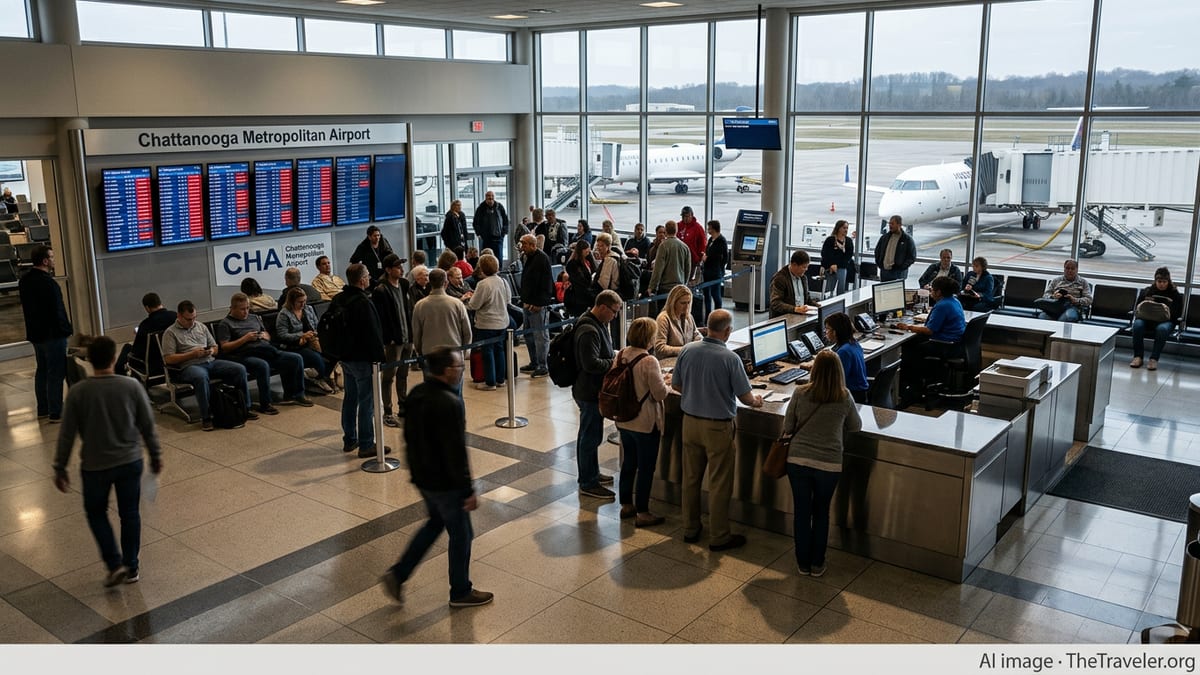
Chattanooga Hub Feels Outsized Impact From Targeted Cancellations
While Lovell Field is a relatively small regional airport, its role as a feeder to some of the country’s busiest hubs magnified the impact of Saturday’s disruptions. With just 14 flights canceled, schedules quickly became unbalanced, leaving some gates idle while others saw long lines of anxious travelers waiting for updates.
Airport operations staff reported that most of the scrapped services were regional connections operated under major-carrier brands, including Delta Connection flights run by SkyWest and Endeavor Air, along with American Eagle services flown by PSA Airlines. Even a limited number of cancellations rippled through tightly timed connection banks at Atlanta, Dallas–Fort Worth and Chicago, causing misconnects for passengers bound for the West Coast, the Northeast and international destinations.
As cancellation notices appeared on terminal departure boards, agents began working flight by flight to reaccommodate passengers on remaining services. However, with regional aircraft typically scheduled in dense rotations and many city pairs served only a few times per day, options for same-day rebooking quickly narrowed.
By late afternoon, the airport concourses were crowded but orderly, with travelers clustered near power outlets and food concessions while monitoring airline apps and overhead announcements for any sign of movement on delayed departures.
Major Airlines Cite Knock-On Effects Across Atlanta, Dallas and Chicago
The hardest-hit routes were those linking Chattanooga to major hubs, particularly Atlanta’s Hartsfield–Jackson, Dallas–Fort Worth and Chicago, where carriers were already managing tight capacity after a week of weather and air-traffic constraints elsewhere in the network. Delta and its regional partners SkyWest and Endeavor Air shouldered a significant portion of the Lovell Field cancellations, reflecting the airline’s large presence in Atlanta and its reliance on regional feeders.
Industry analysts note that when disruptions flare at mega-hubs, regional spokes like Chattanooga can see their schedules trimmed quickly as airlines try to consolidate passengers onto fewer flights, protect crew duty limits and keep aircraft positioned for later waves of departures. That appears to have been the pattern at Lovell Field, where a handful of early cancellations were followed by a series of rolling delays, particularly on flights scheduled to connect into already congested hub banks.
American’s regional affiliate PSA Airlines also cut services linking Chattanooga with Dallas–Fort Worth and other connecting points, adding to the challenges faced by travelers who had counted on one-stop itineraries to cities such as Phoenix, Denver and Washington. With some Dallas–Fort Worth arrivals already reduced at other airports earlier in the week, today’s cuts at Lovell Field added yet another choke point for the sprawling Texas hub.
In Chicago-bound markets, the mix of delays and cancellations created additional complexity. Several passengers attempting to reach Midwestern destinations via Chicago reported multiple rebookings as hub operations struggled to absorb extra connecting demand from southeastern spokes like Chattanooga.
Passengers Face Long Lines, Missed Events and Scrambled Plans
For travelers on the ground in Chattanooga, the operational logic behind the cancellations offered little comfort. Families heading to spring-break departures from Dallas–Fort Worth and Atlanta found themselves re-routed through alternative hubs or pushed to next-day departures, forcing last-minute changes to hotel and rental car reservations at their final destinations.
Business travelers connecting to early-week meetings in Chicago and Detroit described spending hours on customer-service phone lines while simultaneously queuing at gate counters, hoping to secure scarce seats on remaining departures. With some regional flights operating near capacity, standby lists lengthened quickly and many passengers were advised to prepare for overnight stays either in Chattanooga or at their intermediate hub.
Inside the terminal, airport staff attempted to manage expectations by directing travelers to airline app tools and text alerts, while also reminding passengers that rebooking options might be limited until additional aircraft and crews became available. Food concessions and retail outlets reported higher-than-normal traffic as people waiting out delays sought places to sit, charge devices and regroup their travel plans.
Several passengers voiced concern about the lack of clear timelines for delayed departures, with some flights repeatedly pushed back in 30-minute increments. Travel advocates caution that such incremental delays can make it harder for passengers to decide whether to seek hotel rooms, rental cars or alternate itineraries by road or rail.
Regional Airlines Again Under Pressure as Networks Tighten
The day’s events at Lovell Field add to a pattern in which regional carriers such as SkyWest, Endeavor Air and PSA Airlines shoulder much of the visible impact when major airlines rebalance their networks. These carriers operate under the brands of larger partners but work with smaller fleets, thinner schedules and tight crew bases, leaving less room to absorb shocks when weather, air-traffic constraints or maintenance issues emerge.
Aviation analysts point out that regional operators are crucial in connecting smaller communities like Chattanooga to the national air network, yet they often have fewer spare aircraft and crew on standby. When a single aircraft is removed from service or a crew pair times out under federal work rules, multiple downstream flights can be affected, as appeared to be the case with some of Saturday’s suspensions.
The reliance on regional jets for short-haul connectivity to hubs such as Atlanta and Dallas–Fort Worth also means that any disruption can quickly translate into missed connections for passengers trying to reach far-flung destinations. A canceled 70-seat regional flight can strand a full cabin of travelers who were counting on tight connection windows to make onward flights to cities including Los Angeles, New York, Seattle and international gateways.
Labor and staffing dynamics continue to play a role as well. While airlines have rebuilt much of their pilot and cabin-crew ranks since the early pandemic recovery period, regional carriers still report challenges recruiting and retaining crews at the pace needed to support tightly wound schedules.
What Stranded Travelers at Lovell Field Can Do Now
With disruptions still playing out into the evening, travel advisors urged Lovell Field passengers to take a proactive approach. That includes checking flight status frequently in airline apps, enabling push notifications, and confirming that contact details are up to date so that any automatic rebooking offers are received promptly.
Experts also recommend that travelers dealing with cancellations ask airlines about available options beyond the originally booked carrier. In some cases, agents can place passengers on partners or, where interline agreements exist, competitors serving the same hubs, particularly on routes to Atlanta, Chicago and Dallas–Fort Worth where multiple airlines operate.
For those facing long delays, documenting expenses such as meals and hotels can be important if carriers later offer reimbursements or travel vouchers under their customer-service policies. While regulations do not require compensation in all disruption scenarios, several major airlines have expanded their customer-care commitments in recent years, especially when irregular operations are within the carrier’s control.
As operations stabilize, the experience at Lovell Field underscores how even a relatively small number of canceled flights at a regional airport can cascade into a major headache for travelers when those flights are gateways to the country’s largest hubs. For passengers who rely on Chattanooga’s links to Atlanta, Dallas–Fort Worth, Chicago and Detroit, today’s turmoil offered a pointed reminder of just how interconnected the national air network has become.