

More news on this day
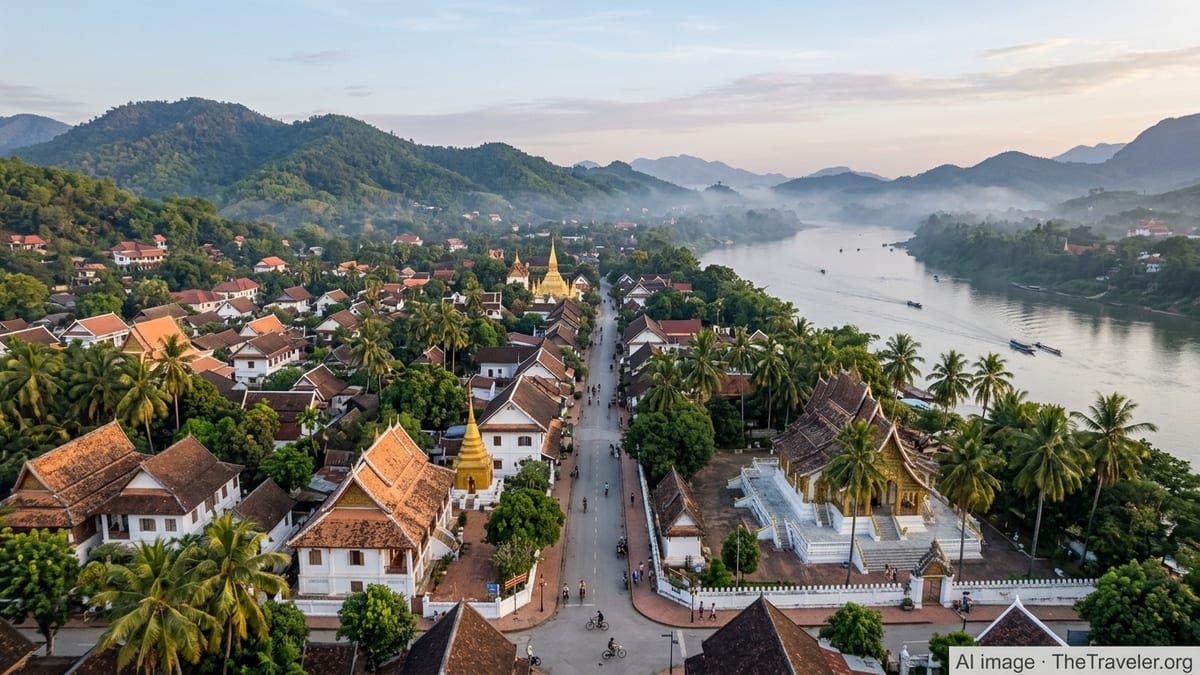
Luang Prabang, the UNESCO World Heritage city in northern Laos, is entering 2026 with a powerful tourism tailwind, as fresh global rankings naming it among Asia’s most beautiful destinations coincide with record visitor numbers and rapid infrastructure upgrades.
Get the latest news straight to your inbox!
Record Visitor Growth Sets the Pace for 2026
Recent tourism data indicates that Luang Prabang has moved from slow post-pandemic recovery to outright boom. Official figures cited in regional travel reports show the province hosting more than 2.1 million visitors in 2025, an increase of over 80 percent on the previous year, outpacing growth in many better-known Southeast Asian destinations. National statistics for Laos point to more than 4.5 million tourists countrywide in 2025, with Luang Prabang accounting for a significant share and acting as a key driver of the country’s wider tourism rebound.
The momentum into 2026 is underpinned by continued government targets to raise overall visitor arrivals and tourism revenue, with Luang Prabang repeatedly highlighted in publicly available planning documents as a strategic showcase destination. Analysts of regional tourism trends describe the city as a bellwether for Laos’s broader economic aims, as tourism is positioned to play a central role in growth forecasts for 2026.
Reports from regional travel media add that this surge is being felt throughout the year rather than only in the traditional cool-season high months. While peak crowds still cluster between October and February and during Lao New Year in April, better connectivity and a diversified events calendar have helped smooth out seasonality, filling guesthouses and boutique hotels in months that historically saw quieter streets along the Mekong.
Global Rankings Cement Image as One of Asia’s Most Beautiful Cities
Luang Prabang’s tourism surge is closely tied to a wave of international recognition. Travel publications over the past two years have repeatedly placed the city near the top of lists of the world’s most beautiful destinations, praising the balance of gilded temples, weathered French-era shophouses and jungle-covered hills. One widely circulated 2024 feature on the “World’s 50 Most Beautiful Places” singled out Luang Prabang among its top tier, while a 2025 regional poll from a leading Asia-focused travel magazine ranked the city among the top holiday destinations in the continent.
These accolades have converged with broader coverage spotlighting Laos as an emerging, affordable and relatively uncrowded alternative to more established regional hotspots. Travel and tourism outlets describe Luang Prabang as the visual and emotional anchor of that narrative: a compact riverside city where saffron-robed monks, morning markets and sunset-lit stupas provide the imagery that powers social media and travel marketing campaigns alike.
Publicly available commentary from tourism analysts notes that such rankings have a measurable impact on demand. Tour operators in the region have reported increased interest in multi-country itineraries that now include Luang Prabang alongside more familiar stops in Thailand, Vietnam and Cambodia, with some itineraries being restructured specifically to allow longer stays in the Lao heritage city.
Rail, Air and River Links Transform Access
Infrastructure improvements are another pillar of Luang Prabang’s tourism boom heading into 2026. The Laos–China Railway, which began operations earlier in the decade, has dramatically reduced travel times between Luang Prabang, the capital Vientiane and the Chinese border. Transport statistics reported by regional media indicate that the railway has carried millions of passengers domestically since launch, with Luang Prabang emerging as one of the most popular stops for both domestic and international travelers entering Laos by train.
At the same time, Luang Prabang International Airport is the focus of an upgrade and expansion process, with recent industry briefings recording multiple consortium bids to develop the facility. The planned works are expected to improve capacity and reliability for regional flights linking the city with Bangkok, Hanoi and other hubs, supporting tourism authorities’ ambitions to attract more high-value visitors and long-haul travelers who connect through those gateways.
River access along the Mekong and Nam Khan remains integral to the destination’s character as well as its logistics. Slow boats and speedboats continue to bring visitors from northern Thailand and upriver communities, and local tourism reports suggest that river-based itineraries are being rebranded as premium, experiential journeys rather than purely budget transit. Combined, these rail, air and river corridors are reshaping how and when travelers arrive, expanding the city’s catchment beyond the traditional backpacker circuit.
Balancing Heritage Protection With Rising Demand
As visitor numbers climb, questions around sustainability and heritage management are moving to the forefront. Luang Prabang’s old town has been on the UNESCO World Heritage List since 1995, recognized for its exceptional blend of traditional Lao and colonial architecture set between the Mekong and Nam Khan rivers. Planning documents and conservation briefs emphasize that this status comes with obligations to safeguard the urban fabric, religious sites and surrounding natural landscapes even as economic pressure favors continued growth in hotels, cafes and tour operations.
Observers of the city’s development note that the surge in tourism has brought tangible benefits in employment and small-business opportunities, particularly in hospitality, transport and handicrafts. At the same time, concerns about overtourism, strain on local infrastructure and changes in neighborhood character are increasingly reflected in public discussion, from regional think-tank reports to commentary on travel forums. The challenge for 2026 and beyond is framed as one of managing intensity rather than limiting interest, ensuring that crowding and commercialization do not erode the very qualities that attract visitors.
Recent initiatives referenced in tourism and development reports include stricter zoning enforcement in the core heritage area, support for community-based tourism in surrounding villages and efforts to spread visitor flows to less congested sites and seasons. Popular day-trip attractions such as Kuang Si Falls and nearby village craft routes feature in these strategies, with authorities and partners aiming to balance economic gains with environmental protection and local participation.
New Experiences and Markets Shape Luang Prabang’s Tourism Future
The profile of travelers arriving in Luang Prabang is diversifying alongside the headline growth. Data from Laos’s tourism statistics indicates strong demand from neighboring ASEAN countries, China and South Korea, while European and North American visitors continue to see the city as a slower-paced cultural interlude on longer regional trips. Niche segments such as wellness retreats, food-focused travel and soft adventure are gaining ground, supported by the area’s riverside setting, rural surroundings and distinctive culinary traditions.
Event-led tourism is expected to play a larger role in 2026, with festivals, cultural performances and sporting events being promoted across official and private channels. The city’s reputation for a calm, reflective atmosphere provides a backdrop for retreats, creative workshops and small conferences that seek a quieter alternative to major urban centers. Boutique hotels and high-end resorts within or near the heritage zone are responding by adding experiential offerings, from temple-focused walking tours to early-morning photography excursions and guided visits to nearby villages.
Industry observers note that Luang Prabang’s current trajectory places it at a crossroads familiar to many celebrated heritage cities. Its elevation into the ranks of Asia’s most beautiful destinations is likely to keep visitor interest high through 2026, but long-term success will depend on how effectively it can preserve its riverine landscapes, layered architecture and everyday rituals while accommodating a fast-expanding global audience.