

More news on this day
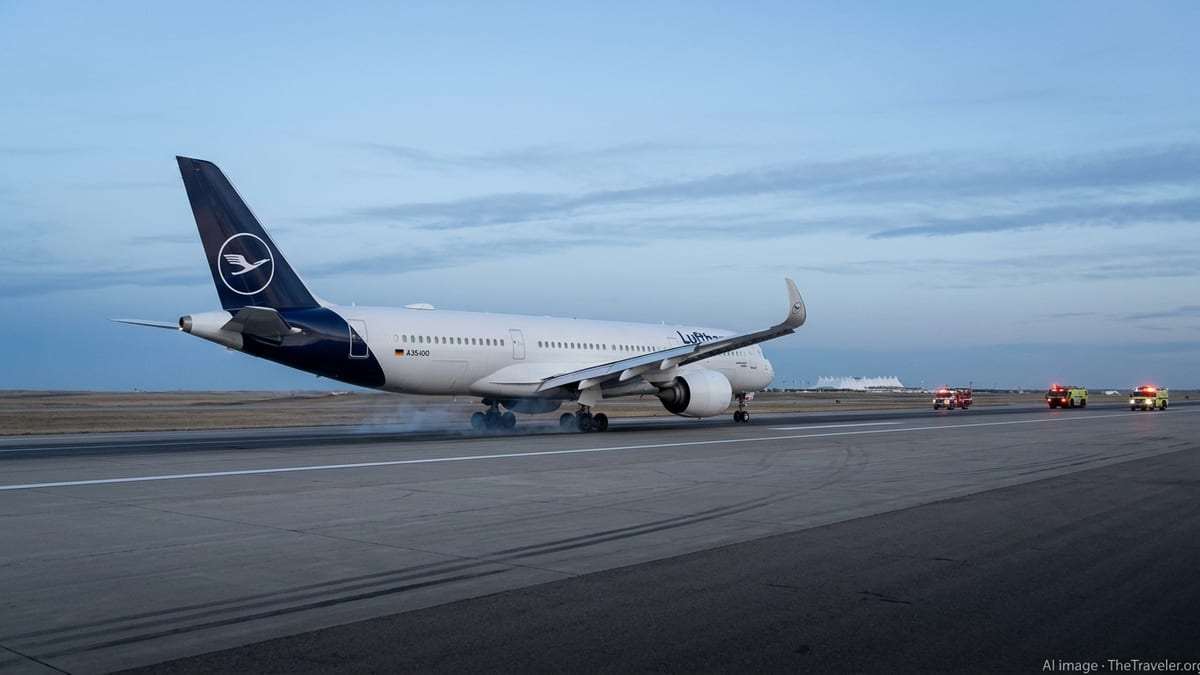
A Lufthansa Airbus A350 bound for Munich rejected its takeoff at Denver International Airport after accelerating to roughly 173 knots, an unusually high speed for an aborted departure that has drawn attention to operating challenges at high-altitude airports.
Get the latest news straight to your inbox!
High-Speed Rejected Takeoff Leaves Jet Disabled on Runway
Publicly available flight and tracking data indicate the widebody jet began its takeoff roll on a westbound runway at Denver on a scheduled evening departure to Munich. The aircraft accelerated to about 173 knots over the course of the long high-altitude runway before the crew initiated a rejected takeoff, bringing the aircraft to a rapid stop on the pavement.
Reports shared by aviation enthusiasts and passengers suggest that the A350 remained on the runway for an extended period following the event, with airport emergency vehicles positioned nearby as a precaution. Images and accounts posted online describe multiple blown main-gear tires and visible heat-related stress on the braking system, consistent with the heavy energy loads associated with an emergency stop at high speed.
According to publicly available coverage and community reporting, there were no immediate indications of injuries among passengers or crew. The aircraft, however, was not able to depart again the same night, and the runway involved required inspection and cleanup before a full return to normal operations.
Although high-speed rejected takeoffs are rare, they are a recognized part of modern airline operations. Aircraft and crews are certificated and trained to handle these events, but they typically result in substantial inspection requirements due to the heavy strain placed on braking systems, tires, and structural components.
Weather, Windshear and Tailwind Questions at High-Altitude Denver
Discussion among pilots and aviation observers in the aftermath has centered on the role of local weather conditions around Denver at the time of the incident. Community reports reference rapidly changing winds and the possibility of predictive windshear alerts in the cockpit, which can prompt crews to reject a takeoff even at higher speeds if performance margins are in doubt.
At Denver’s approximate elevation of 5,430 feet above sea level, thinner air already reduces aircraft performance margins, requiring longer takeoff rolls and higher true airspeeds to achieve liftoff. When combined with warm temperatures or shifting winds, crews must carefully balance weight, thrust settings, and runway length to maintain required safety margins.
Commentary shared in aviation forums indicates that at least some observers initially described the event as tailwind-related, while others suggested a windshear or microburst warning may have been a contributing factor. At this early stage there is no formal public explanation of the exact trigger for the rejected takeoff, and no evidence has been released pointing to a single definitive cause.
What is clear from publicly accessible information is that the decision was made very late in the takeoff roll, at a speed close to typical decision speeds for long-haul, widebody departures. At such speeds, pilots must weigh the risks of continuing the takeoff with potentially compromised performance against the risks of stopping within the available runway distance with highly stressed brakes and tires.
Operational Impact on Denver and Lufthansa’s Transatlantic Schedule
The rejected takeoff disrupted operations both for Denver International Airport and for Lufthansa’s transatlantic schedule. With the A350 stopped on the runway and undergoing assessment, the affected runway experienced reduced availability, compelling air traffic controllers to reroute arrivals and departures to other surfaces until inspections could confirm that debris and rubber deposits were cleared.
Passengers on the Munich-bound flight faced significant delays as the aircraft remained disabled and required engineering checks, including evaluation of landing gear components, wheel assemblies, and brake systems. Similar events in the past at other airports have often resulted in aircraft remaining out of service until replacement tires are installed and detailed structural inspections are completed.
For Lufthansa, the occurrence comes amid its broader investment in A350 operations on long-haul routes to and from the United States, including services linking Munich with Denver and other major gateways. Published schedule data show the airline has been adjusting capacity on Denver routes seasonally, transitioning between Airbus A350, A340, and A380 aircraft depending on demand.
While the incident represents a notable operational disruption, publicly available information suggests that it has not led to widespread changes in Lufthansa’s Denver schedule in the immediate term. Any longer-term fleet or schedule adjustments will likely depend on the technical findings related to the event and on broader operational and commercial considerations.
Safety Procedures for Rejected Takeoffs at or Near Decision Speed
In commercial aviation, the decision speed known as V1 serves as the critical threshold for takeoff. Below V1, crews are generally trained to reject the takeoff in response to serious warnings such as engine failure, predictive windshear alerts, or certain system malfunctions. Above V1, standard procedures emphasize continuing the takeoff and dealing with the issue in the air, because the remaining runway may be insufficient to stop safely.
Publicly available training materials note that rejected takeoffs near V1 are particularly demanding events, both for the crew and for the aircraft. Brakes absorb massive amounts of kinetic energy when stopping a fully loaded long-haul aircraft at high speed, which can result in extreme brake temperatures, tire failures, and, in some cases, the need for fire and rescue services to cool components and monitor for smoke or fire risk.
Abrupt stops at speeds close to 170 knots are outside the routine envelope of day-to-day airline operations, which is why they are heavily emphasized in simulator training. Flight crews regularly rehearse such scenarios to maintain proficiency in decision-making, communication, and directional control during high-speed aborts, ensuring that when rare real-world events occur, they can be managed in a predictable and controlled manner.
Although specific procedural details vary by airline and aircraft type, publicly available guidance across the industry underscores that safety of passengers and crew remains the primary consideration. When significant uncertainty exists about an aircraft’s ability to safely become airborne and climb away, crews may still elect to reject the takeoff even very close to decision speed, accepting the likelihood of equipment damage in exchange for additional performance margin.
Spotlight on Denver as a Challenging but Growing Long-Haul Hub
The incident has again highlighted Denver’s status as a growing long-haul hub with unique operational challenges. The combination of high elevation, variable weather, and heavy long-haul departures can push aircraft and crews near the outer edges of their normal performance envelopes, even as the airport continues to add new international routes.
In recent years, publicly available schedule data and airport announcements have pointed to a steady expansion of transatlantic services from Denver, including Lufthansa’s Munich and Frankfurt flights, along with additional routes from North American and European carriers. The presence of widebody aircraft such as the A350 and, seasonally, the A380 reflects strong demand from both leisure and business travelers connecting the Rocky Mountain region with Europe.
Aviation observers note that each new long-haul route at high-altitude airports requires meticulous performance planning, from runway selection and takeoff weight calculations to contingency procedures for rapidly shifting weather. Events like the Lufthansa A350’s high-speed rejected takeoff serve as visible reminders of the complexity behind seemingly routine departures, and of the ways in which training, design, and airport infrastructure work together to manage risk.
For travelers, the most immediate effects are likely to be limited to delays and rebookings on the affected service. For the aviation community, however, the episode is likely to contribute to ongoing analysis of performance margins, weather monitoring, and decision-making frameworks for long-haul operations at Denver and other high-altitude gateways worldwide.