

More news on this day
Lufthansa’s decision to launch nonstop Frankfurt–Kuala Lumpur flights from October 25, 2026, marks a significant expansion of its Southeast Asia network and a strategically timed bet on resurgent global travel demand.
A Strategic Return to Malaysia After a Decade
The new Frankfurt–Kuala Lumpur service represents Lufthansa’s return to the Malaysian market after an absence of roughly ten years, with the carrier having last served the route in 2016. The move comes as Malaysia consolidates its position as a tourism powerhouse in the region, welcoming more than 40 million visitors in 2025 and topping Southeast Asia’s arrival charts according to tourism authorities.
Starting October 25, 2026, Lufthansa will operate the route five times weekly year-round, aligning it with the airline’s broader winter 2026/27 long-haul strategy. Flight LH704 will depart Frankfurt at 9.30 p.m., arriving in Kuala Lumpur at 4.40 p.m. local time the following day, while the return service LH705 leaves Kuala Lumpur at 11.55 p.m. and lands in Frankfurt at 6.00 a.m. the next morning.
For the Lufthansa Group, the launch is more than just an additional city pair. From its core home markets of Germany, Austria, Switzerland, Belgium and Italy, Lufthansa will become the only airline offering nonstop flights to Malaysia, underscoring the strategic value it sees in Kuala Lumpur as both a destination and a regional gateway.
The timing of the launch reflects confidence in Asia’s continued recovery and growth. Long-haul connectivity between Europe and Southeast Asia has been rebuilding steadily, but capacity gaps remain on certain point-to-point routes. Frankfurt–Kuala Lumpur directly targets that gap, aiming to capture both pent-up leisure demand and structurally growing business flows between Europe and Malaysia.
Premium Product and Schedule Tailored for Global Connectors
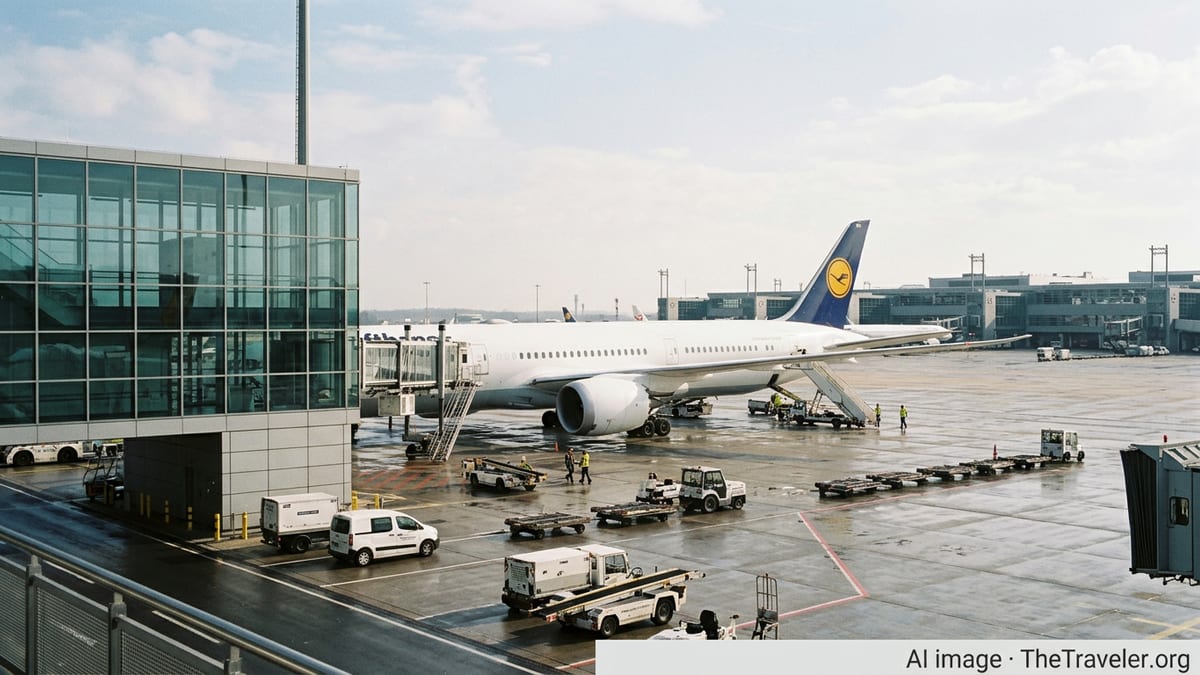
Lufthansa will deploy its Boeing 787-9 Dreamliner on the Frankfurt–Kuala Lumpur route, equipped with the airline’s latest Allegris long-haul cabin. The aircraft offers 287 seats across Business, Premium Economy and Economy, with a particular focus on upgraded comfort, privacy and inflight technology compared with older widebody types still used on some regional competitors’ services.
The overnight timing of both legs is designed to support seamless onward connections. An evening departure from Frankfurt feeds into the carrier’s extensive European and transatlantic network, allowing travelers from North America and across Europe to connect to Kuala Lumpur with a single change of aircraft. The early morning arrival back into Frankfurt likewise slots into Lufthansa’s morning bank of flights across the continent and to long-haul destinations.
This schedule is especially attractive for premium and corporate travelers, who typically prioritize minimized total journey time and daylight arrivals. By landing in Kuala Lumpur in the late afternoon and returning to Europe in the early morning, the service strikes a balance between rest, productivity and connection convenience.
For Lufthansa, such schedule design is core to its hub strategy in Frankfurt. The new route is expected to integrate smoothly into existing connection patterns for cities such as London, Paris, New York, Chicago and multiple German and Central European destinations, making Kuala Lumpur newly accessible with only one stop from dozens of global cities.
Rebalancing Southeast Asia’s Long-Haul Map
The addition of Kuala Lumpur strengthens Lufthansa Group’s footprint in Southeast Asia, where it already serves Bangkok, Singapore and Phuket. Until now, travelers between Malaysia and Europe have largely relied on one-stop itineraries via Middle Eastern or Asian hubs, including Doha, Dubai, Istanbul, Bangkok and Singapore.
By offering a nonstop option, Lufthansa shifts part of that connecting traffic back through its own European hub, potentially chipping away at the dominance of Gulf and other sixth-freedom carriers on Europe–Malaysia flows. For travelers, the new service introduces greater choice: they can now opt for a direct Westbound link to Europe or continue to use existing one-stop routings via regional partners and alliances.
The move also reflects Kuala Lumpur’s growing role as a regional connector in its own right. The Malaysian capital’s airport is well positioned for onward flights to Indonesia, Vietnam, Thailand and domestic Malaysian destinations, which could allow Lufthansa to feed secondary Southeast Asian cities through local and regional partners.
In network terms, the route supports a broader rebalancing of capacity toward Asia, which many European airlines see as a long-term growth engine. With China capacity still normalizing and other markets maturing, Southeast Asia has emerged as a comparatively stable and high-potential region, making Kuala Lumpur a logical addition alongside regional heavyweights such as Singapore and Bangkok.
Implications for Business, Trade and Tourism
Germany and Malaysia maintain strong trade ties, with more than 700 German companies reported to be operating in Malaysia across sectors such as manufacturing, engineering, automotive, chemicals and services. Direct air connectivity between Frankfurt and Kuala Lumpur is expected to facilitate faster, more predictable travel for executives, technicians and investors shuttling between the two countries.
For European businesses, a nonstop link reduces travel time, limits disruption from missed connections and offers more reliable cargo options for high-value, time-sensitive goods. Lufthansa’s 787 service, supported by the group’s cargo operations, could enhance supply chain resilience between German industrial hubs and Malaysia’s export-oriented clusters in and around the Klang Valley and beyond.
On the tourism side, the new route makes it easier for European travelers to access Malaysia’s beaches, rainforests, food destinations and cultural sites without an additional transfer in a third-country hub. At the same time, Malaysian travelers gain a direct gateway not only to Germany but also to the broader Schengen area and beyond via Frankfurt, one of Europe’s largest intercontinental hubs.
The route may also spur closer cooperation in tourism promotion, with joint campaigns likely to target multi-country itineraries linking Malaysia with neighboring Southeast Asian destinations and European city breaks. In an increasingly competitive global tourism market, direct air links often serve as the catalyst for new packages and partnerships between airlines, tourism boards and tour operators.
What Global Travelers Can Expect Next
Lufthansa’s Frankfurt–Kuala Lumpur launch underscores a wider industry trend: airlines are selectively rebuilding and expanding long-haul networks with an eye toward profitable, structurally strong corridors rather than simply restoring every pre-2020 route. For global travelers, that translates to more point-to-point options on certain city pairs, even as others remain reliant on one-stop connections.
If the Kuala Lumpur route performs strongly, it could encourage further adjustments across Europe–Asia networks, including additional frequencies, seasonal capacity boosts or new destinations in emerging Southeast Asian markets. Other carriers may also reassess their strategies, particularly where they face the prospect of losing higher-yield passengers to new nonstop competitors.
For now, travelers planning trips from late 2026 onward will see Frankfurt–Kuala Lumpur added to global booking systems as a five-times-weekly fixture, opening up new one-stop combinations from North America and across Europe into Malaysia. With bookings already available, the route is poised to become one of the more closely watched long-haul launches in the upcoming winter season.
More broadly, the move signals that Europe–Southeast Asia connectivity is entering a new phase, with legacy carriers like Lufthansa increasingly willing to deploy next-generation aircraft on routes that blend leisure and business demand. For passengers, that should mean newer cabins, more direct options and a gradually richer map of possibilities between Europe and one of the world’s most dynamic regions.