

More news on this day
Lufthansa is adding a touch of Arctic magic to its winter network with the launch of seasonal nonstop flights from Munich to Rovaniemi, creating a direct route from southern Germany to the Finnish Lapland city widely known as the official hometown of Santa Claus.
Get the latest news straight to your inbox!
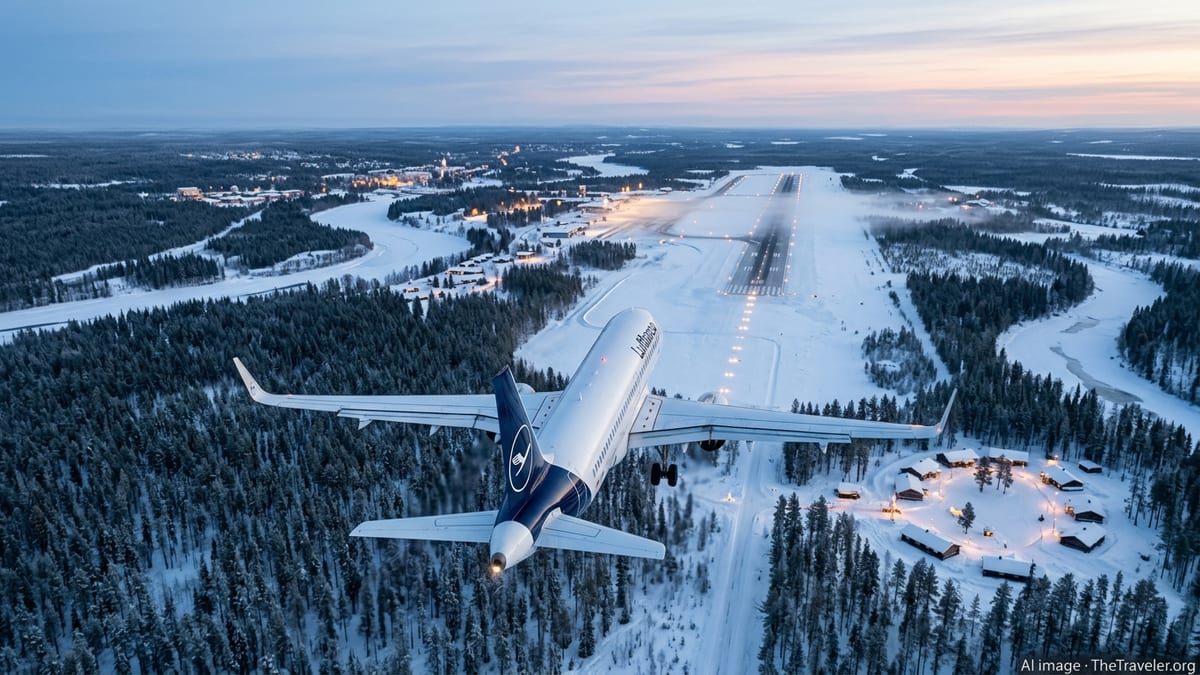
New Seasonal Route Links Bavaria and the Arctic Circle
The new Munich to Rovaniemi service is scheduled as a dedicated winter route, aligning with peak demand for Lapland holidays when travelers flock north in search of snow, northern lights and festive experiences. Publicly available schedules show that the flights are planned as limited-season operations, timed to coincide with the traditional Christmas and New Year travel period and the core winter sports season.
Rovaniemi, situated just south of the Arctic Circle, has emerged as one of Northern Europe’s most recognizable winter destinations, particularly for families. The new nonstop Lufthansa connection from Munich adds to a growing web of routes between Central Europe and Finnish Lapland, complementing existing Lufthansa Group services to Lapland airports from other German hubs.
Flight timetable information for recent winter seasons has already listed Rovaniemi among Lufthansa destinations in the wider group network, and industry route overviews indicate that nonstop services from Munich are structured to reduce travel time compared with traditional one-stop connections via Helsinki or other European hubs.
The move reflects a broader trend in European aviation, where airlines are tailoring winter schedules to tap into high-yield leisure markets in the far north, especially in regions branding themselves around Arctic adventure and Christmas tourism.
Gateway to Santa Claus Village and Arctic Adventures
Rovaniemi markets itself globally as the hometown of Santa Claus, with the Santa Claus Village on the Arctic Circle acting as the region’s best-known attraction. For passengers arriving from Munich, the new direct flights shorten the journey to this winter landmark, which typically requires a road transfer of less than an hour from Rovaniemi Airport.
Beyond Santa-themed experiences, the area offers a wide range of Arctic activities, including reindeer and husky safaris, snowmobiling, ice fishing and guided northern lights excursions. Local tourism information highlights that these experiences are in greatest demand from late November through March, aligning closely with the period when airlines ramp up seasonal services into Lapland.
The enhanced connectivity is expected to support not only family travel but also couples and small groups from southern Germany, Austria, northern Italy and neighboring regions that commonly use Munich as a transfer hub. With a nonstop option, travelers can reach the Arctic more quickly, reducing the risk of missed connections in winter weather and simplifying itineraries that include children or bulky winter gear.
Tourism data published for Lapland in recent years has shown sustained growth in international arrivals, particularly from Central Europe. The addition of nonstop Munich flights provides another point of access for this expanding market, as well as broader one-stop connectivity from long-haul markets feeding into Lufthansa’s Bavarian hub.
Strengthening Lufthansa Group’s Footprint in Lapland
The new Munich to Rovaniemi operation forms part of a wider strategy by Lufthansa Group airlines to expand in Finland’s Arctic tourism region. Published information from Finnish airport operator Finavia has highlighted a wave of recent and upcoming routes from German-speaking markets to Lapland airports, involving Eurowings, Lufthansa, Discover Airlines, Edelweiss Air and Austrian Airlines.
Previous route announcements have detailed seasonal flights from German cities such as Stuttgart, Düsseldorf, Hamburg and Berlin into Lapland destinations including Rovaniemi, Kittilä, Ivalo and Kuusamo. In addition, Lufthansa has already established a winter route from Frankfurt to Rovaniemi, providing another axis of connectivity from Germany into the Arctic region.
The Munich to Rovaniemi link therefore extends a network strategy in which Lufthansa Group carriers distribute Lapland-bound traffic across several hubs. Industry network summaries suggest that the group is positioning itself as a key player in Central Europe–Lapland traffic, competing with Scandinavian and Finnish operators that traditionally dominated the segment.
Finavia’s public communications have emphasized that direct routes from large European catchment areas are seen as critical to maintaining momentum in Lapland’s visitor economy. By adding another nonstop connection from a major continental hub, Lufthansa’s Munich service reinforces this development and supports the region’s ambitions to lengthen and diversify its winter season.
Convenience for Families and Connecting Passengers
Munich Airport is one of Lufthansa’s primary hubs, offering extensive short- and medium-haul feeds from across Germany and neighboring countries, as well as long-haul links from North America and Asia. The new nonstop winter flights to Rovaniemi are positioned to take advantage of this connectivity, enabling same-day transfers onto the Arctic route for many international passengers.
Route comparison tools and airline timetable data show that, until now, most itineraries from Munich to Rovaniemi relied on at least one connection, often via Helsinki or another European capital. A nonstop option reduces total travel time and can decrease exposure to weather-related disruption at intermediate airports, an important factor in the peak winter period when de-icing and snow operations can affect schedules.
For families traveling with young children, a single flight segment from Munich to Rovaniemi is likely to be a significant draw, reducing the stress of multiple boardings and tight connections. Travel industry analysis frequently notes that simplified routings and predictable schedules are key decision factors for this demographic, especially around Christmas, when demand peaks and airport crowds intensify.
The new route also broadens options for travelers who wish to combine a city break in Munich with a short Arctic escape. With winter festivals, Christmas markets and Alpine access, Munich serves as a major tourist destination in its own right, and the ability to add a direct hop to Lapland creates new two-center holiday possibilities marketed by tour operators and online travel agencies.
Boost for Lapland’s Winter Economy
Lapland’s tourism sector is heavily concentrated in the coldest months, when snow reliability and darkness enhance the appeal of northern lights tours and other winter-only activities. Regional tourism reports have consistently indicated that international air links underpin this seasonal economy, feeding demand for accommodation, guiding services, transport and local gastronomy.
By linking Munich directly with Rovaniemi, Lufthansa’s new flights are expected to support higher visitor numbers from Central Europe and connecting markets. Industry observers point out that such routes tend to have a multiplier effect, encouraging investment in hotels, chalets, restaurants and activity providers who can plan ahead with greater confidence in air access.
The increased capacity also dovetails with Finland’s broader positioning as a sustainable Arctic destination. Public messaging from local authorities and tourism bodies has highlighted efforts to balance visitor growth with environmental stewardship, including promotion of rail extensions, low-impact excursions and responsible wildlife experiences. Additional air routes, such as the Munich to Rovaniemi service, are being introduced against this backdrop of sustainability-focused destination management.
As booking platforms and airline channels update their winter offerings, the Munich–Rovaniemi flights are expected to feature prominently in package holidays and dynamic itineraries targeting both first-time and repeat visitors to Lapland. For many travelers in Germany and beyond, the route opens a more direct path to one of Europe’s most evocative winter landscapes and to the city that has built a global identity around the legend of Santa Claus.