

More news on this day
Lufthansa is setting its sights further north for the 2026-27 winter season, adding a new direct connection between Munich and Rovaniemi that will give German and Central European travelers a fresh gateway to Finnish Lapland’s snowy resorts and aurora-filled skies.
Get the latest news straight to your inbox!
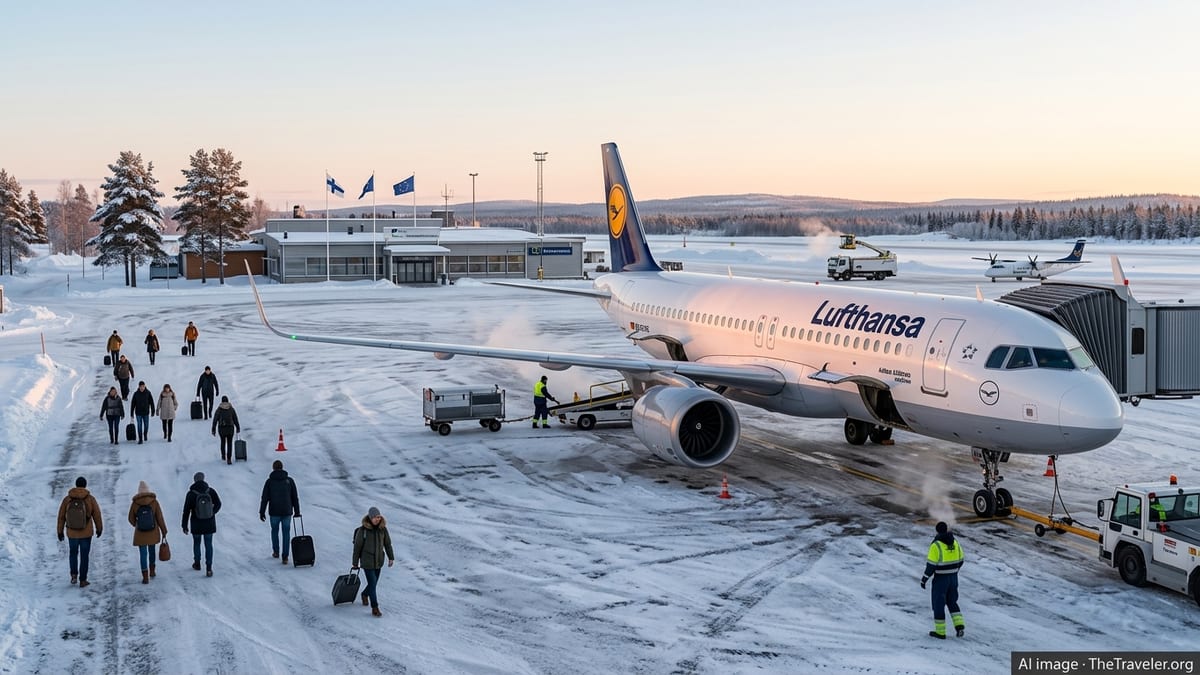
New Twice-Weekly Link From December 2026
Publicly available information from the airport operator in Finland and Lufthansa’s own announcements indicates that the Munich–Rovaniemi route will launch on 4 December 2026 as part of the airline’s winter 2026-27 timetable. The service is planned as a seasonal operation, tailored to peak demand for Arctic holidays and Christmas travel.
The flights are scheduled to run twice weekly, on Fridays and Sundays, through 26 March 2027. This pattern is designed to match typical long-weekend and week-long stays in Lapland, giving leisure travelers flexibility while helping the airline concentrate capacity on the busiest days.
Timings published in Lufthansa’s winter schedule show daytime departures from Munich and afternoon returns from Rovaniemi, allowing same-day connections from other European cities via the Bavarian hub. The planned block time of about three hours and twenty minutes puts Lapland within easy reach of much of Central Europe.
The route will be operated by Airbus A320neo aircraft, according to Lufthansa’s winter network overview. The type selection aligns with the group’s broader strategy of deploying newer, more fuel-efficient jets on medium-haul leisure routes across Europe.
Part of a Wider Push Into the Far North
The Munich–Rovaniemi launch is one element of a broader expansion by Lufthansa Group in the Nordic and Arctic region for winter 2026-27. Network updates published in March 2026 highlight additional capacity increases to northern destinations, with more frequencies planned from Frankfurt and Munich to multiple airports above the Arctic Circle.
For Rovaniemi specifically, the group has already built up a presence from Frankfurt and through its Austrian arm from Vienna. The new Munich link adds another major hub to the mix, reinforcing the Finnish city’s position as a key winter gateway for German-speaking markets.
Schedule data shows that Lufthansa Group airlines now plan to operate to nine airports in or near the Arctic Circle, with up to dozens of weekly flights during the peak of winter. These include established Lapland destinations such as Kittilä and Kuusamo, as well as Tromsø in northern Norway, reflecting robust interest in winter sports, Northern Lights tourism and Christmas-themed trips.
Industry observers note that this northern build-out fits a wider trend across European carriers, which have been adding capacity to Lapland in recent years as international arrivals recovered and then surpassed pre-pandemic levels. The new Munich–Rovaniemi route signals that Lufthansa expects demand to remain strong into the second half of the decade.
Boost for Lapland Tourism and Regional Access
Tourism authorities and airport operators in Finnish Lapland have repeatedly highlighted Germany as one of their fastest-growing source markets for winter visitors. Passenger statistics released in recent seasons show double-digit growth in German arrivals, aided by earlier route launches from Frankfurt, Berlin, Düsseldorf and Hamburg.
By tapping its Munich hub, Lufthansa is set to widen the catchment further, making it easier for travelers from southern Germany, Austria, northern Italy and parts of Central and Eastern Europe to reach Rovaniemi with a single connection. Travel trade publications point out that the new link should support both package tour programs and independent travelers booking dynamic packages.
For Rovaniemi and the broader Lapland region, the added capacity is expected to underpin continued investment in accommodation, experiences and infrastructure. Local tourism bodies have previously signaled that stable, recurring winter routes are critical for justifying year-round operations at resorts, activity providers and hospitality businesses.
At the same time, the schedule remains clearly seasonal, reducing the risk of overcapacity outside the peak months. The December-to-March window aligns closely with snow reliability, peak aurora viewing periods and the traditional Christmas travel season associated with Rovaniemi’s branding as the home of Santa Claus.
Environmental Focus and Changing Traveler Expectations
Lufthansa’s decision to deploy A320neo aircraft on the Munich–Rovaniemi sector is in line with its ongoing fleet renewal program, which aims to cut per-passenger emissions on short and medium-haul routes. Fleet and network documentation from the group describes the type as offering lower fuel burn and reduced noise compared with earlier-generation narrowbodies.
The environmental profile of flights to sensitive Arctic and sub-Arctic regions has come under closer scrutiny as tourism volumes grow. Industry analysts note that airlines and destination authorities are increasingly emphasizing measures such as modern aircraft types, coordinated surface transport, and encouragement of longer stays to balance economic benefits with climate and sustainability goals.
Travel trade reports indicate that many winter visitors to Lapland are now actively seeking lower-impact options, from rail connections into feeder hubs to operators that highlight certified accommodation and excursions. The ability to reach Rovaniemi via a major European hub like Munich, with consolidated connecting traffic and newer aircraft, is being presented as one element in that evolving equation.
While aviation remains a significant source of emissions, network planners suggest that concentrating demand on a smaller number of well-timed, high-load flights can be more efficient than fragmented services. The twice-weekly pattern on the Munich–Rovaniemi route appears to reflect that logic, aiming for strong load factors during the highest-demand travel days.
Competitive Landscape for Winter 2026-27
By the time the Munich–Rovaniemi flights start in December 2026, the competitive landscape for access to Finnish Lapland is expected to be more crowded than ever. Several European network and leisure carriers have already announced or launched their own winter links to Lapland airports, often targeting the same November-to-March window.
Germany is a key battleground, with multiple airlines serving Lapland from different German cities or via hubs in Central Europe. Travel industry coverage points to a mix of legacy carriers, leisure specialists and low-cost operators offering seasonal routes to Rovaniemi, Kittilä and other northern airports, particularly around Christmas and school holiday peaks.
Lufthansa’s move to introduce a direct connection from its southern hub is seen as both a defensive and offensive step, helping retain German customers within its own network while also appealing to travelers in neighboring countries who typically connect through Munich. The route may also support long-haul inbound tourism to Lapland by providing smoother one-stop itineraries from North America and parts of Asia.
Schedules for winter 2026-27 remain subject to adjustment, and final capacity levels will depend on booking trends closer to the season. However, the early publication of the Munich–Rovaniemi timetable suggests that the airline is committing to Lapland as a long-term pillar of its winter leisure strategy, with the 2026-27 season set to mark another milestone in the region’s rise as a marquee European winter destination.